skip to main content
 Effective Ways to Organize Small Office Space
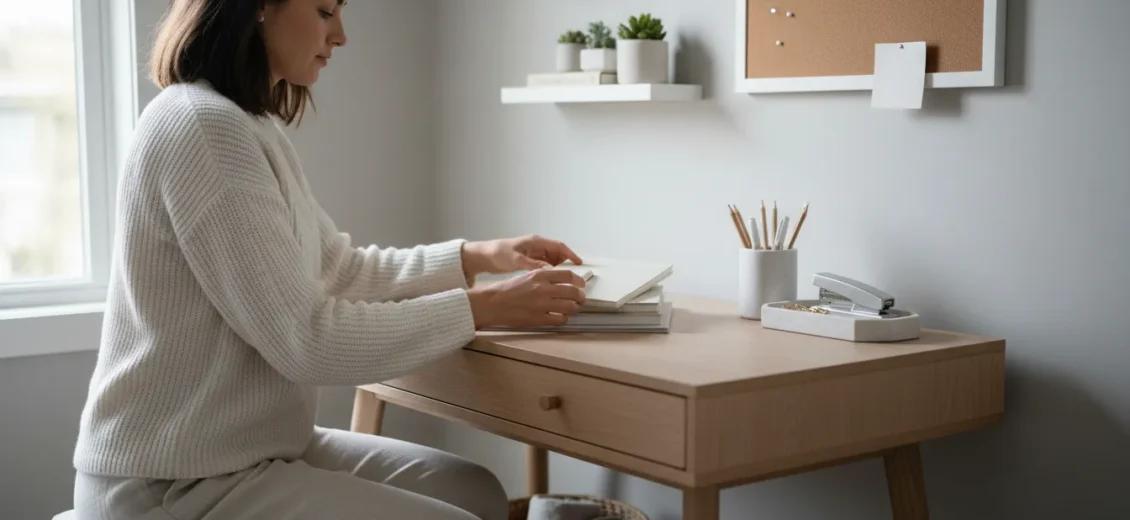

Table of Contents
- Introduction
- The Psychology of the Small Workspace
- Strategic Layouts for Maximum Efficiency
- Transitioning to a Paperless Environment
- Leveraging Operational Support to Clear the Clutter
- Member Connection and the Business Development Layer
- Designing for Different Work Modes
- Practical Steps to Organize Your Office This Week
- Scaling Your Space as You Grow
- The Value of a Bundled Environment
- Conclusion
- FAQ
Introduction
Does the layout of your workspace fuel your focus, or does it serve as a constant reminder of an ever-growing to-do list? For many founders and small teams, the physical environment is often the first thing to be sacrificed when business picks up. However, a cluttered or poorly arranged office isn’t just an aesthetic issue; it is an operational bottleneck. When you are operating within a limited footprint, every square inch must be intentional. Learning how to organize small office space is less about finding the right bins and more about building a system that supports your professional momentum.
The goal of this article is to provide a comprehensive roadmap for transforming a compact workspace into a high-functioning headquarters. We will explore the psychology of space, practical layout strategies, and the digital transitions necessary to keep your physical environment clear. Furthermore, we will examine how choosing a managed workspace environment can fundamentally change your relationship with office organization by removing the administrative and logistical burdens of traditional office management. By the end of this guide, you will understand that a well-organized office is a foundational element of Member Success—allowing you to stop managing “stuff” and start managing growth.
The Psychology of the Small Workspace
Before moving a single desk or buying a filing cabinet, it is vital to understand why organization matters so much in a small space. In a large, sprawling corporate suite, a stack of papers or a tangled web of cables might go unnoticed. In a private office or a smaller suite, that same clutter occupies a significant percentage of your visual field.
Reducing Cognitive Load
Our brains are constantly processing the environment around us. Every item in your line of sight requires a small amount of mental energy to ignore or categorize. In a small office, “visual noise” can lead to faster mental fatigue and decreased focus. By organizing your space, you are effectively reducing the cognitive load required to function throughout the day. This is why many professionals find that a clear desk leads to a clearer strategy.
Professional Identity and Presence
For many of our members, their office is more than just a place to work; it is their corporate headquarters. Whether you are hosting a potential investor or a new hire, the organization of your space communicates your brand’s values. A streamlined, intentional office suggests a streamlined, intentional business. At Workbox, we include company logo placement on the office door at no additional cost for our private office members because we understand that establishing a professional presence is a key component of business development.
Strategic Layouts for Maximum Efficiency
When you have limited square footage, the way you arrange your furniture can drastically change the “feel” of the room. A poor layout makes a room feel cramped and uninviting, while a strategic one creates a sense of flow.
Utilizing Vertical Space
The most common mistake in small office organization is failing to look up. When floor space is at a premium, the walls are your greatest asset. High-mounted shelving can house reference books, archived files, or even decorative elements that would otherwise clutter your desk. By moving storage off the floor and onto the walls, you maintain the “open” feel of the office floor, which makes the entire room feel larger.
The Perimeter Strategy
In smaller private offices, placing furniture against the walls—the perimeter strategy—tends to be the most effective way to open up the center of the room. This creates a clear walkway and prevents the space from feeling like an obstacle course. If you are working as a small team in a suite, consider “benching” arrangements where desks are lined up along a single wall or back-to-back to maximize the shared floor area.
Creating High-Traffic Zones
Even in a small space, there are areas you visit more often than others. Your desk is the primary zone, but where do you keep your printer? Where is your “landing zone” for mail and packages? By grouping related activities, you reduce the need to constantly move around the room, which can be disruptive in a tight environment. For our members, the “landing zone” for mail is often handled at the front desk by our dedicated community managers, which keeps the individual office free from the clutter of incoming packages.
Transitioning to a Paperless Environment
Nothing consumes space faster than paper. Filing cabinets are often the largest pieces of furniture in a small office, and yet much of what they contain could be digitized.
The Digital First Mindset
To truly organize a small office space, you must adopt a digital-first mindset. This involves scanning essential documents and shredding the physical copies. Use secure cloud storage solutions to categorize your files. This not only saves physical space but also makes your business more agile; you can access your “filing cabinet” from any Workbox location nationwide during staffed hours or from your home base 24/7.
Managing Hardware and Cables
In a small office, a “cable nest” under the desk is both an eyesore and a tripping hazard. Use cable sleeves, clips, and ties to bundle cords together and route them along the legs of your furniture. Furthermore, reconsider your hardware needs. Do you need a massive desktop tower, or would a powerful laptop and a single high-quality monitor suffice? (Note: While Workbox provides the space and furniture, members typically bring their own hardware to suit their specific technical needs).
Leveraging Operational Support to Clear the Clutter
One of the most effective ways to organize a small office is to remove the items you don’t actually need to own or manage yourself. This is where the concept of a managed workspace becomes a strategic advantage.
The Burden of Traditional Office Supplies
In a traditional office, you have to find space for boxes of printer paper, extra toner, cleaning supplies, and kitchen essentials. These items take up valuable real estate. At Workbox, our operational support model means we handle the “operational backbone” of your office. We provide unlimited printing, filtered water, and complimentary coffee and tea. Because these are provided as part of your membership, you don’t need to store bulk supplies in your private office.
Professional Cleaning Services
Small spaces show dust and dirt much faster than large ones. Keeping a small office organized also means keeping it clean. However, managing a cleaning schedule or storing a vacuum and cleaning chemicals takes up both time and space. We provide professional cleaning services as part of our bundled workplace environment, ensuring your space remains a professional destination without you having to lift a finger or find a place to hide a mop.
Shared Amenities as Office Extensions
Think of the common areas as an extension of your small office. If your private office is starting to feel tight during a collaborative session, you don’t need to reorganize the furniture. Instead, you can utilize our private conference rooms (starting at $60/hr) or phone booths for calls. For a consultant juggling client meetings and deep work, reserving a professional meeting room when needed—while using a membership for focused work—creates a predictable weekly rhythm that keeps their primary workspace dedicated solely to high-concentration tasks.
Member Connection and the Business Development Layer
Organization isn’t just about physical objects; it’s about organizing your time and your professional network. When your environment is optimized, you have more capacity to engage with the community around you.
Purposeful Programming
At Workbox, we believe that “Success Takes More” than just a desk. Our Member Success philosophy is built on the idea that space + community connectivity + resources = growth. By organizing your business life within our ecosystem, you gain access to a powerful network of other innovators and leaders. We facilitate high-quality member-to-member interactions through weekly community-based engagements and quarterly mixers. These events are designed to help you build a network without having to coordinate the logistics yourself.
Access to Resources
Our business development layer provides members (Floating Membership or higher) with access to a virtual platform and resources that can help replace physical clutter with digital efficiency. This includes vendor discounts and cloud credits, which allow small teams to scale their digital infrastructure rather than their physical footprint. For a small team transitioning out of coffee shops, a private office gives them consistency and privacy for calls, while the broader Workbox community provides the social and professional connectivity they previously lacked.
Designing for Different Work Modes
Even within a small office, you should aim to create different “zones” for different types of work. This prevents the space from feeling stagnant and helps you mentally shift gears.
The Deep Work Zone
Your primary desk should be your deep work zone. Keep this area as minimal as possible. Ideally, only the tools you use every single day—your computer, a notebook, and a drink—should live on this surface. Everything else should be stored in drawers or on shelves.
The Collaboration Zone
If you share your small office with a partner or employee, consider how you interact. Do your desks face each other, or are they side-by-side? Often, a side-by-side arrangement allows for a shared “collaboration zone” in the middle of the room, which can be used for quick huddles or reviewing physical documents.
The Wellness Break
It is difficult to “turn off” when your break area is the same desk where you just spent four hours grinding through spreadsheets. This is why we provide wellness rooms and communal lounge areas. Taking your break outside of your small office allows you to return to your workspace with a fresh perspective, making it easier to maintain the organizational systems you’ve put in place.
Practical Steps to Organize Your Office This Week
If you are currently sitting in a cluttered small office, the task of organizing can feel overwhelming. Break it down into these actionable steps:
- The Categorization Phase: Take everything out of your drawers and off your shelves. Group items into three categories: “Daily Use,” “Weekly Use,” and “Archive.”
- The Purge: Be ruthless. If you haven’t used an item in six months, do you really need it? Shred old papers and donate or recycle redundant hardware.
- The Surface Reset: Clear your desk surface entirely. Only put back the “Daily Use” items.
- The Vertical Shift: Install shelving or use stacking organizers to move your “Weekly Use” items off the desk and onto the walls or under the desk.
- The Digital Transition: Set aside one hour each Friday to scan and shred the week’s accumulated paperwork.
Scaling Your Space as You Grow
One of the greatest benefits of a flexible workspace like Workbox is that your organization strategy can evolve as your company does. You aren’t locked into a 7-10 year lease with a fixed square footage that you have to “grow into” or “make do” with.
From Floating to Private Offices
Many of our members start with a Floating Membership (starting at $250/mo) or a Desk Membership (starting at $350/mo). As their needs change and they require more space to organize specialized equipment or sensitive documents, they transition into Private Offices (starting at $500/mo). This flexibility means your office organization is never a permanent problem; it’s a temporary puzzle that we help you solve as you scale.
Managing a Distributed Team
If your team is growing but doesn’t necessarily need to be in the same room every day, you can organize your “office” geographically. Your core team might occupy a private suite at one location, while remote employees use day passes ($35/day) at other Workbox locations across the country. This distributed model keeps your physical footprint small and organized while maintaining a high level of operational efficiency.
The Value of a Bundled Environment
When you consider the true cost of organizing a small office, you must factor in the time spent on administrative tasks. In a traditional office setting, you are the one coordinating the internet setup, finding a janitorial service, negotiating with landlords, and making sure the coffee hasn’t run out.
Reduced Administrative Burden
By choosing a Workbox membership, you are choosing to offload that administrative burden to us. Our seamless operational backbone reduces the day-to-day office administration, allowing you to focus on your actual work. This is the ultimate form of organization: organizing your time so that it is spent on high-value activities rather than low-value maintenance.
Financial Predictability
Organization also applies to your balance sheet. Traditional office models often require significant upfront capital for furniture, lease deposits, and utility setups. Our model offers a much lower upfront commitment—often just one month’s rent with a two-month minimum lease—compared to the years-long commitments required by traditional landlords. This financial organization allows you to reinvest that capital into your business development and growth.
Conclusion
Organizing a small office space is an ongoing process of refinement. It requires a combination of smart physical layouts, a commitment to digital efficiency, and an environment that supports your operational needs. By focusing on vertical storage, reducing visual noise, and leveraging the shared resources of a managed workspace, you can turn even the smallest office into a powerhouse of productivity.
At Workbox, we are dedicated to helping you achieve Member Success by providing more than just a place to sit. We offer a “Workspace with a Purpose,” where the logistics of your office are handled with professional care, leaving you free to connect, collaborate, and grow. Whether you are a solo founder or a scaling team, our suites and offices are designed to facilitate network building and professional excellence.
If you are ready to move away from the clutter of a traditional office and into a space designed for modern professionals, we invite you to explore what Workbox can do for you. Our team is ready to help you find the perfect fit for your team’s unique needs.
Ready to elevate your workspace? View our locations and book a tour today to see how Workbox can support your journey toward Member Success.
FAQ
How can I maximize storage in a small private office?
To maximize storage, focus on utilizing vertical space with shelving or tall cabinets. Use “under-desk” storage for items you don’t need daily, and keep your primary desk surface clear of anything that isn’t essential for your immediate tasks. Additionally, leveraging the shared amenities of a managed workspace allows you to offload the storage of bulky items like printer paper, kitchen supplies, and cleaning equipment.
Does organizing my office really affect my business growth?
Yes. An organized office reduces cognitive load, allowing for better focus and faster decision-making. It also establishes a professional presence for clients and investors. More importantly, when you have an organized operational system—such as the support provided by a Workbox membership—you spend less time on administrative tasks and more time on business development and strategic growth.
What are the benefits of a managed office versus a traditional one?
A managed office provides a “bundled” environment where internet, utilities, cleaning, and furniture are included in a single monthly cost. This reduces the administrative burden of running an office and offers more flexibility with lower upfront commitments. In a small space, this is especially valuable because it removes the need to store maintenance supplies and manage service vendors yourself.
How do I handle mail and packages in a small workspace?
For members with a Floating Membership or higher, Workbox provides mailing and packaging services. Our dedicated community managers handle incoming mail and packages during staffed hours (8:30 am – 5:00 pm, Mon-Fri), which prevents your private office from becoming cluttered with deliveries. Details for these services vary by location and membership type, so it’s best to check with your local community manager for specific workflows.