skip to main content
 Smart Strategies: How to Partition Office Space
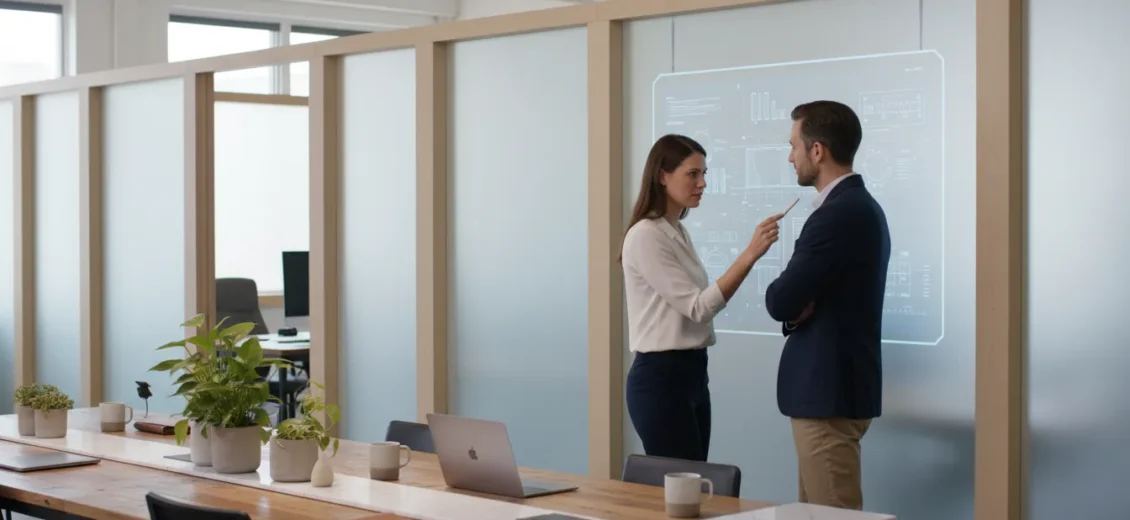
Table of Contents
- Introduction
- Assessing Your Workspace Objectives
- Physical Partitioning Methods
- Zoning: Partitioning by Function
- The Operational Reality: Traditional Office vs. Flex Space
- Case Studies in Practical Partitioning
- Success Takes More: The Business Development Layer
- Design Tips for Your Partitioned Space
- The Importance of Professional Management
- Community Connectivity Through Strategic Layouts
- Conclusion
- FAQ
Introduction
Imagine walking into an office where every conversation, keyboard click, and coffee machine whir echoes through the entire room. While the open-office trend was born from a desire for transparency and collaboration, many teams have found that a lack of physical and visual boundaries can lead to a fragmented workday. The challenge for modern leaders is not just finding a place to sit, but understanding how to partition office space in a way that balances the energy of a community with the necessity of deep focus.
In this post, we will explore the strategic methods for dividing a workspace, from physical modular solutions to psychological zoning. We will cover how to evaluate your team’s specific needs, the various types of partitions available, and how the right layout can foster both individual success and collective growth. Ultimately, we will see why a “Workspace with a Purpose” approach—one that combines a thoughtfully designed physical environment with a robust support system—is the most effective way to help your business thrive.
Whether you are a founder setting up your first headquarters or a department head looking to optimize a growing team’s workflow, partitioning is about more than just moving furniture. It is about creating a functional ecosystem where every square foot serves a specific goal.
Assessing Your Workspace Objectives
Before picking out dividers or rearranging desks, you must first define what you want your office to achieve. Partitioning is a tool to solve problems, so identifying those problems is the critical first step.
Identifying Workflow Patterns
Every team has a unique rhythm. A sales team might thrive in a high-energy environment with frequent verbal communication, whereas a software development team might require long periods of uninterrupted concentration. When you look at how to partition office space, start by auditing how your team spends their time. Do they spend 80% of their day on calls? Do they need frequent, informal huddles? Or do they require a professional setting to host investors and clients?
Balancing Privacy and Connectivity
The most common mistake in office design is choosing one extreme over the other: a completely open floor plan or a series of isolated cubicles. Effective partitioning seeks a middle ground. You want to provide enough privacy so that members feel ownership over their workspace and can work without constant visual distractions, but you also want to maintain the “Member Connection” that fuels innovation. At Workbox, we believe that high-quality member-to-member interactions are facilitated by spaces that allow people to see one another while still providing the infrastructure for focused work.
Scalability and Flexibility
For a growing business, your needs today will likely look different six months from now. Fixed walls and permanent installations can be a liability for a startup or an expanding team. When considering how to partition office space, prioritize modularity. The ability to reconfigure a layout without a major construction project is one of the primary benefits of a flexible workspace model.
Physical Partitioning Methods
Once you have a clear understanding of your goals, you can look at the physical tools available to divide your space. Each method offers different levels of acoustic and visual privacy.
Glass Partitions and Demountable Walls
Glass is one of the most effective tools for modern partitioning. It provides a physical barrier that helps dampen sound while maintaining a sense of openness and light. Using glass walls allows leaders to stay visible to their teams, reinforcing a culture of accessibility. Many of our private offices and suites utilize glass fronts to ensure that even while you are in a dedicated space, you remain a part of the larger professional community.
Modular Furniture and Storage Units
High shelving units, cabinets, and modular desks can serve as dual-purpose partitions. By placing a bookshelf perpendicular to a wall, you create a natural boundary between two functional areas without the need for a permanent structure. This approach is particularly useful for small teams transitioning out of shared spaces into their first dedicated area, as it provides a sense of a “home base” using the tools they already have.
Greenery and Biophilic Dividers
Using plants to partition space—often called biophilic design—offers more than just aesthetic appeal. Large floor plants or “living walls” can act as soft visual screens that reduce stress and improve air quality. While they do not offer acoustic privacy, they are excellent for defining the edges of a lounge area or a collaborative zone.
Mobile Screens and Acoustic Panels
For maximum flexibility, mobile partitions on wheels allow a space to transform in minutes. These can be used to shield a project team during a high-intensity sprint or to create a temporary backdrop for a video call. Acoustic panels, whether wall-mounted or freestanding, are also essential for managing the noise levels that naturally occur in a vibrant, productive environment.
Zoning: Partitioning by Function
Partitioning isn’t just about physical objects; it’s about “zoning”—the practice of dedicating specific areas to specific activities.
Collaborative Zones
These are the heart of the office, designed for the “Member Connection” we prioritize. These areas should be partitioned away from heads-down work zones to allow for natural conversation, weekly community-based engagements, and quarterly mixers. These spaces often include comfortable seating, whiteboards, and easy access to amenities like complimentary coffee and tea.
Focus Environments
Every professional needs a place to escape the buzz of the main office. Instead of a “quiet area,” a more effective strategy is to provide structural focus environments. This includes:
- Phone Booths: Small, sound-insulated booths for private calls or short bursts of concentration.
- Private Offices: For those who need a consistent, lockable space for their team.
- Meeting Rooms: Larger, reservable spaces for deep-dive strategy sessions.
Social and Transitional Zones
The areas around the kitchen, the entrance, or the mailing and packaging services act as natural collision points. By partitioning these with different flooring, lighting, or furniture styles, you signal to members that these are spaces for casual interaction and networking. At Workbox, these areas are designed to facilitate network building, connecting leaders and innovators across different industries.
The Operational Reality: Traditional Office vs. Flex Space
When businesses research how to partition office space, they often overlook the administrative and financial burden associated with traditional real estate.
The Traditional Office Burden
If you lease a conventional office, partitioning is your responsibility. This often involves:
- Hiring architects and contractors.
- Navigating local building permits.
- Negotiating long-term leases (often 7–10 years).
- Upfront capital expenditure for furniture, technology, and hardware.
- Ongoing maintenance, cleaning, and utility management.
The time and energy spent coordinating internet setup, janitorial services, and office supplies are hours taken away from your core business.
The Workbox Approach: Operational Support
We provide a seamless operational backbone that reduces this administrative burden. When you choose a private office or suite at Workbox, the partitioning is already handled. We’ve designed our spaces to offer the perfect balance of privacy and community.
Our members benefit from a bundled workplace environment that includes fast, secure Wi-Fi, professional cleaning, and a dedicated community manager to handle the day-to-day logistics. This allows you to focus on Member Success rather than office management. Furthermore, our flexible model requires a much lower upfront commitment—often just one month of rent with a two-month minimum—compared to the heavy deposits and multi-year ties of a traditional lease.
Case Studies in Practical Partitioning
The Growing Tech Team
Consider a small software team that has outgrown a coffee-shop setup. They need a space where they can code in silence but also have a place for daily stand-up meetings. In a traditional office, they would have to build out walls or use messy cubicles. At Workbox, that same team can move into a private suite. The glass walls provide the visual connection they want with the broader ecosystem, while the private door (which includes their company logo placement at no additional cost) provides the security and focus they need. They can use the on-site phone booths for individual calls and reserve private conference rooms for larger board meetings.
The Independent Consultant
For a consultant who spends half their time at client sites and the other half doing deep analysis, a floating membership offers the perfect “partitioned” lifestyle. They have 24/7 access to their home-base location for late-night work and can use any Workbox location nationwide during staffed hours (8:30 am–5:00 pm) when traveling. When they need to project a professional image for a client pitch, they can book a meeting room, which starts at $60/hr. This creates a predictable weekly rhythm without the overhead of a full office.
Success Takes More: The Business Development Layer
At Workbox, we know that a well-partitioned office is just the beginning. To truly grow, professionals need more than four walls; they need a platform for growth. This is where our Business Development layer comes in.
Beyond the physical space, we provide:
- Virtual Platform Access: Connect with a powerful network of other innovators and leaders.
- Purposeful Programming: Access to partnership events across the country and networking opportunities with capital partners and founders.
- Vendor Discounts: Cloud credits and other resources that reduce the cost of doing business.
For companies at the intersection of innovation and capital, we also offer connectivity to our ventures-related resources. While we make no guarantees of funding, the proximity to investors and leaders within the Workbox community creates a unique environment for business development that a standard office simply cannot match.
Design Tips for Your Partitioned Space
If you are currently in a private office or suite and want to further optimize your layout, consider these practical tips:
- Define the “Public” vs. “Private” Face: Place your desks so that monitors are not immediately visible from the door. This creates a psychological sense of privacy even in a smaller room.
- Use Light Strategically: Do not block natural light with tall, opaque partitions. Keep the “heavy” furniture against internal walls and use lower or transparent dividers near windows.
- Incorporate “Touchdown” Points: Even in a small partitioned space, have one chair or a small stool that isn’t a desk chair. This allows a colleague to pop in for a quick chat without it feeling like a formal meeting.
- Manage Cable Chaos: Nothing ruins the look and feel of a partitioned space like a tangle of wires. Use the built-in Ethernet and cable management features provided in your Workbox office to keep the environment clean and professional.
The Importance of Professional Management
One of the biggest advantages of a managed workspace like Workbox is that you have a dedicated community manager on-site from 8:30 am to 5:00 pm, Monday through Friday. When a partition needs adjusting, a light needs changing, or you need help setting up a meeting room for a high-stakes presentation, there is a professional there to assist.
This level of operational support is what allows our members to operate smoothly. We handle the “workspace” so you can handle the “purpose.” Whether it’s managing your mailing and packaging services (available to all members with a floating membership or higher) or ensuring the filtered water and complimentary coffee are always ready, we take the friction out of the workday.
Community Connectivity Through Strategic Layouts
The way an office is partitioned significantly impacts how people interact. At Workbox, we purposefully design our layouts to encourage what we call “high-quality member-to-member interactions.”
By partitioning the “work” zones from the “connection” zones, we ensure that when you are in the common areas, you are in a mindset to network, collaborate, and share ideas. Our weekly community-based engagements and quarterly mixers are held in these intentionally designed spaces, ensuring that community building doesn’t distract from the deep work happening in the private offices.
This holistic approach—combining space, community connectivity, and a layer of business resources—is why nearly two-thirds of our member companies choose Workbox as their corporate headquarters. They aren’t just looking for a place to put a desk; they are looking for a destination for leaders and innovators.
Conclusion
Learning how to partition office space is a vital skill for any leader looking to build a high-performing team. It requires a balance of physical boundaries, functional zoning, and an understanding of human psychology. While the process can be daunting in a traditional office setting—fraught with long leases, construction costs, and administrative headaches—the flexible workspace model offers a streamlined, professional alternative.
At Workbox, we believe that “Success Takes More.” It takes more than just a room; it takes a community, a support system, and a space designed with purpose. By choosing a workspace that has already integrated these partitioning strategies, you free yourself to focus on what matters most: your business.
From private offices and suites starting at $500/mo to desk memberships starting at $350/mo, we offer the flexibility to scale as you grow. With 24/7 access for members and a dedicated layer of business development resources, Workbox is the ideal partner for your professional journey.
Ready to see how a purposefully designed workspace can transform your workday? Explore our locations and find the perfect space for your team today. Reach out to our team with any questions—we are here to support your success.
FAQ
What are the best materials for partitioning an office without building permanent walls?
Modular glass partitions, freestanding acoustic panels, and tall shelving units are excellent non-permanent options. These allow you to divide space effectively while maintaining the flexibility to reconfigure the layout as your team grows. In a Workbox private office, many of these elements are already integrated, providing a professional look without the need for construction.
How does office partitioning affect employee productivity?
Thoughtful partitioning reduces visual and acoustic distractions, which is essential for deep work and focus. However, it’s important not to over-partition, as this can lead to isolation. A balanced approach that includes both private areas (like phone booths and offices) and open collaborative zones fosters a more dynamic and productive work environment.
Can I partition my office in a coworking space?
Yes, especially if you have a private office or suite. Members at Workbox often customize their dedicated spaces with their own storage units or internal layouts. We also provide company logo placement on the office door at no extra cost, helping you establish your brand identity within the partitioned space.
What is the most cost-effective way to get a partitioned office for a small team?
The most cost-effective method is choosing a flexible workspace like Workbox. Rather than paying for lease negotiations, furniture, and utility setups in a traditional office, you can move into a pre-partitioned, fully furnished private suite. With prices starting at $500/mo and significantly lower upfront commitments, it allows you to invest your capital into your business growth instead of office overhead.