skip to main content
 Strategic Tips to Maximize Small Office Space
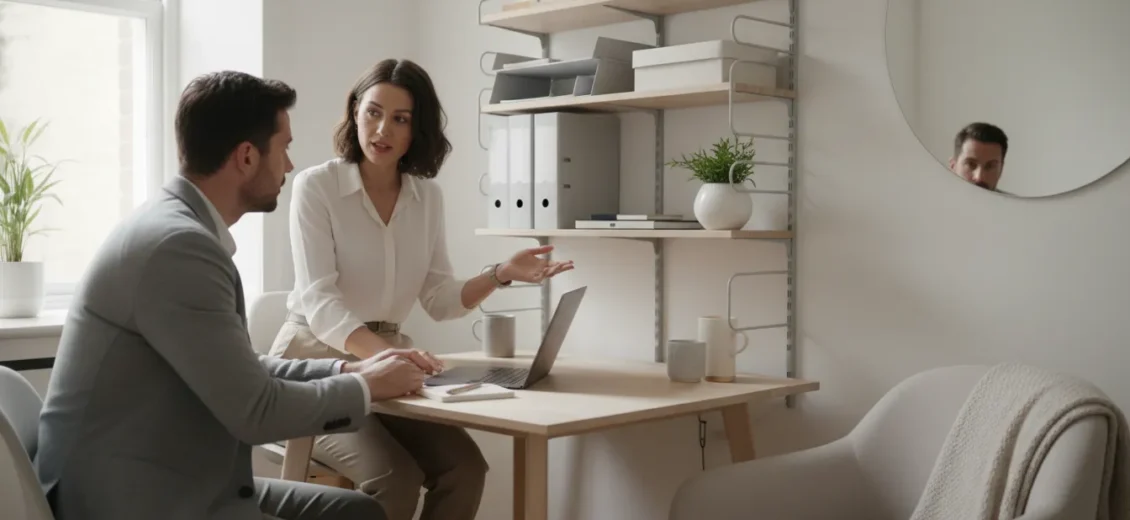
Table of Contents
- Introduction
- The Shift from Square Footage to Functional Value
- Strategic Layouts: Thinking Beyond the Desk
- Externalizing Non-Essential Functions
- Digital Efficiency: Clearing the Physical Clutter
- The Economics of Maximizing Space
- Creating a Purposeful Environment
- Practical Scenarios for Space Management
- Designing for Focus and Connection
- The Role of Technology in Space Optimization
- Long-Term Thinking: Flexibility as a Growth Strategy
- Operational Excellence and Member Success
- Conclusion
- FAQ
Introduction
Does your office feel like it is shrinking every time you add a new file folder, a second monitor, or a new team member? For many founders, consultants, and growing teams, the “small office” struggle is a daily reality. The common reaction is to look for a larger lease, but square footage is often not the problem—it is how that space is being utilized. Managing a compact workspace requires a shift in mindset from owning every square inch to accessing a broader ecosystem of resources.
In this guide, we will explore practical and strategic ways to maximize small office space, ranging from physical layout optimizations and digital transformation to the strategic advantage of externalizing non-essential functions. We will also discuss how the right workplace partner can turn a modest private office into a high-functioning headquarters by providing an operational backbone that traditional leases simply cannot match. By the end of this article, you will understand how to transform a limited footprint into a powerhouse of productivity, ensuring that your physical environment supports your Member Success.
The Shift from Square Footage to Functional Value
When people think about how to maximize small office space, they often start with furniture catalogs. However, the most effective optimization starts with a strategic audit of what “work” actually looks like for your team. In a traditional office setting, you are forced to pay for and manage “dead space”—areas like kitchenettes, hallways, server rooms, and reception areas that are only used a fraction of the time.
At Workbox, we view workspace through the lens of functional value rather than just raw square footage. Our approach, “Workspace with a Purpose,” recognizes that a private office should be a place for deep focus and confidential collaboration, while the “heavy lifting” of the office environment—like hosting guests, managing mail, and brewing coffee—should happen in shared, professionally managed areas. By moving these peripheral functions out of your immediate four walls, your small office suddenly feels twice as large.
The 80/20 Rule of Office Assets
Apply the Pareto Principle to your workspace: 80% of your daily tasks likely require only 20% of your equipment. For a small office, this means identifying the essentials and finding a home for the rest. If you have a printer that you use once a week, it should not be taking up prime real estate on your desk. This is where a bundled workplace environment becomes a competitive advantage. When you have access to unlimited printing and professional mailing and packaging services as part of your membership benefits, you can reclaim the corners of your office previously occupied by bulky machinery and shipping supplies.
Strategic Layouts: Thinking Beyond the Desk
The physical arrangement of a small office can either facilitate flow or create friction. To maximize the space, you must consider both the “visual weight” of the room and the actual path of movement.
Prioritizing the Vertical Plane
When floor space is at a premium, look up. Walls are the most underutilized asset in a small office. Floating shelves, wall-mounted organizers, and vertical filing systems can move clutter off the floor and desks, making the room feel more open. However, avoid over-cluttering the walls, as too much visual noise can increase cognitive load and decrease focus.
The Power of Clear Sightlines
A common mistake in small office design is placing large, opaque furniture in the middle of the room or blocking windows. To make a space feel larger, keep sightlines open. Use furniture with thin profiles and legs that allow light to pass underneath. At Workbox, our private offices and suites come furnished with desks and chairs designed to provide a professional aesthetic without overwhelming the footprint of the room. This allows members to move in and start working immediately without the logistical headache of measuring, buying, and assembling furniture.
Multi-Zonal Thinking
Even in a small office, you can create “zones.” For a consultant who spends half their day on calls and the other half on deep analysis, the office can be divided into a “tech-heavy” zone for computer work and a “minimalist” zone for reading or thinking. If the office is too small for multiple zones, utilizing external “zones”—like phone booths for private calls or a wellness room for a quick mental reset—allows you to maintain the integrity of your primary workspace.
Externalizing Non-Essential Functions
One of the most effective ways to maximize small office space is to stop using it for things that aren’t “work.” In a traditional lease, your office is also your breakroom, your waiting room, and your storage unit. This leads to a cluttered environment that hampers productivity.
Utilizing the Community Ecosystem
When you are a member at Workbox, your “office” extends far beyond your door. Think of the communal lounge as your secondary living room and the kitchen as your high-end breakroom.
- The Waiting Room: Instead of trying to fit a guest chair into a tight corner, utilize the professional reception and lounge areas. Your clients are greeted by a dedicated community manager, providing a high-touch experience that a small, isolated office could never offer.
- The Conference Room: Don’t let a large table sit empty 90% of the week in your private suite. Access to private conference rooms (starting at $60/hr for non-members, with varying inclusions for members) means you only use the space you need, when you need it.
- The Social Hub: High-quality member-to-member interactions should happen in spaces designed for them. By participating in weekly community-based engagements or quarterly mixers in the common areas, you keep your private office as a sanctuary for deep work.
Operational Support as a Space-Saver
Consider the physical space taken up by “office administration.” Boxes of paper, extra toner, cleaning supplies, and kitchen stocks all require storage. A major differentiator for Workbox is our Operational Support. We provide a seamless operational backbone that includes professional cleaning services and fully stocked coffee and tea stations. By removing the administrative burden of running an office, we also remove the physical burden of storing the supplies required to run it.
Digital Efficiency: Clearing the Physical Clutter
Physical clutter is often just a symptom of digital disorganization. To maximize small office space, you must aggressively pursue a “paper-light” or paperless environment.
The End of the Filing Cabinet
A single four-drawer filing cabinet can take up nearly nine square feet of floor space when you account for the drawer pull-out distance. By transitioning to secure cloud storage, you can eliminate the need for physical filing altogether. For members who still require some physical storage, many of our locations offer secure solutions that keep your files safe without cluttering your desk.
Streamlining Hardware
Multiple devices and tangled cords create “visual clutter” that makes a small room feel chaotic. Using cable management tools and integrated power strips can help. Furthermore, taking advantage of our fast, secure Wi-Fi and Ethernet ensures that you don’t need to house bulky networking equipment or servers within your private space.
The Economics of Maximizing Space
Maximizing small office space is not just about aesthetics; it is about capital efficiency. For a growing company, every dollar spent on “empty” square footage is a dollar taken away from hiring, marketing, or product development.
Traditional vs. Flexible Models
In a traditional office model, you might be forced into a 7–10 year lease with a minimum of six months’ rent as a deposit. You are then responsible for every line item:
- Internet setup and monthly fees.
- Janitorial services and trash removal.
- Furniture procurement and maintenance.
- Utilities and HVAC coordination.
When you factor in these costs and the time spent managing them, the “price per square foot” of a traditional office is much higher than it appears on paper.
At Workbox, we simplify this with a bundled approach. Whether you choose a private office starting at $500/mo or a desk membership starting at $350/mo, your “overhead” is essentially zero. You avoid the upfront commitment and the ongoing headache of coordinating vendors. This flexibility is why nearly two-thirds of our member companies choose Workbox as their corporate headquarters—they can maximize their budget and their focus by letting us handle the workplace operations.
Creating a Purposeful Environment
A maximized space is one where every element has a purpose. This is the core of our “Member Success” philosophy. We aren’t just providing a desk; we are providing a platform for professionals to connect, collaborate, and grow.
The Business Development Layer
Maximizing your space also means maximizing the opportunities that space provides. Through our Business Development resources, members gain access to:
- A powerful network of other innovators and leaders.
- Purposeful programming and access to partnership events across the country.
- A virtual platform containing vendor discounts and cloud credits.
- Introductions to potential capital partners and business leaders.
For a startup founder, a small office at Workbox is not a limitation—it is an entry point into a national ecosystem of support. The value of the connections made in our hallways often far outweighs the value of the physical square footage.
Practical Scenarios for Space Management
To see how these strategies work in the real world, let’s look at a few common scenarios our members face.
Scenario 1: The Boutique Professional Services Firm
Imagine a two-person legal or consulting team transitioning out of a home office or a shared desk environment. They need a private office for confidentiality but worry about feeling “cramped.” By choosing a Workbox private office, they get their own lockable space where their company logo is placed on the door at no additional cost.
Instead of cramming a printer, a coffee maker, and a guest sofa into their 150-square-foot room, they use the complimentary coffee in the lounge, the high-speed printers in the common area, and the professional meeting rooms for client signings. Their small office remains a clean, focused environment for drafting documents, while the rest of the 10,000+ square foot facility serves as their “firm’s” extended footprint.
Scenario 2: The Remote Team Leader
A manager for a distributed tech company needs a home base in a specific city to coordinate regional operations. They might opt for a Desk Membership (starting at $350/mo), which gives them 24/7 access to their home-base location. Because they don’t have a private office to store “stuff,” they are forced to be hyper-efficient. They use a locker for their peripherals and take advantage of the mailing and packaging services to handle hardware shipments to their remote team. Their “small space” is exactly one desk, but their operational capacity is that of a full-scale office.
Scenario 3: The Scaling Startup
For a founder who has just closed a seed round, the focus is on growth. They need an office that can accommodate four people today but might need to fit six in six months. By utilizing Workbox’s flexible options, they can start in a private suite and, as they grow, leverage our nationwide network. If the founder needs to travel to meet investors, their membership gives them 8:30am–5:00pm access to any other Workbox location across the country. They aren’t tethered to one small room; they have a national headquarters.
Designing for Focus and Connection
One of the biggest challenges of small office spaces is managing noise and privacy without feeling isolated. While we do not offer “quiet zones,” we provide the infrastructure for both high-energy collaboration and deep-focus work.
Privacy Solutions
If you need a quieter environment in a private space for a sensitive call or a deep-focus session, our phone booths and private offices are designed for exactly that. Many members find that by stepping out of their “main” office and into a phone booth for a 30-minute call, they mentally reset and return to their desk with more energy.
Intentional Community
Conversely, the “smallness” of an office can sometimes lead to a feeling of being siloed. We counteract this through intentional community connectivity. Our spaces are designed to facilitate network building. From the layout of our lounges to our purposeful programming, we ensure that you are never more than a few steps away from a potential collaborator or mentor. This “social square footage” is a vital part of maximizing your office experience.
The Role of Technology in Space Optimization
In the modern workplace, your technology stack is as much a part of your office as your desk. Maximizing space means ensuring your technology doesn’t create physical or mental clutter.
Seamless Connectivity
Nothing shrinks a room faster than the frustration of dropped calls or slow internet. We provide fast, secure Wi-Fi and Ethernet as a standard amenity, removing the need for you to manage your own routers or troubleshooting. This reliable infrastructure allows you to use cloud-based tools that replace physical hardware.
Virtual Resources
Our Business Development layer includes access to a virtual platform that provides resources beyond the physical walls of your office. From cloud credits that help you scale your digital infrastructure to vendor discounts that lower your operational costs, these resources ensure that your business can grow even if your physical footprint remains the same.
Long-Term Thinking: Flexibility as a Growth Strategy
The most important way to maximize small office space is to ensure that your space can evolve with you. Traditional leases are rigid; they are built for the company you are today, not the company you will be in three years.
Scalability without the Stress
At Workbox, we offer a range of memberships designed to grow with you:
- Floating Memberships (starting at $250/mo): Perfect for those who need a professional home base but don’t require a dedicated desk every day.
- Desk Memberships (starting at $350/mo): Ideal for individuals who want a consistent spot to leave their things and a 24/7 home base.
- Private Offices & Suites (starting at $500/mo): The ultimate solution for teams needing privacy, branding, and a dedicated headquarters.
If your team grows, you don’t have to break a lease and find a new building. You simply talk to your dedicated community manager about moving into a larger suite or adding additional desk memberships. This “elasticity” is the ultimate space maximization strategy.
Operational Excellence and Member Success
Ultimately, maximizing small office space is about removing the friction of the workday. When you don’t have to worry about whether the trash was taken out, if the internet is down, or who is going to sign for a package, you have more mental bandwidth to focus on what matters: your business.
Our Member Success philosophy is built on the idea that your workspace should be an asset, not a liability. By combining high-quality physical space with an enabling layer of resources and support, we help you operate more smoothly and effectively. We handle the workplace overhead so you can focus on building your legacy.
Conclusion
Maximizing small office space is an exercise in intentionality. It requires moving beyond the traditional “four walls” mindset and embracing a model that prioritizes functional value, operational support, and community connection. By externalizing non-essential functions, utilizing vertical space, and leveraging a bundled workplace environment like Workbox, you can transform even the smallest office into a highly efficient corporate headquarters.
Whether you are a solo consultant or a rapidly scaling startup, the right environment can be a catalyst for growth. At Workbox, we are committed to providing more than just a place to sit; we provide a “Workspace with a Purpose” where professionals can connect, collaborate, and thrive.
Ready to see how our flexible workspace solutions can help you maximize your potential? Explore our diverse locations across the country. Discover our range of membership options, and reach out to our team today to find your perfect fit. Your next stage of growth starts here.
FAQ
How can I make my small office feel bigger without moving?
To make a small office feel larger, focus on clearing sightlines and utilizing vertical space. Move non-essential items like printers and large filing cabinets to shared communal areas if your workspace provider allows it. At Workbox, we help maximize your space by providing shared amenities like kitchens, lounges, and printing stations, allowing your private office to remain a clutter-free zone for deep focus.
What are the best furniture choices for a small office?
The best furniture for small spaces has a minimal visual footprint. Look for desks with thin legs and open bases that allow light to pass through. Workbox private offices come furnished with desks and chairs that are both professional and space-efficient, so you don’t have to worry about the logistics of finding the right fit for your footprint.
How does a coworking membership help maximize small office space?
A coworking membership, particularly at a platform like Workbox, allows you to “externalize” the most space-consuming parts of an office. Instead of needing room for a breakroom, a reception area, or a conference room within your private lease, you gain access to these as shared resources. This means 100% of the square footage you pay for in your private office is dedicated to your primary work tasks.
Is it better to have a small private office or a dedicated desk?
This depends on your need for privacy and branding. A private office (starting at $500/mo) offers a lockable space and the ability to have your company logo on the door, which is ideal for teams or those handling sensitive information. A desk membership (starting at $350/mo) is a more cost-effective way to have a consistent “home base” while still enjoying all the communal benefits and operational support of the Workbox ecosystem.