skip to main content
 What is an Open Space Office? A Guide to Modern Workspaces

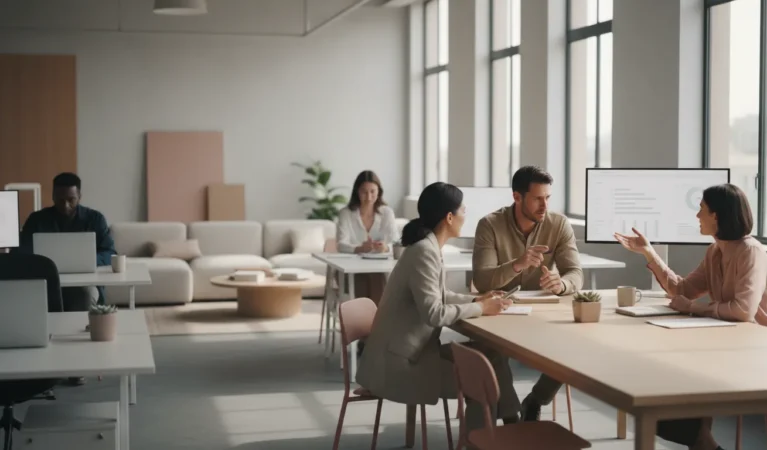
Table of Contents
- Introduction
- Defining the Open Space Office
- The Evolution of the Workplace: From Rows to Relationships
- Why Modern Businesses Choose Open Space
- Balancing Privacy and Openness: The Ecosystem Model
- The Operational Advantage of Flexible Open Spaces
- Member Connection: The Heart of the Open Environment
- Business Development and Professional Growth
- Common Considerations and Practical Solutions
- Choosing Your Path: Floating, Desk, or Suite?
- Conclusion
- FAQ
Introduction
Imagine walking into a workplace where the physical barriers to innovation have been removed. Instead of a maze of drywall and closed doors that segment departments into silos, you see a dynamic landscape of shared tables, collaborative lounges, and teams interacting in real-time. This is the visual essence of the open space office, but the concept runs much deeper than just the absence of walls. For many professionals, the open space office represents a shift from the isolated “cubicle farm” of the past toward a more integrated, high-energy environment designed for connection. However, as the workplace continues to evolve, the question for founders and leaders is no longer just “what is an open space office?” but rather “how can we use this environment to drive actual business success?”
In this article, we will define the open space office, explore its historical roots, and examine how it has transformed from a simple cost-saving measure into a strategic asset for growth. We will look at the practical benefits of this layout, address common considerations with actionable solutions, and explain why a successful workspace requires more than just a desk and an internet connection. Our goal is to provide you with a comprehensive understanding of how a balanced open environment—supported by a robust operational backbone and a connected community—can serve as the headquarters for your company’s next stage of growth. At Workbox, we believe that an open space office should be “Workspace with a Purpose,” where the environment is specifically engineered to foster Member Success through connection, support, and professional resources.
Defining the Open Space Office
At its most fundamental level, an open space office is a workplace layout that minimizes or eliminates partitioned rooms and individual offices in favor of a shared, open floor plan. In this setting, employees from various levels and departments work in the same large room, typically at shared “bench” desks or long tables. The design philosophy is rooted in the idea that removing physical barriers encourages spontaneous communication, flattens organizational hierarchies, and creates a sense of collective energy.
However, the modern definition of an open space office has matured. It is no longer just a big room filled with desks. A sophisticated open space office, such as those we cultivate at Workbox, is an ecosystem. It includes a variety of zones designed for different types of work: phone booths for private calls, meeting rooms for collaborative sessions, and wellness rooms for personal moments. While the primary workspace remains open to facilitate “Member Connection,” the most effective versions of this layout provide the necessary infrastructure to support deep work and privacy when needed.
The Evolution of the Workplace: From Rows to Relationships
To truly understand what an open space office is today, it is helpful to look at where it began. The concept has undergone several major shifts over the last century.
The Early Industrial Model
In the early 20th century, offices were often designed like factories. Cluttered rows of desks faced a supervisor’s office, emphasizing top-down control and repetitive tasks. There was little thought given to “community” or “innovation”; the goal was purely transactional.
The Rise of the “Office Landscape”
In the 1950s and 60s, a German concept known as Bürolandschaft (office landscape) emerged. This was the first real attempt to break away from rigid rows. It used plants and curved screens to create a more organic flow, aiming to improve communication. While it was more human-centric, it still lacked the technological and professional support layers that modern teams require.
The Cubicle Era and the Open Backlash
By the 1980s, the “Action Office” had devolved into the cubicle. While intended to give workers privacy, it often resulted in a sense of isolation. This led to the massive swing back toward open plans in the early 2000s, driven largely by the tech industry’s desire for transparency and speed. However, early versions of these modern open offices were often too loud and lacked privacy, leading to the “open office backlash.”
The Modern Integrated Workspace
Today, we are in the era of the integrated workspace. We have learned that “open” shouldn’t mean “unstructured.” At Workbox, we take this history into account by offering a “Workspace with a Purpose.” Nearly two-thirds of our member companies choose us as their corporate headquarters because we provide a balance: the energy of an open floor plan with the professional stability of Private Offices & Suites. We recognize that Success Takes More than just a seat; it requires an enabling layer of resources that turn a physical location into a business-development engine.
Why Modern Businesses Choose Open Space
Why do founders, innovators, and investors gravitate toward open environments? It isn’t just about modern aesthetics; there are tangible business advantages to this model.
Spontaneous Collaboration and Innovation
In a traditional office, if you want to talk to someone in another department, you often have to schedule a meeting or walk through several doors. In an open space office, “collisions” happen naturally. A quick question over a cup of coffee in the kitchen or a conversation across a shared table can spark an idea that leads to a new product feature or a partnership. This is what we call high-quality member-to-member interaction.
Cultural Transparency
An open layout promotes a sense of “we’re all in this together.” When leadership is visible and accessible in the open space, it builds trust and streamlines communication. It breaks down the “us vs. them” mentality that can plague larger organizations. At Workbox, this transparency is extended through our community-based engagements, where members from different companies can easily interact, share advice, and build professional networks.
Flexibility and Scalability
For a growing team, a traditional lease is often a cage. You might sign a 7-to-10-year lease on a space that is too big today but will be too small in three years. An open space model, particularly within a flexible workspace platform, allows for rapid scaling. You might start with a few Floating Memberships and, as your team grows, transition into a dedicated Desk Membership or a Private Office, all while staying within the same supportive ecosystem.
Balancing Privacy and Openness: The Ecosystem Model
One of the most frequent questions we hear regarding what an open space office is involves the concern over distractions. This is a valid consideration. A “one-size-fits-all” open room can indeed become noisy. The solution is not to go back to cubicles, but to implement an ecosystem model.
At Workbox, we solve for this by offering a variety of workspace types that complement the open environment:
- Private Offices & Suites: These provide a home base for teams who need their own four walls for sensitive work or consistent team collaboration, while still having immediate access to the open community and amenities.
- Phone Booths: Essential for those quick client calls or focus sessions without having to book a full meeting room.
- Meeting Rooms: Professional spaces designed for presentations and team huddles, available to be booked as needed.
- Wellness Room: A dedicated, private space for members to take a moment for themselves.
By providing these options, we ensure that the open space remains a place of connection, while private spaces remain available for concentration. For a consultant juggling client meetings and deep work, reserving a professional meeting room when needed—while using a membership for focused work—creates a predictable and professional weekly rhythm.
The Operational Advantage of Flexible Open Spaces
When considering a traditional office versus a flexible open space, the operational burden is often the deciding factor. In a traditional office model, a business owner is responsible for every single detail of the workplace environment.
Reducing Administrative Burden
In a conventional office, you are the office manager, the IT support, and the procurement officer. You have to coordinate:
- Fast, secure Wi-Fi and Ethernet setup
- Professional cleaning services
- Mailing and packaging services
- Furniture procurement (desks and chairs)
- Utilities and lease negotiations
- Stocking the kitchen with coffee, tea, and water
When you choose a flexible open space like Workbox, we provide a “seamless operational backbone.” This bundled workplace environment reduces day-to-day office administration, allowing you to focus entirely on your business. We handle the cleaning, the internet, and the coffee, and even include your company logo placement on your office door at no additional cost if you opt for a private space.
Lower Upfront Commitment
Traditional leases typically require a minimum of 7 to 10 years and significant upfront capital for build-outs and deposits. In contrast, our model emphasizes lower upfront commitment. This financial agility is crucial for startups and established firms alike, as it preserves capital for hiring, marketing, and product development rather than sinking it into real estate.
Member Connection: The Heart of the Open Environment
A great open space office is more than just furniture; it is the people within it. At Workbox, we differentiate our spaces through “Member Connection.” We don’t just provide a place to sit; we provide a platform for professionals to connect, collaborate, and grow.
Purposeful Programming
Connectivity doesn’t always happen by accident. We facilitate high-quality member-to-member interactions through:
- Weekly Community-Based Engagements: These touchpoints help members stay integrated with the local community.
- Quarterly Mixers: Larger events designed to facilitate network building across the entire Workbox ecosystem.
- Partnership Events: Access to events across the country that support professional connection and business-development opportunities.
Dedicated Community Managers
Each Workbox location is supported by a dedicated community manager. This person isn’t just a receptionist; they are a bridge-builder. They help introduce members to one another, manage the operational needs of the space, and ensure that every professional has what they need to succeed.
Business Development and Professional Growth
For many, the open space office is a gateway to a broader network. At Workbox, we have institutionalized this through our Business Development layer. We believe that “Success Takes More” than just a beautiful office. It requires access to resources that help a business scale.
Our members gain access to a virtual platform and business-development resources that are often unavailable in a traditional office setting. This includes:
- Programming with Capital Partners: Networking events with investors and business leaders.
- Vendor Discounts and Cloud Credits: Practical tools to reduce the cost of doing business.
- A Powerful Network of Innovators: The ability to tap into a community of other leaders who are facing similar challenges.
While we do not guarantee funding outcomes, we do provide the connectivity. For a small team transitioning out of coffee shops, a private office within our community gives them the consistency and privacy they need for calls while keeping them plugged into a network of potential partners and mentors.
Common Considerations and Practical Solutions
When researching “what is open space office,” you will likely find discussions regarding noise and privacy. Rather than viewing these as deal-breakers, we frame them as considerations that can be managed through smart design and professional etiquette.
Managing Noise and Distractions
The most effective way to manage noise is through “a quieter environment in a private space.” Instead of labeling specific areas as “quiet zones,” we provide phone booths and private offices. This allows members to self-regulate. If you have a sensitive call, you use a booth. If you need a week of deep focus, you book a private office or a meeting room.
Ensuring Security
Security is a top priority in a shared environment. We provide secure Wi-Fi and Ethernet, and our locations are staffed during standard hours (8:30 am to 5:00 pm, Monday through Friday). Members with Floating, Desk, or Private Office memberships enjoy 24/7 access to their home-base location, ensuring they can work on their own schedule with peace of mind.
Professionalism and Client Experience
Some worry that an open space might not look “professional” to clients. On the contrary, a bustling, high-design Workbox location often creates a more impressive first impression than a sterile, empty traditional office. When you bring a client into a Workbox meeting room, they see a vibrant community of innovators, which reflects positively on your company’s energy and growth.
Choosing Your Path: Floating, Desk, or Suite?
An open space office is not a singular product; it is a spectrum of options. Depending on your business stage, one of the following may be the best fit:
Floating Membership
- What it is: Access to the open seating areas on a first-come, first-served basis.
- Who it’s for: Individual contributors, freelancers, or remote workers who need a professional environment but don’t require a permanent desk.
- Price point: Starting at $250/mo (varies by location).
- Benefit: Maximum flexibility and access to the full Workbox community and Business Development resources.
Desk Membership
- What it is: A dedicated desk that is yours and yours alone, located within the open space.
- Who it’s for: Professionals who want a consistent “home base” to leave their belongings (like a keyboard or files) but still want the energy of the open floor.
- Price point: Starting at $350/mo (varies by location).
- Benefit: Combines the permanence of an office with the connectivity of an open plan.
Private Offices & Suites
- What it is: Fully furnished, enclosed spaces that can accommodate teams of 1 to 50+ people.
- Who it’s for: Growing teams and established companies that require privacy and a branded presence (including logo placement).
- Price point: Starting at $500/mo (varies by location).
- Benefit: The “best of both worlds”—private focus for the team and an open community just outside the door.
Day Pass & Meeting Rooms
- What it is: Short-term access for those who need a professional workspace for a few hours or a day.
- Price point: Day passes are $35/day; meeting rooms start at $60/hr.
- Access: Staffed hours are 8:30 am–5:00 pm (Mon–Fri). For short-term needs, our Day Pass option provides drop-in access and amenities.
Conclusion
So, what is an open space office? It is a workplace strategy that prioritizes connection, transparency, and operational efficiency over the rigid silos of the past. It is an environment that, when supported by a platform like Workbox, becomes a “Workspace with a Purpose.” By integrating the energy of an open floor plan with the practical support of private offices, meeting rooms, and a dedicated Business Development layer, we help our members do more than just work—we help them succeed.
Whether you are a solo consultant looking for a professional community, a founder ready to move your team into their first headquarters, or an investor seeking a destination for your portfolio companies, the modern open space office offers the flexibility and resources necessary for today’s professional landscape. Success takes more than just a desk; it takes a community, an operational backbone, and a network of innovators.
Are you ready to see how a “Workspace with a Purpose” can help your business grow? We invite you to explore our locations across the country and experience the Workbox difference firsthand.
View our locations and find your new headquarters today.
Book a tour of a nearby Workbox location.
FAQ
What is the main benefit of an open space office?
The primary benefit of an open space office is the facilitation of “Member Connection.” By removing physical walls, the layout encourages spontaneous collaboration, faster communication, and a more vibrant company culture. When supported by an operational backbone like Workbox, it also significantly reduces the administrative burden of running an office, allowing you to focus on business growth.
Is an open space office too noisy for focused work?
While open spaces are designed for interaction, a high-quality workspace provides solutions for focus. At Workbox, we offer phone booths for private calls, “a quieter environment in a private space” like our private offices and suites, and bookable meeting rooms. This ecosystem approach ensures you have the energy of the open space when you want it and the privacy you need for deep work.
How does an open space office compare in cost to a traditional office?
An open space office within a flexible workspace platform typically offers a much lower upfront commitment. Traditional offices often require 7-to-10-year leases and significant setup costs for internet, furniture, and utilities. A flexible workspace bundles these “operational support” essentials into a single membership fee, often with a commitment as short as a few months, providing much-needed financial agility.
Can I get a mailing address with an open space membership?
Yes, mailing and packaging services are available to Workbox members holding a Floating Membership or higher. This allows you to have a professional business address for your company. Please note that specific details and availability for mailing services vary by location and membership type, so it is always best to check with the local community manager.