skip to main content
 Are Space Heaters Illegal in Office Buildings?
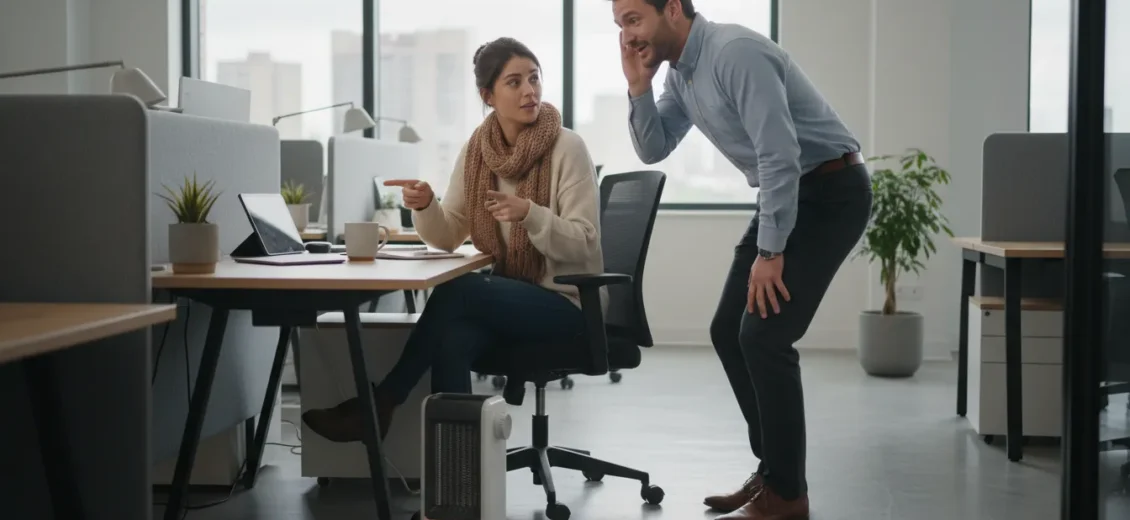
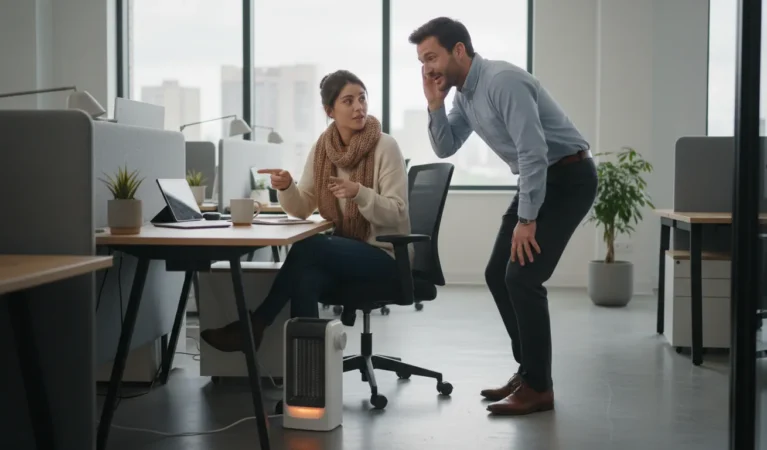
Table of Contents
- Introduction
- Understanding the Legal Landscape: Laws vs. Codes
- The Physical Risks: Why Space Heaters Are Regulated
- The Psychology of Office Temperature
- Alternatives to Space Heaters in the Workplace
- How Workbox Solves the Office Climate Challenge
- The Risks of Ignoring the Rules
- Creating a Comfortable Culture Without Hazards
- Navigating Specific Office Scenarios
- The Future of Office Comfort and Safety
- Conclusion
- FAQ
Introduction
Have you ever found yourself sitting at your desk, surreptitiously reaching for a small plastic device tucked under your chair to fight an office draft? The “office thermostat war” is a legendary staple of professional life. However, before you plug in that portable heater, a critical question arises: Are space heaters illegal in office buildings? While there is no single federal statute that bans them, the reality is governed by a complex web of local fire codes, insurance policies, and lease agreements that often make these devices a significant liability.
This guide navigates the legal and safety landscape of personal heating. We will explore why building managers prohibit them, OSHA’s stance on office temperatures, and how fire risks influence corporate policy. Beyond the legalities, modern workspace strategies centered on professional management and Member Success can eliminate the need for these makeshift solutions entirely. Understanding these nuances is the first step toward a safer, more productive work environment.
Quick Answer: There is no federal law that outright bans space heaters, but local fire codes, commercial lease terms, and insurance regulations often make them effectively off-limits in office buildings due to the significant fire and electrical risks they pose.
Understanding the Legal Landscape: Laws vs. Codes
When people ask if space heaters are “illegal,” they are usually looking for a specific law. In the United States, there is no federal law explicitly banning the use of a space heater in a commercial building. However, the term “illegal” often extends to the violation of municipal fire codes and building regulations, which carry the weight of law at the local level.
| Category | Governance | Practical Effect |
|---|---|---|
| Local Fire Codes/NFPA | Municipal standards based on NFPA 1 (Fire Code) and NFPA 101 (Life Safety Code). | Strict requirements—such as automatic shut-off and a three-foot clearance from all combustible materials—often make compliance physically impossible in tight office spaces. |
| OSHA General Duty Clause | Federal mandate requiring employers to provide a workplace “free from recognized hazards.” | Because heaters are leading causes of fires, safety officers often interpret this clause as a mandate to prohibit them. Violations can lead to company citations and fines. |
| Lease Agreements and Insurance Liability | Contractual rules between tenant and landlord, plus insurance provider stipulations. | Most commercial leases prohibit high-draw electrical appliances. Using them can void insurance claims and leave business owners with massive financial liability if a fire occurs. |
The Physical Risks: Why Space Heaters Are Regulated
The restrictions on space heaters are rooted in significant physical risks that can jeopardize the safety of an entire building.
Electrical Overload and Circuit Failures
Most office buildings are wired for standard technology like laptops and monitors. A typical space heater draws about 1,500 watts of power. In older buildings, a single 20-amp circuit might be shared across several desks. When one person plugs in a heater, it consumes the majority of that circuit’s capacity; if a second person does the same, the breaker will trip.
Frequent circuit tripping can damage sensitive electronic equipment and cause electrical fires within the walls. At Workbox, we prioritize operational support by ensuring our infrastructure is managed by professionals who understand these loads, providing a seamless backbone that helps members operate without the fear of power outages.
The Fire Hazard Reality
Portable heaters are designed for temporary, supervised use in open areas. In an office, they are often tucked under desks where they can contact wastebaskets, curtains, or loose papers. If left on overnight, they become a silent threat in an empty building.
The danger is compounded when users plug these devices into power strips or extension cords. Most power strips are not rated for the sustained high-amperage draw of a heater, leading to melting plastic and electrical arcs.
Key Takeaway: Portable heaters are risky in offices because shared circuits, under-desk placement, and the use of unrated power strips can turn a simple comfort fix into a major electrical or fire hazard.
The Psychology of Office Temperature
If space heaters are dangerous, why are they everywhere? The answer lies in the difficulty of balancing traditional office HVAC systems for everyone’s biological preferences.
Productivity and Comfort
Environmental comfort is directly linked to productivity. When a team member is too cold, cognitive focus decreases as the body redirects energy to maintain its core temperature. Rather than hazardous equipment, the solution is a workspace that values operational excellence. At Workbox, our staff ensures common areas and private offices are maintained at comfortable levels, reducing the friction of “thermostat battles.”
The “One Size Fits All” Problem
Traditional office buildings often use centralized HVAC systems controlled by an off-site landlord, leading to zones that are freezing or stifling. In a flexible workspace model, on-site community managers can address temperature issues in real-time rather than through a bureaucratic ticketing system.
Alternatives to Space Heaters in the Workplace
If your office is consistently cold but heaters are prohibited, there are safer ways to manage your comfort.
Layering and Personal Attire
Dressing in layers is the most effective way to manage personal temperature. Keeping a professional sweater or blazer at your desk is a common strategy. Some professionals opt for heated vests or wraps that run on small, low-voltage batteries, which are generally safer than plug-in space heaters.
Improving Circulation and Layout
“Cold spots” are often the result of poor air circulation. Moving a desk away from a direct vent or drafty window can make a significant difference. In our private offices, members have the flexibility to arrange furnished desks and chairs to find the warmest spot in their space.
Utilizing Community Spaces
One benefit of a coworking environment is that you aren’t tethered to one desk. If your office feels chilly, you can move to a communal lounge or use a day pass to drop in where the amenities and seating best fit your needs.
Quick Summary:
- Legal Status: There is no federal ban, but local fire codes and lease terms often prohibit space heaters.
- Risks: The main dangers are electrical circuit overloads and fire hazards from poor placement.
- Safer Options: Use layers, adjust your office layout, or utilize low-voltage heated apparel.
- Managed Solutions: Professionally managed spaces ensure consistent HVAC, reducing the need for personal heaters.
How Workbox Solves the Office Climate Challenge
At Workbox, we recognize that the physical environment is the foundation for your business growth. We take the administrative burden of running an office off your plate.
Professional Operational Support
In a traditional office, you coordinate everything from HVAC maintenance to fire safety. At Workbox, we provide a bundled environment where we handle the “operational backbone.” We ensure the building complies with all fire codes and that climate systems function optimally, so you don’t have to worry about whether a heater is “illegal.”
A Focus on Member Success
Our philosophy ensures high-quality interactions happen naturally in a comfortable environment. Nearly two-thirds of our member companies choose us as their corporate headquarters because they value this attention to detail. We manage the complexities of building safety to provide a worry-free home for your business.
The Risks of Ignoring the Rules
Ignoring fire codes or lease agreements can have severe consequences beyond a simple reprimand.
Potential for Eviction
Repeated safety violations can be grounds for lease termination. For a growing company, an unexpected eviction is a catastrophic distraction. In a professional flex space, we work with members to keep them compliant and comfortable, ensuring 24/7 access without safety-related shutdowns.
Personal and Professional Liability
If an unapproved space heater causes a fire, your company’s liability insurance may not cover the damage. This is a risk most leaders cannot afford. Opting for a managed space delegates that risk to experts who specialize in workplace strategy.
Creating a Comfortable Culture Without Hazards
The “cold office” problem is often a symptom of poor communication. In traditional offices, employees may feel they have no agency over their environment.
Open Communication Channels
In a Workbox location, your dedicated community manager is your direct line to the building’s operations. If a suite is cold, we want to know so we can solve the root cause—such as rebalancing an air handler—rather than masking it with a dangerous device.
Purposeful Programming and Community
A workspace should be more than a place to sit. Our purposeful programming and access to partnership events support greater professional connection. We provide the coffee, tea, and filtered water to keep you warm from the inside out, while providing the network to keep your business growing.
Navigating Specific Office Scenarios
Scenario 1: The Early-Stage Founder
A founder moving a team into their first Private Office (starting at $500/mo) might be tempted to bring comforts from home. However, by choosing a professional ecosystem, they can focus on business development resources and networking rather than fire safety checklists.
Scenario 2: The Established Consultant
A consultant with a Desk Membership (starting at $350/mo) benefits from a layout that allows them to move from a kitchen to a phone booth or a meeting room (starting at $60/hr). Each space is professionally managed for temperature, providing a predictable rhythm to the workday.
The Future of Office Comfort and Safety
The demand for “Workspace with a Purpose” is growing. Professionals are moving away from the “gray boxes” of the past toward managed, flexible, and safe environments.
Integrated Smart Systems
Modern buildings increasingly use smart HVAC systems that adjust in real-time based on occupancy. Combined with operational oversight, this technology is making the portable space heater a relic of the past.
The Value of Professional Management
Joining Workbox lifts the burdens of facility management. You receive fast Wi-Fi, unlimited printing, and professional cleaning included in your membership. By choosing a professional workspace, you prioritize safety, compliance, and growth.
Conclusion
So, are space heaters illegal in office buildings? While you won’t likely be arrested, you are very likely violating local fire codes, insurance policies, and your lease agreement. The fire risks and electrical burdens make them a significant hazard.
Rather than struggling with a dangerous environment, look at your workspace strategically. Workbox offers a comprehensive solution by providing the operational backbone and a community-centered atmosphere. Don’t let your team’s productivity freeze; experience the Workbox difference where your comfort is our standard.
Ready to find a workspace that works for you? Explore our locations, see our range of membership options, and reach out today to schedule a tour.
FAQ
Is it an OSHA violation to have a space heater in my office?
OSHA does not have a specific regulation that bans space heaters, but they can issue citations under the “General Duty Clause” if a heater is deemed a fire or electrical hazard. Most OSHA inspectors will look for whether the heater is UL-listed, plugged directly into a wall outlet, and kept away from combustible materials. If those conditions aren’t met, it could be considered a violation.
Can my landlord evict me for using a space heater?
Most commercial leases contain clauses that prohibit the use of high-draw electrical appliances or anything that poses a fire risk. If your landlord or the building’s fire marshal has issued warnings about a space heater and you continue to use it, you could be in breach of your lease. This can lead to fines or, in extreme cases, the termination of your lease agreement.
Why do fire marshals focus so much on space heaters during office inspections?
Space heaters are one of the leading causes of structure fires in commercial buildings. Fire marshals focus on them because they are often used incorrectly—plugged into power strips, left on overnight, or placed too close to flammable items like paper and furniture. Their goal is to ensure the life safety of everyone in the building, and portable heaters are a high-risk factor.
What are the best alternatives to keeping warm if I can’t use a space heater?
If your office is cold, the safest alternatives include dressing in layers, using a personal heated wrap (which uses much less power), or moving your workstation away from drafts. However, the best long-term solution is to work in a professionally managed space like Workbox, where our on-site staff can address HVAC issues directly and ensure the environment is kept at a comfortable, productive temperature for all members.