skip to main content
 Maximizing Productivity: How to Organize Small Office Space
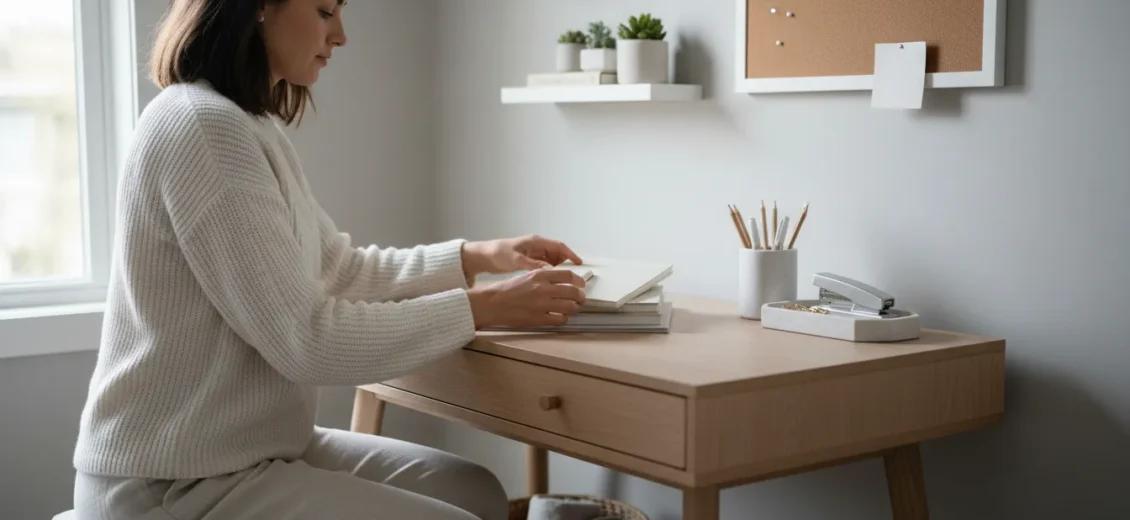
Table of Contents
- Introduction
- The Impact of Physical Organization on Mental Performance
- Step 1: Ruthless Decluttering and the Essentialist Mindset
- Step 2: Maximizing the Vertical Plane
- Step 3: Establishing Functional Zones
- Step 4: Mastering the Paperless Transition
- Step 5: Professional Operational Support vs. DIY Management
- The Workbox Approach to Member Success
- Practical Scenarios for Workspace Evolution
- Strategic Layout for Small Office Suites
- Member-Exclusive Amenities that Support Organization
- Access and Flexibility
- Conclusion
- FAQ
Introduction
Does your current workspace feel like a high-performance engine room or a cluttered storage closet? For many founders and professionals, the physical environment is often the most overlooked factor in their daily performance. We have all experienced that specific moment of friction: you are on a tight deadline, but you cannot find the right adapter, a crucial document is buried under a stack of mail, or your desk is so crowded that there is no room to actually think. When you are operating in a limited footprint, these small frustrations do not just slow you down—they compound, draining your mental energy and distracting you from the high-level work that actually moves the needle.
The purpose of this guide is to provide a comprehensive strategy for how to organize small office space to enhance focus, professionalism, and operational efficiency. We will move beyond basic “cleaning tips” to explore how your environment serves as a foundation for your professional growth. From vertical storage solutions and digital transformation to the strategic advantage of moving into a managed professional environment, we will cover the practical steps needed to reclaim your space. At Workbox, we believe that workspace should have a purpose. Organization is not merely about aesthetics; it is a strategic lever for Member Success, designed to reduce the administrative burden of your day-to-day operations so you can focus on scaling your business.
The Impact of Physical Organization on Mental Performance
The relationship between a clear workspace and a clear mind is well-documented. In a small office, every square inch carries a heavy weight. When a space is disorganized, the brain is constantly processing irrelevant visual stimuli, which can lead to increased cognitive load and decreased focus. This is particularly critical for leaders and innovators who need to switch between deep, focused work and high-level networking.
A chaotic environment often signals a chaotic operation. For a professional, your office is also a reflection of your brand. Whether you are hosting a client in a private suite or hopping on a video call, the background and the order of your space communicate your attention to detail. By mastering how to organize small office space, you are not just tidying up—you are building a platform for professional presence.
Step 1: Ruthless Decluttering and the Essentialist Mindset
The first step in any organizational overhaul is to recognize that you cannot organize your way out of having too much stuff. In a small office, the “just in case” mindset is your greatest enemy. Every item in your office should either be essential for your daily tasks or contribute significantly to your professional inspiration.
The One-Year Audit
Go through every drawer, shelf, and surface. If you have not used an item in the last year, it is likely taking up valuable real estate that could be better utilized. This applies to everything from old cables and legacy hardware to promotional materials from past events.
Minimalist Supply Management
Many professionals are guilty of hoarding office supplies. You do not need five different types of staplers or a decade’s worth of pens. Identify your “power tools”—the high-quality items you use every single day—and clear out the rest. By narrowing your collection to the items you actually need, you reduce the time spent searching through drawers and create a more streamlined workflow.
Step 2: Maximizing the Vertical Plane
When floor space is at a premium, the most underutilized asset is the wall. Traditional office layouts often rely on bulky cabinets that eat up square footage. To truly master how to organize small office space, you must look upward.
Floating Shelves and Wall Systems
Installing shelves above your desk or along the perimeter of your office allows you to move secondary items—like reference books, decorative elements, or backup hardware—off your primary work surface. This keeps your immediate “strike zone” clear for the task at hand.
Pegboards and Grid Walls
For those who need frequent access to tools or cables, a modular pegboard system can be a game-changer. It allows you to customize your storage as your needs change. Instead of tangling cables in a drawer, you can hang them neatly, making it effortless to grab what you need for a meeting or a mobile work session.
Step 3: Establishing Functional Zones
Even in a very small office, it is possible to create distinct zones for different types of work. This “zoning” helps your brain transition between tasks more effectively.
The Focus Zone
Your primary desk should be reserved for deep work. Keep this surface as clear as possible. We recommend a “reset-ready” policy: at the end of every workday, take five minutes to clear your desk. This ensures that when you arrive the next morning, you are met with a clean slate rather than yesterday’s leftovers.
The Technical Zone
Designate a specific area for your “operational backbone”—your printer, charging stations, and backup drives. By grouping these items together, you keep the associated cables and noise away from your focus area.
Privacy and Professionalism
If you are working in a shared or flexible environment, utilizing phone booths or private meeting rooms for calls is a key part of your organizational strategy. It keeps your primary desk from becoming a cluttered site of overlapping activities and provides the privacy needed for confidential business development conversations. For meetings and client gatherings, Workbox meeting and event spaces can provide a more professional setting without overloading your office.
Step 4: Mastering the Paperless Transition
Paper is the primary source of clutter in the modern office. To organize a small space effectively, you must transition as much as possible to a digital format.
The Digital Filing Cabinet
Use high-quality scanning tools to digitize receipts, contracts, and notes immediately. Once a document is in your secure cloud storage, the physical copy can often be recycled. This eliminates the need for bulky filing cabinets, which are one of the biggest space-consumers in traditional offices.
Designated Inboxes
For the paper that must remain physical, use a tiered inbox system. Categories like “Action Needed,” “To File,” and “Read” prevent mail and documents from becoming a monolithic stack on your desk. The goal is for nothing to stay in these temporary spots for more than a few days.
Step 5: Professional Operational Support vs. DIY Management
One of the most significant challenges in organizing a small office is the “hidden” work required to keep it running. Coordinating internet setup, cleaning services, utilities, and supply replenishment takes time away from your core business.
This is where the contrast between a traditional office and a managed workspace becomes clear. In a traditional lease, you are the office manager, the IT department, and the janitor. These burdens do not just take up physical space; they take up “mental space.”
The Burden of Traditional Office Overhead
When managing your own small office, the operational distractions are constant. You might spend hours negotiating a lease, which industry estimates suggest can cost between $2,000 and $10,000 in time and legal fees. Then there is the ongoing coordination of services:
- Janitorial Services: Estimated at $3,800–$4,000 per month for professional cleaning.
- Internet and Tech: Estimated at $200–$900 per month, plus the time spent troubleshooting connectivity.
- Utilities and Maintenance: Constant attention to heating, cooling, and repairs.
By choosing a flexible workspace, these administrative burdens are removed from your plate. At Workbox, our Operational Support serves as a seamless backbone for your business. We handle the furniture, the cleaning, the high-speed Wi-Fi, and the complimentary coffee and tea, allowing you to focus entirely on your professional goals. Explore Workbox workspace memberships to compare private offices, suites, desk memberships, and floating memberships.
The Workbox Approach to Member Success
At Workbox, we believe that success takes more than just a desk and a chair. Our philosophy is built around “Workspace with a Purpose,” where organization and community connectivity go hand-in-hand. When you choose a Workbox membership, you are not just renting a square foot of space; you are gaining access to a platform designed for growth.
Member Connection and Business Development
Organization is about more than just physical items; it is about organizing your professional life for maximum opportunity. Our spaces are intentionally designed to facilitate high-quality member-to-member interactions. Through weekly community-based engagements and quarterly mixers, we provide the architecture for you to build a powerful network of innovators and leaders. See Workbox member benefits and included amenities.
Our Business Development layer provides members with access to a virtual platform, business-development resources, and purposeful programming. This might include networking events with capital partners or partnership events across the country that support greater professional connection. For the nearly two-thirds of our member companies who use Workbox as their corporate headquarters, this environment provides a level of professional credibility and connectivity that is impossible to achieve in a DIY small office. Members can also explore upcoming Workbox events and community gatherings.
Practical Scenarios for Workspace Evolution
To understand how to organize small office space effectively, it helps to look at how different professionals navigate their environment.
The Consultant’s Weekly Rhythm
For a consultant juggling multiple client projects, a cluttered home office can lead to fragmented thinking. By utilizing a Workbox Desk Membership, they move into a professionally managed environment. They keep their physical items minimal—utilizing our secure Wi-Fi and unlimited printing—while reserving a private conference room for high-stakes client presentations. This separation of “home life” from “work life” creates a predictable rhythm that boosts productivity and professional presence.
The Scaling Startup Team
Consider a small team of three that has outgrown a local coffee shop. They are in a phase of rapid growth and cannot afford the time or capital commitment of a 7-year traditional lease. By moving into a Workbox Private Office, they get a fully furnished space from day one. They can place their company logo on the office door at no additional cost, immediately establishing their brand. Instead of worrying about cleaning or internet setup, they focus on their Business Development goals, utilizing our network to find potential investors or partners.
Strategic Layout for Small Office Suites
If you are moving into a private office or suite, how you arrange the furniture can drastically change the feel of the space.
Avoid “Boxing Yourself In”
In a small room, it is tempting to push every piece of furniture against the walls. However, creating a bit of “breathing room” can make the space feel larger. If the layout allows, facing your desk toward a window or the door can provide a sense of openness.
Utilize Multi-Functional Furniture
In a Workbox suite, we provide furnished desks and chairs, but how you supplement that space matters. Use small bins to divide drawers so every item has a “home,” preventing the dreaded “junk drawer” scenario. Consider a mobile drawer unit that can double as a side table for a printer or a coffee station.
The Importance of Lighting and Atmosphere
While we provide a bright, professional environment, personalizing your small office with a task lamp or a few plants can improve your mood and focus. Just ensure these items do not become a source of “visual noise.”
Member-Exclusive Amenities that Support Organization
A major part of organizing a small office is knowing what you don’t need to store on-site. At Workbox, our bundled amenities reduce the amount of equipment you need to own and manage.
- Mailing and Packaging Services: Available to members (Floating Membership or higher), this service allows you to use a professional business address and offload the handling of packages. Details vary by location, but it effectively removes the need for a dedicated mail area in your small office.
- Unlimited Printing: No need to store bulky printers, toner, or stacks of paper in your suite.
- Wellness Rooms and Phone Booths: These specialized spaces provide a quieter environment for private moments or calls, meaning you don’t have to over-engineer your small office for every possible scenario.
- Filtered Water, Coffee, and Tea: We handle the “kitchen” side of the office, so you don’t have to clutter your desk with kettles or coffee makers.
Access and Flexibility
Organization also means having the flexibility to work when and where you are most productive.
- Private Offices, Desk Memberships, and Floating Memberships: These members enjoy 24/7 access to their home-base location. This allows you to organize your schedule around your peak performance hours.
- Nationwide Access: Members have access to any other Workbox location nationwide from 8:30 am to 5:00 pm (Mon-Fri). This means your “office” is organized across a whole network of professional destinations. Browse Workbox locations nationwide to find a suitable home base.
- Day Passes and Non-Member Bookings: For those who only need a professional touchpoint occasionally, our staffed hours are 8:30 am to 5:00 pm (Mon-Fri). A Workbox day pass offers a flexible option for occasional workspace needs.
Conclusion
Learning how to organize small office space is a journey from chaos to clarity. It begins with a ruthless assessment of what is essential and moves into the strategic use of vertical space, digital tools, and functional zoning. However, the most effective way to organize a workspace is to choose an environment that was built for your success from the ground up.
By moving away from the “trial and clutter” of a DIY office and into a managed environment like Workbox, you eliminate the administrative and operational burdens that hold so many professionals back. You gain more than just a place to work; you gain a destination for leadership, a platform for connection, and a suite of resources designed to help your business thrive. Whether you are a solo consultant or a growing team, a well-organized professional space is the foundation upon which your future success is built.
We invite you to experience the Workbox difference. Explore our diverse range of private offices, suites, and flexible memberships tailored to your unique needs. Visit our Workbox locations page to find a space that aligns with your professional goals and book a Workbox tour to learn how we can support your journey toward Member Success.
FAQ
How can I make my small office feel bigger?
To create a sense of space in a small office, prioritize a clear desktop and utilize vertical wall space for storage. Using light-colored organizers and maintaining a “reset-ready” policy—where the space is cleared at the end of each day—can drastically reduce the feeling of being cramped. Additionally, choosing a workspace with high-quality communal areas, like those at Workbox, allows you to step out of your immediate office for a change of scenery, making your total working environment feel much larger.
What are the most important items to keep on my desk?
Only keep the items you use multiple times a day on your desk surface. This typically includes your computer, a notebook, and one or two preferred writing instruments. Secondary items like staplers, extra paperclips, or reference books should be moved to drawers or vertical shelving. At Workbox, we provide furnished desks and chairs, giving you a clean slate to build your ideal setup.
How do I manage cables in a small office?
Cable management is essential for a professional look and mental focus. Use cable ties or adhesive hooks to route wires behind your desk or along the legs of the furniture. For items you unplug frequently, consider a weighted cable organizer on the desk surface. If you are in a Workbox suite, our desks are designed to help you keep your tech setup clean and streamlined.
Is a private office better than a floating membership for organization?
This depends on your specific needs. A private office or suite allows for a permanent home base where you can leave your equipment and take advantage of features like company logo placement on the door. It is ideal for teams or individuals with significant physical materials. A floating membership is perfect for those who are “digital nomads” and only need a laptop and a professional environment, as it encourages a minimalist, highly organized mobile workflow. Both options at Workbox offer 24/7 access to your home location for members.