skip to main content
 How Coworking Spaces Facilitate Professional Networking

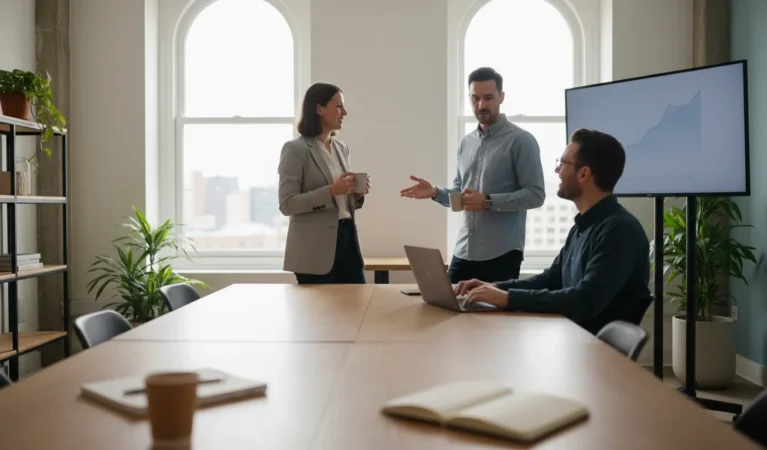
Table of Contents
- Introduction
- The Evolution of Professional Connectivity
- Serendipity by Design: How Space Influences Interaction
- The Human Element: The Community Manager as a Connector
- Purposeful Programming and Events
- The Business Development Layer
- Operational Support as a Networking Catalyst
- Practical Scenarios: Networking in Action
- Maximizing Your Networking Potential
- The Workbox Difference: Workspace with a Purpose
- Conclusion
- FAQ
Introduction
Think back to the last valuable business connection you made. Was it the result of a cold outreach on a social platform, or did it happen naturally during a shared moment in a professional environment? For many founders, leaders, and growing teams, the most impactful partnerships often begin with a chance conversation that evolves into a strategic collaboration. The challenge in the modern work landscape is that these organic interactions are increasingly rare in traditional, siloed office settings or the isolation of home offices.
Understanding how coworking spaces facilitate professional networking is essential for any professional looking to scale their business or expand their influence. It is not simply about sharing a roof; it is about being part of an intentional ecosystem designed to foster high-quality interactions. At Workbox, we view workspace as a platform for “Member Success,” where the environment, the community, and the operational support all converge to help professionals grow.
In this article, we will explore the mechanisms behind professional connectivity in flexible workspaces. We will examine how intentional design, curated community programming, and a dedicated Business Development layer transform a daily workplace into a powerful engine for networking. By the end of this guide, you will understand how to leverage these environments to build a network that supports your long-term professional objectives.
The Evolution of Professional Connectivity
The concept of networking has shifted from transactional exchanges—think stacks of business cards at a crowded mixer—to a focus on authentic, long-term relationships. In a traditional office lease, a company is often physically and socially isolated from its neighbors. You might share an elevator with someone for three years without ever knowing they provide the exact service your company needs to scale.
Flexible workspaces change this dynamic by breaking down the walls that traditionally separate industries and companies. This creates a “low-friction” environment for networking. When you are surrounded by a diverse mix of innovators, investors, and leaders, the barriers to entry for a conversation are significantly lower.
At Workbox, we refer to this as “Workspace with a Purpose.” We recognize that for our members, success takes more than just a desk and a Wi-Fi connection. It requires a holistic approach that combines physical space with an enabling layer of resources. This shift from “providing a room” to “facilitating success” is what makes modern coworking environments the premier choice for companies looking to establish their corporate headquarters. In fact, nearly two-thirds of our member companies choose Workbox as their primary base of operations because of this integrated approach to professional growth.
Serendipity by Design: How Space Influences Interaction
One of the primary ways coworking spaces facilitate professional networking is through architectural intentionality. Space design is a powerful tool for social engineering. In a traditional office, the layout is often designed for hierarchy and containment. In a flexible workspace, the layout is designed for visibility and accessibility.
The Role of Shared Common Areas
The most effective networking often happens in the “in-between” spaces. Lounges, kitchens, and shared coffee areas serve as the modern-day town square. When you are grabbing a coffee or filtered water, you are in a neutral zone where it is socially acceptable—and even encouraged—to strike up a conversation.
These spaces are intentionally designed to be comfortable and inviting, encouraging members to step away from their private offices or dedicated desks. By creating a high-quality environment for these “micro-interactions,” coworking spaces ensure that networking becomes a daily habit rather than a scheduled chore.
Balancing Privacy and Openness
While shared areas drive connectivity, a professional environment must also support deep work. Coworking spaces facilitate networking by providing a variety of zones. When a member needs to take a confidential call, they have access to phone booths. When a team needs to brainstorm, they can book a private conference room.
This balance is crucial because it ensures that when people are in the common areas, they are actually available for interaction. The existence of private offices and suites allows for a professional home base, while the shared infrastructure provides the “porch” where the community meets. This creates a rhythm to the workday: periods of focused output followed by periods of community engagement.
The Human Element: The Community Manager as a Connector
In many office buildings, the staff is focused purely on facility management—ensuring the lights are on and the trash is taken out. In a flexible workspace built around Member Success, the role is far more strategic. Our dedicated community managers act as the primary facilitators of professional networking.
A community manager’s job is to know who is in the building, what they do, and what they need. This allows them to make “warm introductions” between members. For example, if a community manager knows a founder in a private suite is looking for a new legal partner, and a specialized law firm just took a desk membership down the hall, they can bridge that gap.
These introductions are significantly more valuable than cold networking because they come with a level of built-in trust. The community manager acts as a curator, ensuring that connections are relevant and mutually beneficial. This human layer of operational support reduces the time members spend searching for resources and increases the time they spend building their business.
Purposeful Programming and Events
Networking events are a staple of the coworking industry, but their effectiveness varies wildly. To truly facilitate professional networking, programming must be purposeful and consistent.
Weekly and Quarterly Engagement
Consistency is the foundation of community. At Workbox, we utilize weekly community-based engagements and quarterly mixers to provide a predictable cadence for networking. Weekly engagements might be smaller and more informal, allowing for deeper conversations among a consistent group of peers. Quarterly mixers are larger, high-energy events that bring together a broader cross-section of the local business ecosystem.
These events are not just about socializing; they are designed to facilitate network building. By creating a structured environment for interaction, we take the pressure off the individual. Whether you are an extroverted salesperson or a focused developer, these touchpoints provide a comfortable framework for meeting new people and reinforcing existing relationships.
Access to National Networks
The value of a professional network is often tied to its reach. Because Workbox has locations across the country, members gain access to partnership events that extend beyond their local city. If a member is traveling for business, they can use their 8:30 am to 5:00 pm access to any other Workbox location nationwide. This instantly plugs them into a new local network, complete with its own community manager and unique member base. This “portable community” is a massive advantage for growing teams that need to establish a presence in multiple markets.
The Business Development Layer
To truly stand out, a workspace must go beyond physical amenities. The “Success Takes More” philosophy at Workbox is built on the idea that professionals need a platform for growth. This is where the Business Development layer comes into play.
Connectivity to Capital and Leadership
For many innovators and founders, the most critical part of their network involves access to capital and strategic mentorship. Coworking spaces facilitate professional networking by hosting programming and networking events with capital partners, business leaders, and successful founders.
This creates a unique destination for leaders and investors. When high-level decision-makers are regularly in the building for events or meetings, the “proximity effect” benefits the entire membership. While there are no guarantees of funding, the mere act of being in the same room as potential partners and investors significantly increases the likelihood of meaningful engagement.
Resources and Virtual Platforms
Networking in the 21st century is not limited to physical presence. A robust virtual platform allows members to connect, share resources, and seek advice even when they aren’t in the office. This digital layer provides access to business-development resources, vendor discounts, and cloud credits, further lowering the barriers to growth.
When you join a workspace with a strong Business Development focus, you aren’t just renting a desk; you are gaining access to a powerful network of other innovators and leaders. This ecosystem provides a sense of “community connectivity” that is difficult to replicate in a standalone office.
Operational Support as a Networking Catalyst
It might seem counterintuitive, but operational support is one of the most effective ways a coworking space facilitates professional networking. When a business owner is bogged down by the administrative burden of running an office, they have very little “mental bandwidth” left for networking.
Reducing the Administrative Burden
Think about the tasks involved in a traditional office lease:
- Coordinating internet and Ethernet setup
- Managing professional cleaning services
- Ordering office supplies, coffee, and tea
- Handling mailing and packaging services
- Setting up printers and managing technology
In a bundled workplace environment like Workbox, these tasks are handled by our team. We provide a seamless operational backbone that includes everything from fast, secure Wi-Fi and unlimited printing to a wellness room and bike storage.
By removing these day-to-day distractions, we free up our members to focus on what matters: their work and their professional connections. A founder who isn’t spent two hours on the phone with an internet provider is a founder who has the energy to attend a community breakfast and meet a potential new client.
Lowering the Barrier to Entry
Traditional office models often require a 7–10 year minimum lease with a massive upfront commitment (often estimated at 6 months of rent). This financial and temporal burden can prevent a small team or a solo professional from ever entering a high-quality professional environment.
Flexible workspaces offer a much lower barrier to entry. With options like a Floating Membership starting at $250/mo or a private office starting at $500/mo (varying by location), professionals can join a high-level network without the risk of a long-term traditional lease. This accessibility ensures a more diverse and vibrant community, which in turn leads to better networking opportunities for everyone involved. Learn more about our available membership types and pricing on the Workbox memberships page: Workspace Memberships & Pricing.
Practical Scenarios: Networking in Action
To understand how these elements come together, let’s look at a few practical scenarios of how coworking spaces facilitate professional networking for different types of members.
The Scaling Founder
For a founder who has just moved their team of five into a private suite, the workspace serves as a corporate headquarters that punches above its weight. They benefit from a professional presence—including their company logo on the office door at no extra cost—which is vital when hosting potential investors in a private conference room.
During a quarterly mixer, this founder is introduced by the community manager to a growth-stage investor who frequently attends Workbox events. This introduction leads to a follow-up meeting. Because the founder doesn’t have to worry about cleaning the office or restocking the coffee, they can spend their time refining their pitch and building that relationship.
The Independent Consultant
Consider a consultant who uses a Desk Membership as their home base. They need a professional environment to maintain a productive routine but also want to avoid the isolation of working from home.
By attending the weekly community-based engagements, they become a familiar face in the lounge. Over a period of months, they strike up conversations with several small business owners in the space. Eventually, one of those owners realizes they need the consultant’s specific expertise to help with a transition. The networking happened naturally over time, built on a foundation of professional proximity and shared experience. If you want to test the community before committing, a Day Pass is a great way to try it out: Day Pass details.
The Expanding Regional Team
For a larger company headquartered elsewhere, a satellite office at Workbox provides an instant foothold in a new city. The team has 24/7 access to their home-base location and can use meeting rooms to host local clients.
The team leader uses the virtual platform to identify other leaders in the local market. They attend purposeful programming events held at the space, allowing them to build a local professional network in weeks rather than months. The operational support provided by Workbox means the team is “plugged in” and productive from day one, without the lag time of setting up a traditional office. If your team needs a space for offsites or client gatherings, our meeting and event offerings are built for exactly that: Host an Event at Workbox.
Maximizing Your Networking Potential
Simply being in a coworking space isn’t enough; you must be intentional about how you engage with the community. Here are a few strategies to maximize the networking benefits of your workspace:
- Be Visible: Spend some of your day in the common areas. If you stay locked in your private office from 9 to 5, you miss out on the organic “water cooler” moments that drive connectivity.
- Leverage Your Community Manager: Don’t be afraid to tell your community manager what you are looking for. They are there to help you succeed and are often happy to make targeted introductions.
- Attend Programming: Even if you are busy, try to make it to the weekly community engagements or the quarterly mixers. These are the most concentrated opportunities for networking.
- Use the Virtual Platform: Stay connected even when you are off-site. Engaging with the digital community can lead to physical meetings and collaborations.
- Be a Resource for Others: Networking is a two-way street. By offering your own expertise or making introductions for other members, you build social capital within the community.
For details on the benefits included with memberships, see our member benefits overview: Membership Benefits.
The Workbox Difference: Workspace with a Purpose
At Workbox, we are committed to more than just providing a place to work. Our platform is built around the idea of “Member Success.” We recognize that your office is more than four walls and a desk; it is the foundation of your professional life and a key driver of your company’s growth.
Our approach combines:
- Member Connection: Through a high-density network of innovators, purposeful programming, and a dedicated community manager who acts as a bridge-builder.
- Operational Support: A bundled environment that eliminates the friction of traditional office management, allowing you to focus on your mission.
- Business Development Layer: Access to a network of leaders, capital partners, and resources that help you navigate the complexities of scaling a business.
Whether you are a solo professional looking for a Day Pass to get out of the house, or a growing company needing a full Private Suite for your headquarters, the environment you choose will dictate the network you build. If you’d like to see a space in person, you can schedule a visit here: Book a Tour.
Conclusion
Professional networking is the lifeblood of career and business growth, yet it is often the hardest thing to get right. Traditional networking methods are often inefficient, while traditional office spaces are often isolating. Coworking spaces solve this by creating an ecosystem where professional connectivity is baked into the daily experience.
By combining intentional space design, human-led community management, and a robust Business Development layer, workspaces like Workbox transform the act of going to work into an act of building a future. We provide the “porch” where the community meets, the “private office” where the work gets done, and the “platform” that helps you grow.
If you are ready to move beyond the limitations of a traditional office or the isolation of working from home, we invite you to experience the Workbox difference. Our spaces are designed for those who know that success takes more than just a desk.
Explore our locations across the country, discover our range of memberships from Floating Desks to Private Suites, and reach out to our team today to see how we can support your professional journey. Join a community where your success is the primary mission.
FAQ
How do coworking spaces facilitate professional networking for introverts?
Coworking spaces provide a low-pressure environment for introverts by creating structured opportunities for interaction. Instead of having to initiate a cold conversation, introverts can participate in scheduled community engagements or mixers where the “ice” is already broken. Additionally, the presence of a community manager allows for warm, moderated introductions, making it easier for less extroverted members to build a professional network at their own pace.
Can I really build a business network using a Day Pass?
While a Day Pass offers a snapshot of the community, building a deep professional network usually requires consistency. However, a Day Pass (available 8:30 am to 5:00 pm, Mon–Fri) is an excellent way to experience the environment, attend a specific networking event, and meet the community manager. For long-term networking, most professionals find that a Floating, Desk, or Private Office membership provides the recurring touchpoints necessary to build lasting business relationships.
What is the Business Development layer in a coworking space?
The Business Development layer refers to the additional resources and connectivity provided beyond the physical workspace. At Workbox, this includes access to a virtual platform, purposeful programming with capital partners and industry leaders, and vendor discounts or cloud credits. It is designed to act as an enabling layer that helps members find the talent, capital, and advice they need to scale their businesses more effectively.
Is networking in a coworking space better than online networking?
Online networking is a valuable tool for reach, but physical proximity in a coworking space builds trust and rapport much faster. In-person interactions allow for nuanced communication and the “serendipity” of spontaneous conversation that digital platforms often lack. A hybrid approach—using a workspace for deep, local connections and a virtual platform for broader reach—is typically the most effective strategy for professional growth.