skip to main content
 How to Design a Small Office Space for Maximum Success
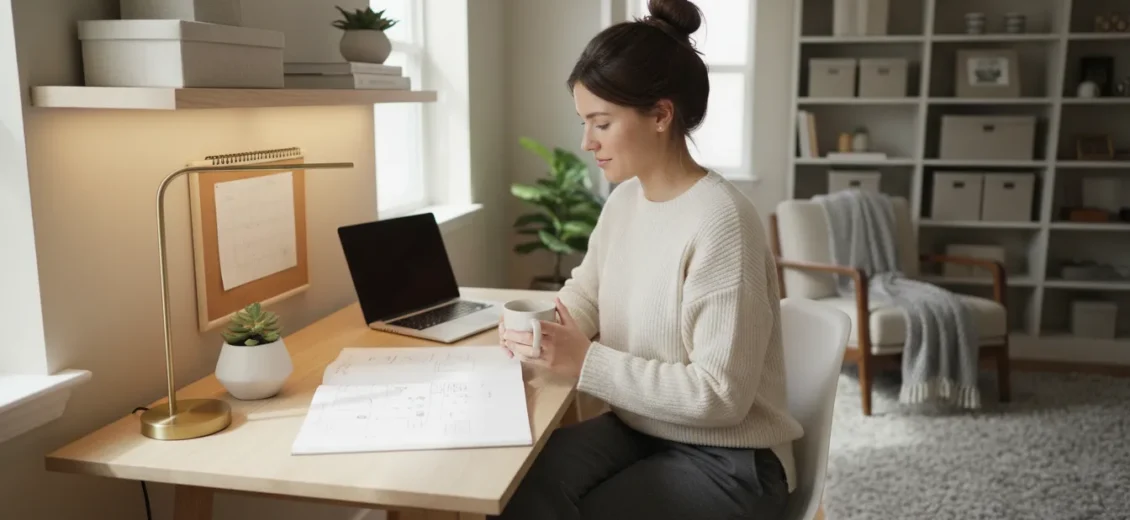
Table of Contents
- Introduction
- The Foundation of Intentional Design
- Spatial Planning and Layout Strategies
- Lighting and the Visual Environment
- Furniture and Essential Features
- Enhancing Productivity Through Operational Support
- The Importance of Community Connectivity
- Practical Scenarios in Small Office Design
- The Flexibility Advantage
- Designing for Wellness and Focus
- The Role of Technology in Small Office Design
- Summary of Best Practices for Small Office Design
- Conclusion
- FAQ
Introduction
Imagine the frustration of a high-stakes morning where your physical surroundings feel as though they are actively working against your productivity. The desk is cluttered with cables, the lighting is harsh, and the walls seem to be closing in as your team grows. For many founders and small teams, the transition from a home office or a local coffee shop to a professional environment is a major milestone, but it often comes with the daunting challenge of figuring out how to design a small office space that actually supports growth. It is not just about fitting desks into a room; it is about creating a “Workspace with a Purpose” that fosters connection, professionality, and operational ease.
In this article, we will explore the strategic principles of small office design, from spatial planning and lighting to the psychological impact of color and furniture. We will also examine how the right environment can serve as more than just a place to sit, acting instead as a platform for Member Success. Our goal is to provide a comprehensive roadmap for leaders and teams to optimize their physical footprint while leveraging the operational support and community connectivity that turn a simple office into a corporate headquarters.
Whether you are a solo consultant looking for a professional home base or a growing team transitioning into a dedicated suite, the design of your space dictates the rhythm of your workday. By focusing on intentionality and functionality, you can transform a limited square footage into a high-impact hub for innovation.
The Foundation of Intentional Design
Designing a small office space begins with a mindset shift: every square inch must earn its keep. In a traditional large-scale office, there is room for wasted space—empty corridors, oversized reception areas, and underutilized conference rooms. In a small office, efficiency is the priority. However, efficiency should never come at the expense of inspiration or comfort.
At Workbox, we believe that success takes more than just a desk and a chair. It requires an environment designed to reduce the administrative burden of running a business while maximizing the professional presence of the team. When you approach design with a focus on Member Success, you stop seeing walls and start seeing opportunities for better routines and stronger collaboration.
Prioritizing Functionality Over Excess
The first step in any design project is identifying the core activities that will take place in the space. Will you be spending most of your time on video calls? Do you need a collaborative area for brainstorming sessions? Or is the primary focus deep, heads-down work?
For a consultant who spends the morning on client calls and the afternoon on deep research, a private office offers a consistent home base. In this scenario, the design should prioritize acoustics and high-quality video backgrounds. Conversely, a small creative team might prioritize a layout that allows for easy movement between individual workstations and a central shared table.
Spatial Planning and Layout Strategies
When square footage is at a premium, the layout of the office determines the flow of the workday. A poorly planned layout leads to “spatial friction”—those small annoyances like having to move a chair to open a cabinet or tangling with power cords every time you stand up.
Zoning Without Walls
In a small space, physical partitions like heavy walls or tall cubicles can make the room feel cramped and dark. Instead, use “zoning” to differentiate areas of activity. This can be achieved through the strategic placement of furniture or changes in flooring textures.
For example, placing a small rug under a seating area can visually separate a “breakout” zone from the “work” zone without the need for a physical divider. This allows light to move freely through the space while still providing a psychological boundary between different types of tasks.
Maximizing the Vertical Plane
One of the most common mistakes in small office design is focusing solely on the floor plan. When you run out of horizontal space, look up. Vertical storage solutions—such as high shelving or wall-mounted organizers—keep the desk surface clear and draw the eye upward, making the room feel taller.
For members in our private offices and suites, we include furnished desks and chairs, but we also encourage teams to think about how they utilize their wall space. We even include company logo placement on the office door at no additional cost, which helps establish a sense of ownership and professional identity from the moment you walk down the hall.
The Power of Sightlines
A small office feels larger when the eye can travel. Avoid placing large, bulky furniture directly in the line of sight from the entrance. Keeping the center of the room relatively open or using furniture with “legs” (rather than solid bases that go all the way to the floor) creates a sense of airiness.
Lighting and the Visual Environment
Lighting is perhaps the most underrated element of workplace strategy. It affects mood, eye strain, and even the professional quality of your virtual meetings. In a small office, the right lighting can make the difference between a space that feels like a storage closet and one that feels like a premium suite.
Embracing Natural Light
Whenever possible, position workstations to take advantage of natural light. Sunlight has been shown to improve mood and energy levels, which are critical for founders and teams working long hours. In our locations, we prioritize floor plans that maximize window access, ensuring that even smaller private offices feel connected to the outside world.
Layered Lighting
A single overhead light is rarely sufficient. Instead, use a layered approach:
- Ambient Lighting: The general light source for the room.
- Task Lighting: Focused light for specific activities, such as a desk lamp for reading or a ring light for video calls.
- Accent Lighting: Used to highlight specific features or create a warmer atmosphere.
By controlling the levels of light, you can shift the mood of the space depending on the time of day or the task at hand. This flexibility is essential for maintaining a healthy work rhythm.
Furniture and Essential Features
The furniture you choose is the “operational backbone” of your office. Because small offices have limited room, every piece should be chosen for its utility and scale.
Selecting the Right Scale
Large, executive-style desks are often a mismatch for small offices. They take up too much physical and visual space. Instead, opt for streamlined desks with clean lines. At Workbox, our offices and suites come furnished with desks and chairs that are selected to balance professional aesthetics with spatial efficiency.
Decluttering Through Design
A cluttered desk is a major contributor to mental fatigue. When designing your space, incorporate integrated cable management and storage solutions. Keeping wires tucked away and supplies organized in drawers or bins prevents the “visual noise” that can derail focus.
Creating a Professional Presence
For many of our members, their office is more than just a place to work—it is where they host investors, partners, and prospective hires. Nearly two-thirds of our member companies choose Workbox as their corporate headquarters because we provide a professional presence that a home office simply cannot match. High-quality finishes, a clean design, and a dedicated community manager at the front desk ensure that every visitor’s first impression is one of success and stability.
Enhancing Productivity Through Operational Support
A well-designed office is about more than just aesthetics; it is about how the space functions on a day-to-day basis. One of the greatest benefits of a flexible workspace is the “enabling layer” of resources that supports your business.
Reducing the Administrative Burden
When you manage a traditional office, you are responsible for everything: internet setup, cleaning, utilities, furniture procurement, and even stocking the coffee. These tasks are “administrative friction” that steal time away from your core business goals.
At Workbox, we provide a bundled workplace environment. This means our members benefit from included workspace amenities and member benefits:
- Fast, secure Wi-Fi & Ethernet: No more troubleshooting routers or negotiating with ISPs.
- Professional cleaning services: Your space stays pristine without you lifting a finger.
- Unlimited printing: Essential tools are always at the ready.
- Mailing and packaging services: Available for members (Floating Membership or higher), allowing you to maintain a professional business address without the hassle of managing a mailroom.
By outsourcing these operational needs, you effectively “expand” your small office. You aren’t just paying for the square footage of your private suite; you are gaining the support of a full-scale operations team.
The Importance of Community Connectivity
Design should not stop at your office door. In a modern professional environment, the “space” includes the community and the network around you. This is where the concept of “Success Takes More” truly comes to life.
Moving Beyond the Four Walls
While a private office provides the necessary environment for focused work, being part of a larger community provides the spark for growth. At Workbox, we facilitate high-quality member-to-member interactions through:
- Weekly community-based engagements: Opportunities to meet neighbors and share insights.
- Quarterly mixers: Larger events designed to build lasting professional relationships.
- Purposeful programming: Access to partnership events across the country that support greater professional connection and business-development opportunities.
For a small team, these interactions are invaluable. They provide the networking opportunities that are often lost when working in a traditional, isolated office building. You are not just a tenant; you are part of a powerful network of innovators, leaders, and investors.
Access to a Business Development Layer
True Member Success involves more than just a beautiful room. It requires access to resources that help a company scale. Our members gain access to a virtual platform and business-development resources, including:
- Vendor discounts and cloud credits: Practical savings that improve your bottom line.
- Connections to capital partners: For those looking to scale, our network includes founders and investors who understand the journey.
- Professional programming: Events focused on the challenges that leaders face, from hiring to fundraising.
Practical Scenarios in Small Office Design
To see how these principles work in practice, let’s look at two common scenarios our members face.
Scenario 1: The Transitioning Small Team
A small team of four has spent the last year working out of a crowded apartment. They are ready for their first “real” office. By moving into a Workbox private suite, they immediately gain a consistent home base.
The design of their suite allows for four dedicated desks, while the common areas of the Workbox location provide them with additional “overflow” space. When they need to host a formal team meeting or a client presentation, they can book a private conference room (starting at $60/hr for non-members, but integrated into the member experience). This allows them to maintain a small, cost-effective private footprint while still having access to large-scale amenities.
Scenario 2: The Independent Consultant
An independent consultant needs a professional environment to meet with high-level clients but wants to avoid the overhead of a traditional long-term lease. A Desk Membership (starting at $350/mo, varying by location) or a Floating Membership (starting at $250/mo) provides them with a professional address and a sophisticated place to work.
When they need a quieter environment in a private space for a confidential call, they can utilize our phone booths or a wellness room. Their “office design” isn’t limited to a single desk; it encompasses the entire Workbox floor, allowing them to choose the environment that best fits their task at any given hour.
The Flexibility Advantage
One of the most significant challenges in designing a traditional small office is the lack of flexibility. If you sign a five-year lease and your team grows by three people in year two, you are in trouble.
Flexible workspaces solve this problem. At Workbox, we offer a range of workspace membership solutions that can grow with you. You might start with a few Desk Memberships and move into a Private Office (starting at $500/mo) as your team expands. This scalability is a core component of our Member Success philosophy. We provide a seamless operational backbone that reduces the upfront commitment compared with a conventional office model—often requiring only a one-month rent deposit and a two-month minimum lease, rather than the years-long commitments required by traditional landlords.
Designing for Wellness and Focus
A small office can sometimes feel intense. To counteract this, it is important to incorporate elements that support mental well-being and focus.
Incorporating Greenery
Biophilic design—the practice of bringing nature into the workspace—is highly effective in small offices. A few well-placed plants can improve air quality and provide a visual “rest” for the eyes. They add life to the space without requiring a large amount of room.
Utilizing Specialized Spaces
Sometimes, the best design for a small office is knowing when to leave it. Having access to common areas, filtered water, and complimentary coffee and tea allows you to step away from your desk and reset. For members who need a change of pace, our locations offer various seating options that provide a quieter environment in a private space or a more social atmosphere in the lounge.
The Role of Technology in Small Office Design
In the modern era, “design” includes your digital infrastructure. A small office must be a high-tech office.
Connectivity and Security
At Workbox, we ensure that every office is equipped with fast, secure Wi-Fi and Ethernet. This is not just a convenience; it is a business necessity. By providing a reliable tech foundation, we allow you to focus on your work rather than your hardware.
Streamlined Hardware
In a small office, bulky servers or messy printer setups are a thing of the floor’s past. By utilizing our shared resources—like unlimited printing and professional-grade tech in conference rooms—you can keep your private office sleek and focused solely on your team’s immediate needs.
Summary of Best Practices for Small Office Design
To recap, designing a small office space for success involves:
- Intentionality: Defining exactly what the space needs to accomplish.
- Verticality: Using wall space to keep the floor clear.
- Lighting: Layering natural and artificial light to create depth.
- Operational Support: Leveraging a workspace provider that handles the “heavy lifting” of office management.
- Connectivity: Ensuring you have access to a broader community and business development resources.
By following these principles, you create more than just a place to work; you create a destination for leaders and innovators.
Conclusion
Designing a small office space is an exercise in focus. It requires you to strip away the distractions and invest in the elements that truly drive your business forward. Whether it is the professional presence of a curated suite, the operational ease of a bundled service model, or the vital connections made at a quarterly mixer, every design choice should serve the ultimate goal of Member Success.
At Workbox, we are dedicated to providing the platform that allows your business to thrive. We combine high-quality workspace with an enabling layer of resources, capital access opportunities, and a powerful network of fellow innovators. Our “Workspace with a Purpose” is designed to scale with you, ensuring that as your team grows, your environment is always a step ahead.
Stop worrying about the logistics of office management and start focusing on your mission. Explore how our private offices, suites, and desk memberships can become the foundation for your next chapter of growth.
Ready to find your new corporate headquarters? Schedule a tour at one of our Workbox locations today and experience the difference of a workspace built for your success.
FAQ
How can I make a small office space feel larger?
To make a small office feel more expansive, focus on maximizing natural light and using a layered lighting strategy. Utilize vertical space for storage to keep desks clear, and choose furniture with a slim profile. At Workbox, our offices are designed with these principles in mind, offering a professional presence without the visual clutter of traditional setups.
What are the most important features to include in a small office?
The most important features are a reliable technological foundation (like fast, secure Wi-Fi), functional furniture, and access to “overflow” spaces like meeting rooms and phone booths. By choosing a flexible workspace like Workbox, you also get the added benefit of operational support and included amenities, which includes cleaning, printing, and community management.
How do I manage clutter in a limited office area?
Clutter management starts with integrated storage and cable management. It also helps to leverage shared amenities; for example, at Workbox, members use our communal printing and mailing services, which means they don’t have to house bulky equipment or mail supplies inside their own private office.
Is a private office better than a desk membership for a small team?
It depends on your needs for privacy and consistency. A private office (starting at $500/mo) provides a dedicated, branded home base with 24/7 access, which is often ideal for teams. However, for those who are more mobile, a Desk Membership (starting at $350/mo) provides a professional environment and access to the same powerful network and business development resources at a lower entry point.