skip to main content
 How to Reduce Noise in Office Space for Better Focus

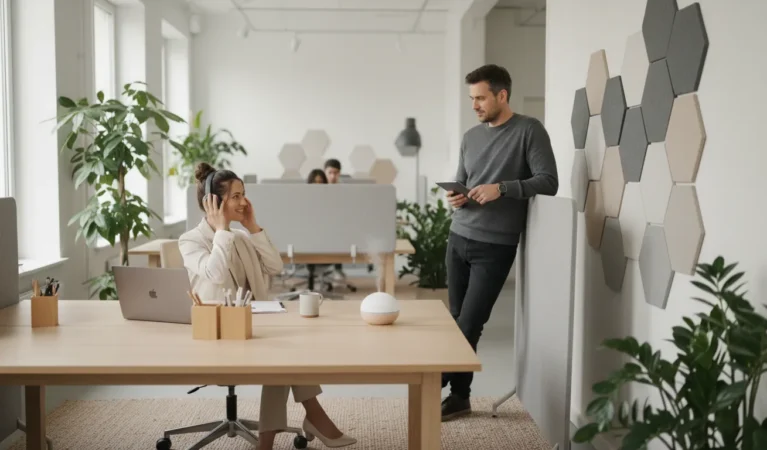
Table of Contents
- Introduction
- The Impact of Office Noise on Professional Success
- Strategic Layouts: Zoning for Acoustic Harmony
- Physical Solutions: Materials and Technology
- Leveraging Phone Booths and Meeting Rooms
- Establishing a Culture of Professionalism
- Operational Support: The Workbox Advantage
- Practical Scenarios: Noise Reduction in Action
- Expanding Your Reach Through Business Development
- Key Amenities that Support a Productive Soundscape
- Conclusion: The Path to Acoustic Excellence
- FAQ
Introduction
Have you ever found yourself re-reading the same sentence five times because a nearby conversation or the rhythmic hum of a printer kept pulling your attention away? In the modern professional landscape, the open-plan office was designed to spark collaboration, but it often inadvertently created an acoustic environment that challenges even the most disciplined minds. Sound travels, bounces, and lingers, turning a vibrant workspace into a source of constant distraction if not managed correctly.
The purpose of this article is to provide a comprehensive strategy on how to reduce noise in office space through design, technology, and cultural norms. We will explore the science of acoustics, the practical application of sound-absorbing materials, and how the right office layout can transform a chaotic room into a hub of productivity. Furthermore, we will discuss how choosing a workspace partner like Workbox can alleviate the operational burden of managing office acoustics, allowing you to focus on what truly matters: your business growth.
Ultimately, managing noise is not about creating a vacuum of silence; it is about creating a balanced environment where high-energy collaboration and deep, focused work can exist side by side. By understanding the principles of acoustic harmony and leveraging professional workspace solutions, teams can achieve a level of operational excellence that supports long-term success.
The Impact of Office Noise on Professional Success
To understand how to reduce noise in office space, we must first recognize the toll that acoustic distractions take on a team. Research consistently shows that unexpected noise can lead to increased stress levels, reduced cognitive function, and a significant drop in overall job satisfaction. For founders and leaders, this isn’t just a comfort issue—it is a performance issue.
When a workspace is too loud, the “cost” manifests in lost time. It takes an average of twenty-three minutes to return to a state of deep focus after a significant interruption. For a small team or a growing startup, those minutes quickly compound into lost hours of innovation and strategy. This is why we view “Workspace with a Purpose” as more than just a desk and a chair; it is an environment engineered for Member Success, where every detail—including the soundscape—is curated to help you win.
Strategic Layouts: Zoning for Acoustic Harmony
One of the most effective ways to manage sound is through intentional spatial planning. Instead of a monolithic open floor plan, a successful office utilizes “zoning.” This involves grouping similar activities together so that high-energy, vocal tasks do not overlap with tasks requiring intense concentration.
Creating Interaction Hubs
At Workbox, we prioritize Member Connection by designing spaces that facilitate high-quality member-to-member interactions. However, we understand these interactions are best suited for specific areas. By centralizing social hubs, kitchens, and lounge areas, we naturally draw the “noisy” activities away from the desks and private offices. Our quarterly mixers and weekly community-based engagements are held in these designated social spaces, ensuring that the vibrancy of the community does not disrupt the professional atmosphere required for your daily operations. Members can also find additional connection through Workbox’s upcoming events and community programming.
The Role of Private Offices and Suites
For many of our members—nearly two-thirds of whom choose Workbox as their corporate headquarters—a private office or suite is the primary solution for noise management. A private office provides a physical and acoustic barrier that allows a team to have internal discussions without being overheard or interrupted by the rest of the community.
For a small team transitioning out of a home office or a coffee shop, moving into a private office or suite membership provides the consistency and privacy needed for sensitive client calls while still allowing the team to remain connected to a broader network of innovators and leaders. This balance of privacy and community is a hallmark of our Member Success philosophy.
Physical Solutions: Materials and Technology
If you are looking at how to reduce noise in office space within an existing footprint, you must address the physical surfaces that reflect sound. Hard surfaces like glass, concrete, and hardwood are acoustic enemies; they allow sound waves to bounce indefinitely, creating echoes and high ambient noise levels.
Acoustic Absorption
The most common method for sound reduction is the introduction of soft, porous materials that “catch” sound waves.
- Acoustic Panels and Baffles: These can be mounted on walls or suspended from the ceiling to break up the path of sound. In a professional setting, these don’t have to look like industrial foam; modern designs incorporate felt, fabric, and even artistic patterns that enhance the aesthetic of the room.
- Floor Coverings: Transitioning from hard floors to high-quality carpeting or strategically placed rugs can significantly dampen the sound of footsteps and moving furniture.
- Furniture as a Buffer: Bookcases, fabric-covered partitions, and even specialized “hush” furniture can act as obstacles that diffuse sound waves.
Sound Masking and White Noise
Sometimes, the problem isn’t that it’s too loud, but that it’s too quiet. In a pin-drop silent environment, a single sneeze or a hushed conversation feels amplified. Sound masking systems—often called white noise or pink noise machines—add a subtle, consistent background frequency that makes human speech less intelligible over a distance. This “blurring” effect allows individuals to focus better because their brains stop trying to process every word of a neighbor’s conversation.
Leveraging Phone Booths and Meeting Rooms
A major contributor to office noise is the “desk call.” In an age of constant virtual meetings, one person on a video conference can distract an entire row of colleagues. The solution is providing a variety of “plug-and-play” spaces for different communication needs.
On-Demand Privacy
Integrating phone booths into the office layout is one of the most practical steps in how to reduce noise in office space. At Workbox, our locations are equipped with phone booths specifically for this purpose. When a member needs to jump on a quick discovery call or a private check-in, they can step into a booth, removing their voice from the common area and ensuring their own privacy. These resources are part of the member benefits and included amenities available through Workbox memberships.
Professional Meeting Environments
For longer sessions, such as board meetings or collaborative brainstorms, private conference rooms are essential. By moving these group activities into a dedicated room with a closed door, the “active” noise is contained. For a consultant juggling client meetings and deep work, reserving a professional meeting room for group sessions—while using a desk membership for focused work—creates a predictable and professional weekly rhythm. This is part of the operational support we provide, ensuring you have the right space for the right task at the right time.
Establishing a Culture of Professionalism
No amount of acoustic paneling can replace a strong community culture. How people behave within a space is just as important as the space itself. At Workbox, we believe that a professional presence is a key component of Member Success. This is why we foster an environment where members respect each other’s need for focus.
Community Managers as Facilitators
Our dedicated community managers play a vital role in setting the tone of the workspace. They aren’t just there to manage the mail; they are the “operational backbone” of the location. By facilitating introductions and managing the daily flow of the space, they help maintain a professional atmosphere. If a specific area becomes consistently loud, a community manager can subtly address the issue or suggest better locations for those activities, such as a lounge or a meeting room.
The Impact of Programming
Purposeful programming and access to partnership events across the country support greater professional connection. By organizing these events with intention, we ensure that high-energy networking happens during specific times and in specific places. This allows our members to know exactly when to expect a lively environment and when to expect a quieter environment in a private space for deep work.
Operational Support: The Workbox Advantage
When businesses consider how to reduce noise in office space, they often overlook the administrative burden and cost associated with doing it themselves in a traditional office. Retrofitting a conventional lease with acoustic treatments, soundproofing doors, and white noise systems requires significant upfront capital and ongoing management.
Reducing the Administrative Burden
At Workbox, we provide a bundled workplace environment that handles these complexities for you. When you move into a Workbox private office or suite, the acoustic strategy is already in place. You don’t have to worry about coordinating with vendors for sound panels or managing the installation of phone booths. We provide:
- Furnished Spaces: Offices and suites include furnished desks and chairs, designed to work within the layout’s acoustic plan.
- Seamless Operations: From fast, secure Wi-Fi to professional cleaning services, we handle the workplace overhead so you can focus on your business-development opportunities.
- Flexibility: Unlike a traditional 7-10 year lease that requires a massive upfront commitment, our flexible models allow you to scale your space as your team’s acoustic and spatial needs evolve.
A Destination for Leaders
Because nearly two-thirds of our member companies use us as their headquarters, our spaces are inherently designed for a high level of professional conduct. We are a destination for leaders and innovators who value their time. This shared commitment to success creates a self-policing environment where noise is naturally kept to a professional level. You aren’t just renting an office; you are joining a powerful network of other innovators who respect the “Success Takes More” mentality.
Practical Scenarios: Noise Reduction in Action
To illustrate how these strategies come together, consider these real-world professional scenarios within the Workbox ecosystem.
Scenario A: The Growing Tech Team
Imagine a small engineering team that has just secured a round of funding. They need to collaborate intensely on code, but they also have several sales representatives making outbound calls. In a traditional open office, the engineers would be constantly distracted by the sales team.
By moving into a Workbox suite, the team can designate their internal space for “quiet” coding and use our common-area phone booths or reserved meeting rooms for sales calls. This allows the team to maintain their internal culture of focus while leveraging the Workbox “Operational Support” layer to handle the logistical needs of their growing staff.
Scenario B: The Individual Consultant
Consider a high-level consultant who spends half their day on Zoom and the other half writing detailed reports. At home, the noise of family life or neighbors is unpredictable. By utilizing a Workbox desk membership, they gain access to a professional environment with a consistent soundscape.
When they need to record a podcast or lead a sensitive client webinar, they use a phone booth or a wellness room for a quieter environment in a private space. During the rest of the day, the gentle hum of other professionals working around them provides a “productive energy” that is far more conducive to work than the isolation of a home office or the clatter of a public cafe.
Expanding Your Reach Through Business Development
At Workbox, we know that success isn’t just about what happens inside your four walls. It’s about the connections you make. Our “Business Development” layer provides members with access to a virtual platform and resources that extend beyond the physical workspace.
When you aren’t worried about the “noise” of running an office—like fixing the Wi-Fi or dealing with a loud neighbor—you have the mental bandwidth to engage with our network of capital partners, founders, and business leaders. This holistic approach combines the physical environment with an enabling layer of resources, ensuring that every minute you spend in the office is a minute spent moving your business forward.
Key Amenities that Support a Productive Soundscape
While noise reduction is often about what you remove or muffle, it is also about what you provide to keep the environment professional. Our list of approved amenities is curated to support a seamless work experience:
- Private Conference Rooms: For containing group noise and facilitating collaboration.
- Phone Booths: For removing individual voices from the common work areas.
- Wellness Room: Providing a quiet retreat for members who need a moment of reprieve.
- Complimentary Coffee & Tea: Keeping the “kitchen noise” centered in a social area.
- Dedicated Community Manager: To oversee the professional tone of the location.
- Fast, Secure Wi-Fi & Ethernet: Ensuring that digital communication is crisp and efficient, reducing the need for repeated “can you hear me now?” frustrations.
Conclusion: The Path to Acoustic Excellence
Learning how to reduce noise in office space is an investment in your team’s mental health, productivity, and long-term success. By moving away from the “one-size-fits-all” open plan and embracing a strategy of zoning, material absorption, and professional etiquette, you create a space where work actually happens.
At Workbox, we take the guesswork out of workplace strategy. Our Member Success philosophy ensures that your office is not just a place to sit, but a platform for growth. By providing the operational backbone and a community of like-minded professionals, we allow you to bypass the common headaches of office management. You get the privacy you need, the community you want, and the support you deserve to take your business to the next level.
Whether you are a solo founder or a scaling team, the right environment makes all the difference. We invite you to experience a workspace designed with your success in mind.
Ready to find your ideal workspace? View our locations and schedule a tour today to see how Workbox can support your team’s focus and growth.
FAQ
How can I reduce noise in an open office without building permanent walls?
You can use a combination of “zoning” and mobile acoustic solutions. Grouping desks by activity type, utilizing phone booths for calls, and adding soft materials like rugs or fabric partitions can significantly dampen sound. At Workbox, we provide these solutions as part of our operational support, giving you access to private offices and phone booths that naturally mitigate the challenges of an open floor plan.
Are there specific materials that work best for sound absorption?
Yes, soft and porous materials are best. Acoustic felt panels, ceiling baffles, heavy drapes, and carpeting are highly effective at catching sound waves before they bounce off hard surfaces. In our Workbox locations, we integrate these elements into the design to ensure a professional and balanced acoustic environment for all members.
Does white noise actually help with office distractions?
Sound masking, or white noise, is very effective at making background speech less intelligible. By adding a consistent, unobtrusive sound to the environment, it “covers” the sharp sounds of distant conversations or office equipment. This allows the brain to tune out distractions more easily, which is why many high-performance workspaces use these systems to maintain a focused atmosphere.
How does Workbox help with office noise management?
Workbox provides a turnkey solution for acoustic professionality. Our locations are designed with a mix of private offices, suites, and dedicated “active” areas like lounges and kitchens. We also provide phone booths for private calls and meeting rooms for group sessions. Because we handle all the operational overhead—including the furniture, layout, and community management—our members can enjoy a productive soundscape without the burden of designing it themselves.