skip to main content
 How to Design an Office Space for Maximum Success

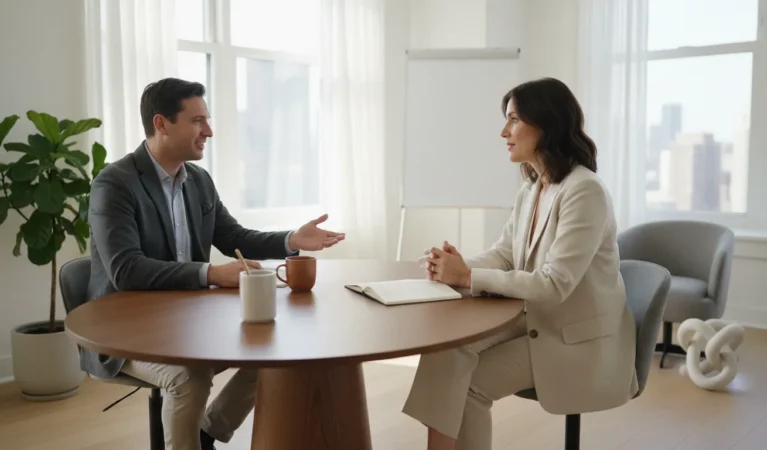
Table of Contents
- Introduction
- The Philosophy of Workspace with a Purpose
- Assessing Your Team’s Functional Needs
- Strategic Layout: Balancing Privacy and Connectivity
- The Operational Backbone: Design for Efficiency
- Designing for Professional Presence and Branding
- Integrating the Business Development Layer
- Furniture and Amenities: Beyond the Basics
- Scaling Your Space: The Power of Flexibility
- Creating a Culture through Environment
- Conclusion
- FAQ
Introduction
Does your current workspace feel like a launchpad for your next big milestone, or does it feel like a hurdle you have to clear every morning? For many founders and team leads, the physical environment is often an afterthought, a container for work rather than a catalyst for it. However, the way you design an office space directly impacts your team’s ability to focus, collaborate, and ultimately succeed. A well-considered layout does more than just look professional; it functions as a strategic asset that supports your operational goals and cultivates a high-performance culture.
In this guide, we will explore the nuances of strategic office design, moving beyond basic aesthetics to focus on “Workspace with a Purpose.” We will cover how to assess your team’s specific needs, the importance of balancing private and communal areas, and how to integrate an operational backbone that removes administrative friction. We will also discuss how to design for professional connection and business development, ensuring your office is a destination for leaders, innovators, and investors.
Our central message is clear: successful office design is not just about where you place furniture, but how you build an environment that facilitates Member Success by combining high-quality workspace with a platform for professional growth.
The Philosophy of Workspace with a Purpose
When we talk about how to design an office space, we start with the philosophy of “Workspace with a Purpose.” Most traditional office environments are built on a “one size fits all” model that prioritizes square footage over functionality. At Workbox, we view the office as a holistic ecosystem. This means the design must account for the space itself, the community connectivity within it, and an enabling layer of resources and support.
Designing for success means acknowledging that work is no longer a static activity. Throughout a single day, a professional might move from a period of deep, concentrated work to a collaborative brainstorming session, followed by a formal pitch to a capital partner. An office design that only caters to one of these modes is inherently flawed. By creating a multi-functional environment, you empower your team to choose the setting that best suits their current task, thereby increasing overall efficiency and job satisfaction.
Furthermore, a purposeful design reflects the identity of the companies within it. This is why nearly two-thirds of our member companies choose Workbox as their corporate headquarters. The space must provide a level of professional gravity that impresses clients and attracts top-tier talent. It’s about creating a destination where leaders feel at home and where the environment itself signals a commitment to excellence.
Assessing Your Team’s Functional Needs
Before picking out furniture or deciding on a floor plan, you must perform a deep dive into how your team actually works. A common mistake in office design is assuming that more open space equals more collaboration. In reality, without structure, open plans can lead to distractions and a lack of privacy.
Consider these practical scenarios:
- The High-Growth Startup: A small team transitioning out of coffee shops or home offices needs more than just desks. They need consistency, privacy for sensitive calls, and a home base that establishes their brand. For them, a private office suite provides the necessary privacy while still keeping them connected to a broader professional community. See our workspace memberships and pricing for details on private offices and suites. (https://www.workboxcompany.com/workspace/#workspace-memberships-pricing)
- The Independent Consultant: For a consultant juggling multiple client meetings and periods of deep work, the design priority might be a mix of professional meeting rooms for presentations and a comfortable desk membership for the hours in between. Their “design” is about a predictable weekly rhythm.
When assessing your needs, ask:
- How much of our day is spent on the phone or in video conferences?
- How often do we need to host external partners or investors?
- Do we require specialized areas for physical equipment, or is our work entirely digital?
- How much “collision” do we want with other professionals to spark new ideas?
By answering these questions, you move away from generic layouts and toward a bespoke environment that supports your specific business development goals.
Strategic Layout: Balancing Privacy and Connectivity
A successful office layout is a delicate balance between private areas for focus and communal areas for connection. At Workbox, we design our locations to facilitate this flow naturally.
Private Offices and Suites
For teams that require a dedicated headquarters, private offices and suites are the foundation of the design. These spaces should be more than just four walls. They should be “ready to work” from day one, furnished with desks and chairs so that your move-in process is seamless. One of the subtle but important design details we include is company logo placement on the office door at no additional cost. This reinforces your brand identity within the community and provides a sense of permanent ownership.
In terms of layout within a suite, consider how you can arrange desks to facilitate internal communication without creating a cramped feeling. The goal is a private space where your team can handle confidential matters and focus intensely on their core mission.
Shared Environments for Focus and Privacy
While we avoid the concept of “quiet zones,” we recognize the absolute necessity for a quieter environment in a private space when work demands it. This is where phone booths and private meeting rooms become essential. When you are designing your office flow, ensure that these resources are easily accessible.
A team member should never have to wander through a loud common area to find a place for an urgent client call. By integrating ample phone booths and bookable meeting rooms, the design naturally segments “loud” and “quiet” activities without the need for restrictive rules. Additionally, including a wellness room in your design offers a dedicated space for personal needs, further supporting the holistic well-being of your team.
Collaborative Hubs and Social Squares
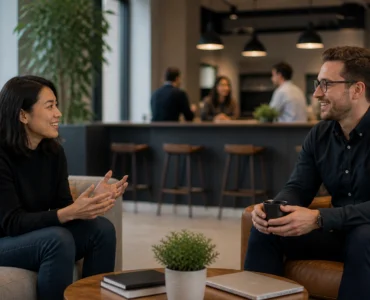
The “Member Connection” aspect of our design philosophy comes to life in our communal spaces. These areas are specifically designed to facilitate high-quality member-to-member interactions. We intentionally create “hubs” where professionals from different industries can intersect.
When designing these areas, think about the placement of amenities like complimentary coffee, tea, and filtered water. These are not just perks; they are natural gathering points. By placing these in central, inviting locations, you encourage the casual “water cooler” conversations that often lead to professional breakthroughs. Our weekly community-based engagements and quarterly mixers are hosted in these spaces to maximize the potential for networking and business development—find upcoming events and programming here. (https://www.workboxcompany.com/upcoming-events/)
The Operational Backbone: Design for Efficiency
One of the most overlooked aspects of how to design an office space is the “operational support” layer. A beautiful office is useless if the Wi-Fi is spotty or the printer is always broken. At Workbox, we believe a seamless operational backbone is a critical part of the design.
By choosing a bundled workplace environment, you reduce the administrative burden of running an office. In a traditional office model, you would have to spend weeks or months coordinating:
- Fast, secure Wi-Fi and Ethernet setup.
- Janitorial and professional cleaning services.
- Utilities and lease negotiations.
- Furniture procurement and assembly.
- Mailing and packaging services.
When the design includes these elements as standard features, you can focus 100% of your energy on your business rather than office management. For members with a Floating Membership or higher, having a professional address and mailing services (details vary by location) is a design feature that adds significant professional credibility.
The “Success Takes More” approach means we handle the workplace overhead. For a leader, this translates to a lower upfront commitment. Compare a traditional office model, which often requires a six-month rent deposit and a 7-to-10-year minimum lease, with the flex model of a one-month rent deposit and a two-month minimum lease. This flexibility is a strategic design choice that allows your workspace to evolve as your company grows.
Designing for Professional Presence and Branding
Your office is a physical representation of your brand. When a potential investor or a high-value client walks through the door, what do they see?
Designing for professional presence involves more than just a logo. It’s about the “enabling layer” of resources. A professional reception and a dedicated community manager ensure that every guest is greeted warmly and professionally during staffed hours (8:30 am to 5:00 pm, Monday through Friday).
The design of your meeting rooms also plays a vital role. At Workbox, meeting rooms (starting at $60/hr for non-members) are designed to be high-impact environments. They should be equipped with fast, secure Wi-Fi and the necessary tech to ensure your presentations run smoothly. Whether you are a resident member with 24/7 access to your home base or a day pass user ($35/day) visiting for a few hours, the environment should consistently reflect a standard of excellence. Learn more about our day pass and meeting room options. (https://www.workboxcompany.com/workspace/#daypass)
Integrating the Business Development Layer
A truly innovative office design doesn’t just house your team; it connects them to a larger ecosystem. This is what we call the “Business Development” layer. When designing your work life, you should consider how your physical environment facilitates access to:
- Virtual platforms and business-development resources: Does your office provider offer a way to connect with other leaders digitally?
- Purposeful programming: Are there events on-site that introduce you to capital partners, business leaders, and other founders?
- Vendor discounts and cloud credits: These operational savings are part of the “design” of a successful business model.
For companies materializing in the startup and innovation space, connectivity to a network like Workbox Ventures can be a transformative element of their environment. While we provide no guarantees of funding, the proximity to a network of investors and the presence of venture-related language in our programming creates a destination for those focused on scaling. This level of connectivity is far more valuable than a standard office lease; it is a strategic partnership for Member Success.
Furniture and Amenities: Beyond the Basics
The furniture you choose for your office should be functional and durable. In our private offices and suites, we provide furnished desks and chairs to eliminate the logistical headache of moving heavy furniture. This allows teams to hit the ground running.
When you are planning your specific layout, consider the following amenities that enhance the daily experience:
- Unlimited Printing: Essential for legal, financial, and creative teams who need hard copies without worrying about per-page costs.
- Bike Storage: For select locations, this is a key design feature for teams in urban environments who prioritize sustainable commuting.
- Kitchen and Lounge Areas: These should be designed to be comfortable and inviting, providing a mental break from the desk. Having draft and bottled beer available (where applicable) for after-hours mixers adds to the community feel.
- Storage Solutions: Even in a digital world, physical storage for supplies or personal items is a necessary design consideration.
For a full list of included perks and member amenities, review our membership benefits. (https://www.workboxcompany.com/workspace/#member-benefits)
Scaling Your Space: The Power of Flexibility
One of the greatest challenges in how to design an office space is predicting the future. If you sign a traditional 10-year lease for 5,000 square feet, you might outgrow it in two years or find yourself with far too much space if your team moves to a hybrid model.
The Workbox model is designed for scalability. We offer everything from Day Passes to large Private Suites. This means your office “design” can expand or contract as your headcount changes. You might start with a Desk Membership (starting at $350/mo) and move into a Private Office (starting at $500/mo) as you hire your first employees. Explore workspace membership options and pricing to see what fits your team. (https://www.workboxcompany.com/workspace/#workspace-memberships-pricing)
This inherent flexibility reduces the risk of growth. You are never “locked in” to a design that no longer serves your team’s needs. Instead, you have access to a national network of locations, with members enjoying 8:30 am to 5:00 pm access to any Workbox location across the country. This is particularly valuable for leaders who travel frequently and need a consistent, professional environment wherever they land.
Creating a Culture through Environment
Finally, the most successful office designs are those that foster a specific culture. At Workbox, our culture is one of “Member Connection.” We design our spaces to be more than just a place to sit; they are a place to belong.
Through purposeful programming and access to partnership events across the country, we support greater professional connection. This isn’t just about happy hours; it’s about high-quality member-to-member interactions that solve problems and open doors. When you design your office with the intent of being part of a powerful network of other innovators and leaders, you are setting your company up for long-term success.
Our approach combines the practicalities of a bundled workplace—like not having to worry about cleaning or internet setup—with the strategic advantages of a business development platform. This allows you to operate smoothly, reduces your administrative burden, and places you in the center of a community dedicated to growth.
Conclusion
Designing an office space is a strategic exercise that requires a deep understanding of your team’s needs, your brand’s identity, and your company’s growth trajectory. By moving away from the static, high-overhead model of traditional real estate and embracing a “Workspace with a Purpose,” you transform your office into a tool for Member Success.
From the layout of your private suite to the operational backbone that supports your daily tasks, every element should be designed to reduce friction and increase connection. At Workbox, we are proud to provide a destination for leaders and innovators who understand that success takes more than just a desk—it takes a community and a support system.
Ready to see how a purposeful office design can accelerate your team’s success? Explore our flexible workspace options and discover the Workbox difference.
View our locations and find your new headquarters today.
FAQ
How do I determine the best layout when I design an office space?
The best layout is determined by your team’s daily activities. Start by auditing how much time is spent on focused work versus collaboration. Ensure your design includes private spaces like offices or phone booths for concentration, while centralizing amenities like coffee and lounge areas to encourage natural networking and community connectivity.
What are the most important amenities to include in a modern office?
A modern office must prioritize an operational backbone that includes fast, secure Wi-Fi, professional cleaning, and unlimited printing. Beyond the basics, consider amenities that foster “Member Connection,” such as communal hubs for mixers, wellness rooms for personal needs, and high-quality meeting rooms for professional presentations.
Is it better to choose a traditional lease or a flexible workspace model?
For most growing companies, the flexible model is superior because it offers a lower upfront commitment and reduced administrative burden. While traditional leases often require 7-10 year commitments and extensive setup of utilities and furniture, a flex model like Workbox provides a bundled environment that is ready for move-in from day one.
How can office design help with business development?
Office design helps with business development by creating an environment that attracts talent and impresses investors. By positioning your team in a workspace that offers purposeful programming, access to capital partners, and a network of other innovators, your physical space becomes a platform for professional growth and high-quality member-to-member interactions.
How do I schedule a visit?
To schedule a tour and see a space in person, book a tour through our site. (https://www.workboxcompany.com/#booktour)