skip to main content
 Effective Strategies on How to Soundproof Office Space for Focus and Privacy
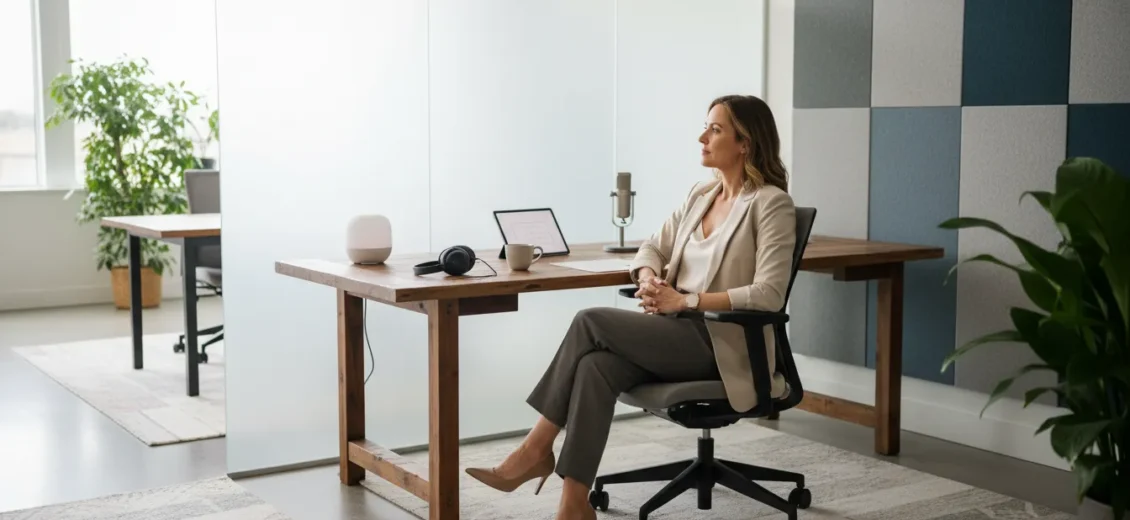
Table of Contents
- Introduction
- Understanding the Basics of Office Acoustics
- Utilizing Soft Goods for Maximum Absorption
- Strategic Furniture Placement and Physical Barriers
- Addressing Gaps and Structural Weak Points
- Leveraging Technology and Professional Tools
- The Workbox Approach: Built-in Acoustic Integrity
- Operational Support and the Value of Managed Space
- Building Connections in a Professional Environment
- Real-World Scenarios: Finding the Right Balance
- Reducing Administrative Burdens
- Conclusion
- FAQ
Introduction
Have you ever been in the middle of a high-stakes client presentation only to be interrupted by the sudden, sharp hum of a neighboring office’s espresso machine or the muffled but distracting echo of a conversation in the hallway? Or perhaps you have found yourself whispering during a confidential strategy session, worried that the “thin walls” of your current workspace are not providing the privacy your business demands. Acoustic distractions are more than just a minor annoyance; they are a significant barrier to the deep work required for professional success.
When sound travels unchecked, it compromises both productivity and confidentiality. For founders, leaders, and growing teams, managing the “acoustic footprint” of an office is essential for maintaining a professional environment. The purpose of this post is to provide a comprehensive look at how to soundproof office space effectively, ranging from simple interior design adjustments to the structural advantages of a professionally managed workspace. We will cover the science of sound absorption, practical DIY methods for existing spaces, and why choosing a workplace designed with operational excellence in mind can eliminate the need for these technical headaches altogether.
Ultimately, creating a sound-controlled environment is not just about silence—it is about intentionality. By mastering your office acoustics, you are investing in your team’s ability to focus and your company’s professional reputation.
Understanding the Basics of Office Acoustics
Before diving into specific tactics on how to soundproof office space, it is helpful to understand how sound behaves in a professional setting. Sound moves like a wave, and when it hits a surface, it does one of three things: it reflects, it is absorbed, or it passes through.
In many modern offices, the prevalence of “hard” surfaces—glass walls, polished concrete floors, and exposed ceilings—creates a playground for sound waves to bounce. This reflection leads to echo and reverberation, which makes it difficult to hear clearly on calls and increases the overall volume of the room.
Soundproofing, on the other hand, usually involves two distinct goals:
- Sound Absorption: Reducing the echo within a room so that it sounds “crisp” and professional.
- Sound Blocking: Preventing sound from entering or leaving a specific area to ensure privacy and focus.
Most workplace strategies require a combination of both. Whether you are trying to shield a private office from the noise of a busy corridor or ensuring that a meeting room remains truly private, the following strategies provide a roadmap for improvement.
Utilizing Soft Goods for Maximum Absorption
One of the most accessible ways to manage sound is through the strategic use of soft materials. In the world of office design, these are often referred to as “absorptive treatments.” Because sound waves lose energy when they hit soft, porous surfaces, adding these elements can drastically reduce the “hollow” sound common in newer office buildings.
The Power of Floor Coverings
Hardwood and concrete floors are visually stunning but acoustically loud. Foot traffic, the rolling of chairs, and even a dropped pen can create sharp sounds that travel. Adding high-density area rugs or carpet tiles is a foundational step in soundproofing. For a small team transitioning into a new space, a thick rug not only defines the workspace but also acts as a primary sound dampener.
Window Treatments and Fabric
If your office features large windows, you are likely dealing with significant sound reflection. Heavy, high-quality curtains or acoustic drapes can be drawn during important calls to block out exterior city noise and absorb internal echoes. Even fabric-based wall hangings or tapestries can serve as decorative ways to break up large, flat surfaces that would otherwise bounce sound.
The Role of Biophilic Design
Incorporating plants is a classic example of “Workspace with a Purpose.” Research, including studies from Harvard’s T.H. Chan School of Public Health, suggests that natural elements in the office improve well-being and productivity. From an acoustic perspective, plants—specifically those with large, broad leaves—help scatter sound waves. While a single succulent may not do much, a collection of greenery can contribute to a softer acoustic environment.
Strategic Furniture Placement and Physical Barriers
Sometimes, the best way to soundproof a space is simply to rethink the layout. Density is your friend when it comes to blocking sound.
Using Storage as a Buffer
Large, heavy pieces of furniture like bookshelves or filing cabinets can act as effective sound barriers. If you share a wall with a high-traffic area, placing a tall, fully stocked bookshelf against that wall creates a layer of mass that sound waves struggle to penetrate. This is a practical solution for a consultant or legal professional who requires a quieter environment in a private space without committing to major construction.
Room Dividers and Acoustic Panels
If you are operating in an open-plan environment, acoustic room dividers can provide a sense of separation. These are often made of compressed felt or other specialized foam materials. Similarly, wall-mounted acoustic panels have become a staple of modern office design. These are not the egg-carton foams of the past; modern panels are available in various colors and shapes, allowing them to double as professional decor while they work to soak up mid-to-high frequency sounds.
Addressing Gaps and Structural Weak Points
Sound is like water; it will find the smallest gap and leak through. If you can see light through a gap, sound is definitely getting through.
Doors and Thresholds
The door is often the weakest link in any private office’s soundproofing. Most standard office doors have a gap at the bottom. Installing a simple door sweep or weather stripping can close these gaps and significantly reduce the amount of noise that “leaks” in from the hallway. Additionally, ensuring that the door itself has a solid core rather than being hollow can make a world of difference in blocking out the sounds of a bustling community.
Sealing the Perimeters
Check the corners of your office and the areas where the walls meet the ceiling. In some older buildings, these joints may not be perfectly sealed. Using acoustic caulk—a specialized, flexible sealant—can fill these minor gaps and prevent sound from “flanking” around your walls.
Leveraging Technology and Professional Tools
While physical changes to the space are vital, technology provides a final layer of acoustic control.
Noise-Canceling Equipment
For individual focus, high-quality noise-canceling headphones are a non-negotiable tool for the modern professional. They allow a member to create their own “personal” sound environment, which is particularly useful when working in vibrant common areas or during travel between Workbox locations.
White Noise and Sound Masking
It may seem counterintuitive to add sound to a room to make it quieter, but sound masking (or white noise) works by raising the “ambient floor” of a room. This makes distant conversations less intelligible and less distracting. Many high-end managed workspaces integrate sound masking into their infrastructure to ensure that even in a busy environment, individual conversations remain private and background noise is neutralized.
The Workbox Approach: Built-in Acoustic Integrity
While the DIY tips above are helpful for immediate fixes, the most effective way to ensure a productive, quiet environment is to choose a workspace that was built with these needs in mind from day one. At Workbox, our “Member Success” philosophy means we take on the administrative and operational burden of office management so you can focus on your business.
Private Offices and Suites Designed for Professionals
Our private offices and suites are more than just four walls. They are designed to be the corporate headquarters for leaders and innovators. We understand that your office needs to be a place where you can hold a confidential board meeting one hour and conduct deep, focused research the next. When you choose a private office with us, you aren’t just getting a room; you’re getting a professional environment where:
- Acoustic Considerations are Standard: We utilize layouts and materials that prioritize professional privacy.
- Logo Placement is Included: Every private office member receives company logo placement on their door at no additional cost, cementing your professional presence.
- Fully Furnished Convenience: Our offices include furnished desks and chairs, removing the need for you to source and move heavy furniture that aids in sound management.
Access to Specialized Spaces
Sometimes, you don’t need a soundproofed office all day; you just need a quiet spot for a 20-minute call. Workbox provides a variety of space types to match your workflow:
- Phone Booths: Perfect for quick, private calls where you need to step away from the collaborative energy of the common areas.
- Meeting Rooms: Our private conference rooms (starting at $60/hr for non-members, with variations by location) are designed for professional presentations and collaborative sessions without outside interference.
- Wellness Room: A quieter environment in a private space for those moments when you need to recharge or step away from the workday’s noise.
Operational Support and the Value of Managed Space
One of the most overlooked aspects of soundproofing an office is the sheer cost and time involved in doing it yourself. In a traditional office model, you might spend thousands on acoustic consultants, specialized materials, and labor—not to mention the ongoing maintenance.
When we talk about “Success Takes More,” we are referencing the operational support that acts as your company’s backbone. By choosing Workbox, you avoid the common overhead of a traditional office, such as:
- Coordinating with contractors for sound treatments.
- Managing utilities, cleaning, and furniture procurement.
- Navigating long-term, 7-to-10-year leases that don’t allow for the flexibility your growing team needs.
Instead, we provide a bundled workplace environment that simplifies operations from day one. Whether it’s ensuring the Wi-Fi is fast and secure or maintaining a professional cleaning service, we handle the “office administration” so you can focus on “Business Development.”
Building Connections in a Professional Environment
Soundproofing isn’t just about keeping noise out; it’s about creating an environment where high-quality interactions can happen. At Workbox, we prioritize “Member Connection.” This means that while your office provides the privacy you need, the surrounding community provides the connectivity your business requires to thrive.
High-Quality Member Interactions
Our spaces are destinations for leaders and investors. By offering weekly community-based engagements and quarterly mixers, we facilitate a network of innovators. These events are designed to help you connect with other members in a structured, professional way. Imagine finishing a focused morning in your sound-controlled private office and then stepping out into the common area for a community breakfast where you meet a potential partner or vendor.
A National Network
As a member, you have 24/7 access to your home-base location and 8:30 am–5:00 pm access to any other Workbox location nationwide. This means that whether you are in Chicago, Salt Lake City, or any of our other hubs, you can rely on the same professional standard of workspace and the same level of community connectivity. You can explore Workbox locations to compare available markets.
Real-World Scenarios: Finding the Right Balance
To illustrate how these acoustic strategies and Workbox resources come together, consider these common professional journeys:
The Growing Team Needing Consistency
For a small team of four transitioning out of noisy coffee shops or a cramped home basement, the noise and lack of privacy can hinder their growth. By moving into a Workbox private office, they gain a consistent home base. They no longer have to worry about “how to soundproof” their environment because the space is already optimized for them. They have the privacy for internal strategy calls and a professional door with their logo to greet clients. When they need a break, they have access to the Business Development resources and a community of other founders who have faced similar challenges.
The Consultant Balancing Deep Work and Meetings
For a consultant who spends half their day on Zoom and the other half in deep research, a Floating Membership provides the perfect rhythm. They can use the vibrant common areas for general work and networking, but when it’s time for a high-priority client call, they can reserve a professional meeting room or step into a phone booth. This flexibility ensures they aren’t paying for more than they need while still having access to a high-end, quiet environment when it matters most.
Reducing Administrative Burdens
The hidden cost of a loud office is the mental energy spent trying to ignore it. Traditional office models often leave sound management up to the tenant. If you are on a long-term lease, making structural changes to improve acoustics can be a nightmare of permissions and capital expenditure.
At Workbox, our model is built on flexibility. With a lower upfront commitment—often just one month’s rent with a two-month minimum lease—you can scale your space as your team grows. You don’t have to worry about the cost of internet, utilities, or printing (which we offer as an unlimited service for members). You don’t have to hire a receptionist (we have dedicated community managers from 8:30 am to 5:00 pm). All of these “operational backbones” are handled, including the acoustic integrity of the space.
Conclusion
Understanding how to soundproof office space is a vital skill for any professional, but it is also a task that shouldn’t fall solely on your shoulders. By implementing soft goods, rethinking furniture placement, and utilizing technology, you can create a more focused environment. However, the most efficient strategy for a growing business is to partner with a workspace provider that understands the intersection of space, community, and support.
At Workbox, we are dedicated to Member Success. We provide “Workspace with a Purpose” so that you can stop worrying about the noise in the hallway and start focusing on the growth of your company. From our private offices with included logo placement to our purposeful programming and national network of innovators, we offer the resources you need to operate smoothly. Our membership benefits include the amenities and support that help members work productively.
If you are ready to move your team into a space designed for focus, connection, and growth, we invite you to explore what a Workbox membership can do for you. Our team is here to help you find the perfect fit, whether you need a single desk or a full suite for your expanding team.
Take the next step in your professional journey. View our locations and schedule a tour today to experience a workspace built for your success.
FAQ
What are the most effective ways to reduce noise in an open-plan office?
Reducing noise in an open-plan office requires a combination of sound absorption and behavioral changes. Utilizing soft materials like high-density rugs, acoustic wall panels, and large plants can help “soak up” the echo. Additionally, providing dedicated spaces for louder activities—such as phone booths for calls and meeting rooms for group discussions—helps keep the open areas quieter for everyone. At Workbox, we provide these specialized zones to ensure all members can find the right environment for their tasks.
How can I improve privacy for confidential calls in a shared workspace?
Privacy for confidential calls is best achieved by using physical barriers. If you are in a shared common area, moving to a phone booth or a private meeting room is the most effective solution. These spaces are designed to contain sound and prevent eavesdropping. For those who frequently handle sensitive information, a private office or suite at Workbox offers the ultimate level of privacy, along with 24/7 access to your home location.
Do acoustic panels actually work for office soundproofing?
Acoustic panels are highly effective for sound absorption, which means they reduce the echo and “bounce” of sound within a room. This makes conversations clearer and the overall environment feel quieter. However, they are less effective at blocking sound from moving between rooms. To block sound, you need mass and a complete seal, such as solid doors and filled wall gaps. Combining panels with structural fixes like door sweeps provides the best results.
What is the difference between soundproofing and sound absorption?
Soundproofing (or sound blocking) is the process of preventing sound from entering or leaving a room. This usually requires heavy, dense materials and sealing any air gaps. Sound absorption is the process of reducing echo and reverberation within a single room using soft, porous materials like foam, felt, or carpet. For a professional office, you typically need a mix of both: absorption to make the room sound good for calls, and soundproofing to ensure privacy from neighbors.