skip to main content
 How to Improve Office Space for Maximum Team Success
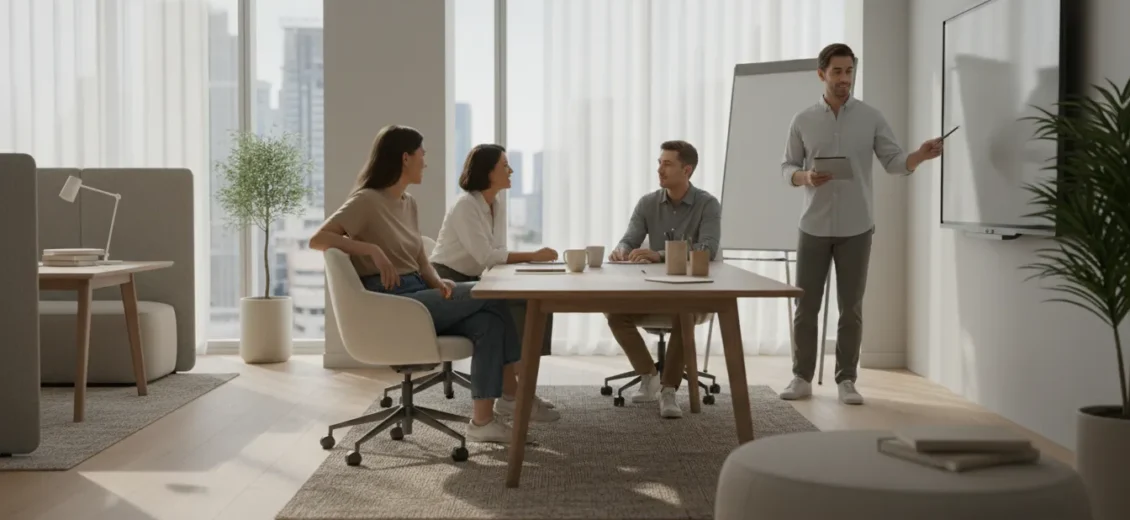
Table of Contents
- Introduction
- Focus on Functionality and Spatial Flow
- Leverage Professional Operational Support
- Prioritize High-Quality Member Connection
- Elevate Your Brand and Professional Presence
- Integrating the Business Development Layer
- Enhancing Well-being and Daily Experience
- Planning for Scalability and Growth
- Conclusion
- FAQ
Introduction
Does your current office feel like a destination where your team thrives, or has it become a mere obligation that people fulfill for forty hours a week? For many business leaders, the realization that their workspace isn’t serving their goals comes not from a single major failure, but from a series of small frictions: a lack of private space for calls, a community that feels disconnected, or the constant administrative headache of managing utilities and supplies. Improving an office space is often treated as an exercise in interior design, but true improvement requires a more holistic strategy.
At Workbox, we believe in “Workspace with a Purpose.” This means that the physical environment is only one part of the equation. To truly understand how to improve office space, one must look at the intersection of professional connection, operational efficiency, and a supportive community. It is about shifting the focus from simply providing four walls and a desk to fostering an environment where “Member Success” is the primary metric.
In this guide, we will explore practical and strategic ways to enhance your work environment. We will cover how to optimize your physical layout for different work styles, the importance of offloading operational burdens to focus on your core business, and how to leverage a built-in professional network to accelerate growth. Whether you are a solo consultant or a scaling team, the goal is to transform your office into a platform for success rather than a static overhead expense.
Focus on Functionality and Spatial Flow
When considering how to improve office space, the most immediate changes often involve the physical layout. However, improvement isn’t about following the latest design trends; it is about creating a “functional mix” that supports the various ways people actually work throughout the day.
Creating Dedicated Spaces for Collaboration
The modern workday is a cycle of collaborative bursts and individual focus. A common mistake in traditional office setups is an over-reliance on a single type of space, such as an entirely open floor plan or entirely closed offices. To improve the space, you must provide variety.
At Workbox, our locations are designed to facilitate this flow. We provide large, tech-ready conference rooms for formal strategy sessions and communal lounge areas for more casual brainstorming. By providing distinct areas for different types of interaction, you reduce the friction of the workday. When a team needs to solve a complex problem, they shouldn’t be huddled around a single desk in a crowded room; they should have access to a professional meeting environment that encourages participation.
Providing Privacy with Phone Booths and Meeting Rooms
One of the most frequent complaints in any office environment is the lack of privacy for sensitive calls or deep work. Improving your space means addressing this head-on. Rather than trying to enforce silence across an entire floor, which is often counterproductive, the solution lies in providing accessible private spaces.
We incorporate phone booths into our floor plans specifically for this reason. These spaces allow members to step away from the communal environment for a private client call or a quick sync without taking up a full conference room. Additionally, for tasks requiring a quieter environment in a private space, members in private offices or suites have the luxury of their own door to close, while floating members can utilize these dedicated booths to maintain their workflow.
Leverage Professional Operational Support
A significant part of knowing how to improve office space involves looking at what happens “behind the scenes.” A workspace is only as good as the infrastructure supporting it. In a traditional office, the burden of management often falls on the business owner or an office manager, distracting them from their primary professional goals.
Eliminating the Administrative Burden
Think about the hours spent coordinating with internet service providers, managing janitorial schedules, ordering office supplies, and troubleshooting printer issues. These are all “hidden costs” of a traditional office that lower the quality of the workspace.
We solve this by providing a seamless operational backbone. When you choose a flexible workspace like Workbox, you are essentially outsourcing the administrative burden of running an office. Our dedicated community managers handle the day-to-day operations, from ensuring the coffee is fresh to managing mailing and packaging services for our members. This allows you to walk into a space that is already optimized, allowing your team to focus entirely on their work from day one.
Bundling Workplace Essentials
A simple way to improve the value of your office is to bundle your essential services into a single, predictable monthly cost. Traditional leases often involve complex negotiations and a long list of separate vendors. By moving to a model where fast, secure Wi-Fi, Ethernet, professional cleaning, and utilities are all included, you simplify your business operations.
For example, imagine a small team transitioning out of a home office or a coffee shop. In a traditional setup, they would spend weeks setting up utilities and furniture. At Workbox, they can move into a fully furnished private office or suite, with their company logo already on the door, and have everything they need to operate immediately. This reduction in upfront commitment and setup time is a direct improvement to the business’s agility.
“A workspace should work for you, not the other way around. By offloading the operational overhead, leaders can reinvest their time into the growth and connection that actually drive their business forward.”
Prioritize High-Quality Member Connection
The social and professional environment of an office is just as important as the physical furniture. An office space is improved when it becomes a hub for high-quality interactions rather than just a collection of strangers working in the same building.
Purposeful Community Programming
Improving an office space involves creating opportunities for people to connect in meaningful ways. This isn’t about forced socialization, but about purposeful programming that supports professional connection and business development.
At Workbox, we facilitate this through weekly community-based engagements and quarterly mixers. These events are designed to be distinct touchpoints where members can meet other innovators, leaders, and potential partners. When your office space includes a built-in network of other professionals, the “improvement” is found in the potential for collaboration that didn’t exist before. Access to partnership events across the country further extends this benefit, allowing members to build their network far beyond their home-base location.
The Role of the Community Manager
A key differentiator in a high-quality workspace is the presence of a dedicated community manager. Unlike a traditional receptionist, a community manager acts as a facilitator for Member Success. They aren’t just there to greet guests; they are there to make introductions, help members navigate the resources available to them, and ensure the community atmosphere remains professional and productive.
For a consultant who spends much of their day in client meetings, having a community manager to handle incoming packages or direct guests adds a level of professional polish that is difficult to replicate in a solo office or a traditional coworking setup. This human element is a critical component of how to improve office space.
Elevate Your Brand and Professional Presence
Your office is often the first physical touchpoint a client has with your brand. Improving the space means ensuring it reflects the professionalism and ambition of your company.
Professional Meeting Environments
If you are hosting a potential investor or a high-value client, the environment matters. Moving meetings from a noisy cafe to a tech-ready conference room is an immediate upgrade. Workbox offers private conference rooms that can be booked by the hour, starting at $60/hr (pricing varies by location). These rooms provide a controlled, professional setting with fast Wi-Fi and the necessary hardware to run a seamless presentation.
For non-members or those using a day pass, these rooms are available during staffed hours (8:30 am to 5:00 pm, Monday through Friday). For our members, having access to these professional spaces—combined with 24/7 access to their home-base location—ensures they are always prepared to host, regardless of the time or day.
Company Logo Placement
A small but impactful way we help improve the office space for our private office and suite members is by including company logo placement on the office door at no additional cost. This simple addition helps a growing team establish a sense of identity and permanence. It transforms a generic office into a corporate headquarters. Nearly two-thirds of our member companies choose Workbox as their corporate headquarters because of this balance between professional identity and flexible infrastructure.
Integrating the Business Development Layer
When we talk about “Workspace with a Purpose,” we are referring to the enabling layer of resources that sit on top of the physical space. This is perhaps the most significant way to improve an office space for a growing company.
Accessing Vendor Discounts and Resources
An improved office space should save you money beyond just the rent. Through our business development resources, members gain access to a virtual platform that includes significant vendor discounts and cloud credits. These are tangible business benefits that help reduce the cost of doing business.
For a founder trying to stretch their runway, these credits and discounts can be more valuable than the desk itself. It changes the office from an “expense” into a “resource.” This holistic approach to member benefits and included resources ensures that as your business grows, your workspace is actively providing tools to support that growth.
Networking with Industry Leaders
Access to a powerful network of other innovators and leaders is a core part of the Workbox experience. We create opportunities for purposeful programming where members can interact with capital partners and seasoned business leaders. While we never guarantee funding or specific outcomes, the connectivity we provide is designed to put our members in the best possible position to succeed.
For a team that has just moved into a private suite, being down the hall from a venture capitalist or a seasoned industry veteran can lead to the kind of high-quality member-to-member interactions that simply don’t happen in a traditional, isolated office building.
Enhancing Well-being and Daily Experience
The psychological impact of a workspace cannot be overstated. Improving an office space must include a focus on the well-being of the people who use it every day.
Wellness Rooms and Shared Amenities
A modern office should cater to the needs of the whole person. This includes having a wellness room for those who need a moment of privacy or respite during a busy day. It also includes the “little things” that make a big difference in the daily rhythm: complimentary coffee and tea, filtered water, and even draft or bottled beer at select locations for those after-work social moments.
When these amenities are provided and maintained by a professional team, they become seamless parts of the workday. You don’t have to worry about who is cleaning the coffee machine or if the water filter has been changed. Professional cleaning services ensure that the environment remains healthy and inviting, which is a fundamental requirement for any improved workspace.
Social Connectivity and Culture
Isolation is a common challenge for remote workers and small teams. By moving into a community-centric environment, you improve the office space by adding a social layer. Whether it’s a community breakfast or a casual conversation in the kitchen, these interactions help build a sense of belonging.
For a small team transitioning out of a home-based environment, this connectivity can improve morale and foster a more vibrant company culture. They are no longer working in a vacuum; they are part of a broader ecosystem of professionals. This sense of being “in it together” with other leaders and innovators can provide a significant boost to a team’s energy and outlook.
Planning for Scalability and Growth
A common pitfall in traditional office leasing is the lack of flexibility. You either have too much space and are paying for empty desks, or you have too little space and are cramped. A truly “improved” office space is one that can grow with you.
From Floating Memberships to Private Suites
The flexibility of the Workbox model allows you to scale your footprint as your needs change. You might start with a floating membership (starting at $250/mo) as you find your footing. As you hire your first employee, you might transition to a desk membership (starting at $350/mo) to have a dedicated spot. When your team grows further, you can move into a private office or larger suite (starting at $500/mo).
Because we offer a variety of workspace types—from day passes and desk memberships to full-scale private suites—you never have to worry about a “move” being a massive disruption to your business. You can stay within the same community, keep the same community manager, and maintain the same professional address while simply moving into a larger room down the hall. This operational flexibility is a major strategic improvement over the rigid 7–10 year terms of a traditional office lease.
National Access for a Mobile Workforce
In a world where business travel and distributed teams are common, having an office that extends beyond a single city is a massive improvement. Workbox members have 24/7 access to their home-base location, but they also have access to any other Workbox location nationwide during staffed hours (8:30 am to 5:00 pm).
Imagine a consultant based in Chicago who needs to host a meeting in another city. They can walk into a Workbox location in that city, use the secure Wi-Fi, and book a conference room, all while feeling at home in a familiar, professional environment. This consistency of experience across multiple Workbox locations improves the efficiency of any professional who is frequently on the move.
Conclusion
Improving an office space is not a project with a defined end date; it is an ongoing strategy to align your physical environment with your professional goals. By focusing on the core pillars of Member Success—Functional Space, Operational Support, and Member Connection—you can transform your workspace into a powerful asset for your business.
At Workbox, we are committed to providing more than just desks and chairs. We provide a platform where leaders, innovators, and investors can come together to grow. From the operational backbone that handles your daily office administration to the business development layer that connects you with resources and a national network, our goal is to ensure that your workspace is working as hard as you are.
Whether you are looking to move away from the distractions of a home office, seeking to reduce the administrative burden of a traditional lease, or wanting to place your team in a more connected and professional environment, there is a solution that fits your needs. We invite you to experience “Workspace with a Purpose” firsthand.
Explore our locations and see how our tailored office solutions can help your business reach its next milestone. Reach out to our team today to schedule a tour and discover the difference that a dedicated focus on Member Success can make for your team.
FAQ
What are the best ways to improve office space layout?
Improving an office layout starts with creating a balance between collaborative zones and focus-driven areas. Incorporating phone booths for private calls, professional conference rooms for team meetings, and lounge areas for casual interaction ensures that the space supports various work styles. Utilizing a flexible workspace provider like Workbox ensures these layouts are professionally managed and optimized for productivity.
How does a flexible workspace improve office space compared to a traditional lease?
A flexible workspace improves the office experience by removing the administrative and operational burdens of a traditional lease. Instead of managing multiple vendors for internet, cleaning, and utilities, these services are bundled into one membership. Additionally, flexible workspaces offer lower upfront commitments and the ability to scale your space as your team grows, which is often impossible with rigid, long-term traditional leases.
Can I improve office space for my team on a budget?
Yes, improving office space on a budget is often best achieved through a membership model. By using a floating or desk membership, you gain access to premium amenities like high-speed internet, professional cleaning, and community events without the high overhead of a private suite. As your budget and team grow, you can seamlessly transition into a private office while maintaining the same professional address and community support.
How do amenities like coffee and fast Wi-Fi improve office space?
While they may seem like small details, high-quality amenities are essential for a frictionless workday. Fast, secure Wi-Fi and Ethernet are the lifeblood of modern business, while complimentary coffee, tea, and filtered water improve the daily experience for employees. When these are managed professionally, it ensures that the team never has to waste time on office maintenance, allowing them to remain focused on their core tasks.