skip to main content
 Smart Strategies for Making a Small Office Space Look Bigger
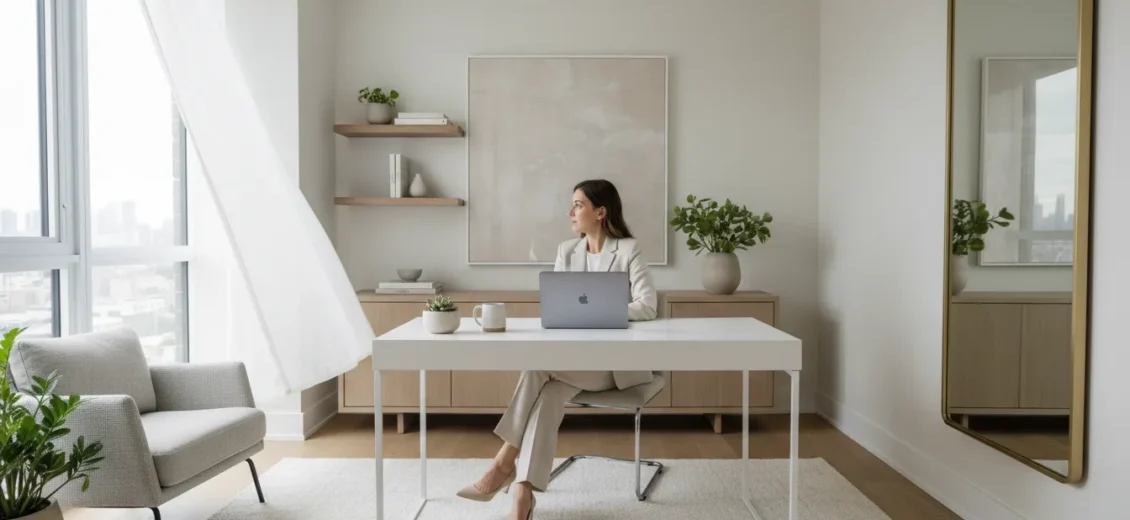
Table of Contents
- Introduction
- The Psychology of Spatial Perception in the Workplace
- Leveraging Light and Color to Expand Your Horizon
- Strategic Furniture and Layout Decisions
- The Power of Vertical Space and Decluttering
- Operational Support: Reducing the “Administrative Footprint”
- Maximizing Space Through Member Connection
- Practical Scenarios: Scaling Without the Squeeze
- The Workbox Approach to Space and Success
- Practical Tips for Your Daily Routine
- Conclusion
- FAQ
Introduction
Have you ever walked into your office on a Monday morning and felt like the walls were moving just a few inches closer? For many founders and growing teams, the physical workspace can quickly begin to feel like a constraint rather than a catalyst for growth. As a business expands, its physical footprint often struggles to keep pace with its ambitions. However, the feeling of a cramped environment is rarely just about total square footage; it is often a result of how that space is utilized, lit, and perceived by those who inhabit it.
The purpose of this post is to provide a comprehensive look at how to make a small office space look bigger through strategic design, intentional layouts, and the adoption of more flexible workspace models. We will explore everything from the science of color and light to the operational advantages of a bundled workplace environment. We will also examine how moving beyond the traditional four walls of a private office into a professional community can effectively “expand” your footprint without increasing your overhead.
At Workbox, we believe that success takes more than just a desk; it requires a workspace with a purpose. Our philosophy is centered on Member Success, which means providing the environment, resources, and connections necessary for your business to thrive regardless of its current size. By the end of this article, you will understand how to transform a modest office into a high-functioning, professional headquarters that feels expansive and inspires confidence in both your team and your clients.
The Psychology of Spatial Perception in the Workplace
Before moving furniture or picking up a paintbrush, it is important to understand why the size of an office matters. It is not merely a matter of comfort. Spatial perception plays a significant role in cognitive load, stress levels, and professional confidence. A cluttered, dark, or poorly arranged office can lead to a sense of being “stuck,” which can subtly impact productivity and long-term vision.
When a space feels open and airy, it encourages expansive thinking. For leaders and innovators, the environment should serve as a blank canvas for ideas, not a reminder of physical limitations. This is one reason why nearly two-thirds of our member companies choose Workbox as their corporate headquarters. They recognize that a well-designed, professional environment—regardless of the specific square footage of their private suite—positions them as established players in their industry.
The goal of making a small office look bigger is to reduce visual noise. When the eye can move across a room without being interrupted by clutter or heavy furniture, the brain perceives the space as larger. By applying specific design principles, you can create a professional presence that punches well above its weight class.
Leveraging Light and Color to Expand Your Horizon
One of the most effective ways to change the perception of a room is through the strategic use of light and color. This is the foundation of spatial design.
The Power of Natural Light
Natural light is the ultimate tool for expanding a space. It blurs the boundaries between the indoors and outdoors, making the walls feel less restrictive. If you are in a private office or suite, ensure that window views are not obstructed by large filing cabinets or heavy drapery.
In many of our Workbox locations, we prioritize floor-to-ceiling windows and glass-fronted offices to ensure that natural light permeates as deep into the floor plate as possible. If natural light is limited, the solution is to layer your lighting. Avoid relying solely on harsh overhead fluorescent lights, which can create dark corners and make a room feel boxy. Instead, use a mix of task lighting and ambient lamps to draw the eye to the corners of the room, effectively “pushing” the walls out.
Strategic Color Palettes
The colors you choose for your walls and furniture can either absorb light or reflect it. To make a small office space look bigger, lean toward a light, neutral palette.
- Whites and Off-Whites: These are classic for a reason. They reflect the most light and create a seamless look.
- Cool Tones: Soft blues and greens tend to “recede” from the eye, making walls appear further away than they actually are.
- Monochromatic Schemes: Using different shades of the same color for walls, trim, and even some furniture can reduce visual transitions, creating a more continuous and expansive feel.
At Workbox, our spaces are designed with a professional, modern aesthetic that utilizes these principles. By providing a clean, sophisticated backdrop, we allow our members to add their own branding—including a company logo placement on the office door at no additional cost—without making the space feel cluttered or overwhelming.
Strategic Furniture and Layout Decisions
In a smaller office, every piece of furniture must justify its existence. The wrong desk or an oversized chair can swallow a room whole.
Choose Furniture with a Slim Profile
Avoid heavy, solid-wood furniture that sits directly on the floor. Instead, look for desks and chairs with “legs” that allow you to see the floor underneath. Being able to see more of the floor and the baseboards tricks the brain into thinking there is more total area in the room.
When you join Workbox, our private offices and suites include furnished desks and chairs designed to balance professional utility with a modern, streamlined aesthetic. This removes the burden of sourcing and moving heavy furniture, ensuring your office is optimized for space from day one. (See our workspace membership options and pricing for details.)
Private offices & workspace memberships
The Importance of the “Path of Travel”
The layout of your office should prioritize a clear path of travel. If you have to shimmy around a desk or a guest chair to get to your seat, the office will feel small. Keep the center of the room as open as possible. Pushing desks against walls or utilizing an L-shaped configuration can open up the middle of the floor, creating a more breathable environment.
Utilizing Glass and Transparency
Transparency is a major trend in modern workplace strategy for a reason. Glass walls or partitions provide sound privacy without the visual “clutter” of a solid wall. In a Workbox environment, many of our private offices feature glass fronts. This allows members to feel connected to the vibrant professional community and the natural light of the common areas while maintaining the privacy needed for deep work or sensitive calls.
The Power of Vertical Space and Decluttering
When floor space is at a premium, look up. Many professionals forget that the volume of a room includes the space between the top of their heads and the ceiling.
High Shelving and Vertical Storage
Instead of wide bookshelves that take up precious square footage, utilize vertical shelving. This draws the eye upward, highlighting the height of the room rather than the width. However, be careful not to over-stuff these shelves, as visual clutter at a high level can make a room feel “top-heavy” and enclosed.
The Digital Transformation of the Office
Physical clutter is the enemy of a spacious office. Stacks of paper, overflowing bins, and tangled cords can make even a large room feel tiny. Transitioning to a paperless workflow is one of the fastest ways to reclaim physical space.
- Cable Management: Use sleeves or clips to hide wires. A “spaghetti” of cords under a desk creates visual chaos.
- Minimalist Decor: Choose one or two bold pieces of art rather than a dozen small trinkets. One large focal point creates a sense of scale, while many small items create clutter.
At Workbox, we support this lean operational approach through our integrated resources. Our members have access to unlimited printing and professional mailing and packaging services (available to those with a Floating Membership or higher, with details varying by location), which allows them to keep their internal office footprint focused entirely on their work rather than on bulky equipment or storage needs. (Learn more about what is included with membership.)
Membership benefits and included amenities
Operational Support: Reducing the “Administrative Footprint”
One often overlooked aspect of making an office look and feel bigger is removing the “back-office” clutter. In a traditional office, you have to find room for a printer, a coffee station, a reception area, and storage for cleaning supplies. These items take up physical space and require mental energy to manage.
This is where the value of a bundled workplace environment becomes clear. By choosing a flexible workspace, you shift these operational burdens to us. We provide the “operational backbone” that allows your private office to remain a place of work, not a storage unit for office supplies.
Our members enjoy a seamless experience where the following are handled as part of the membership:
- Professional Cleaning Services: Keeping your space pristine and inviting.
- Communal Kitchens: Access to filtered water, complimentary coffee and tea, and even draft or bottled beer in select locations. This removes the need for bulky breakroom appliances in your private suite.
- Staffed Reception: During business hours (8:30 am to 5:00 pm), our dedicated community managers provide a professional point of contact for your guests, effectively giving you a “lobby” that doesn’t count toward your private square footage.
By reducing the administrative burden of running an office—from coordinating internet and utilities to managing supplies—you free up both physical space and mental bandwidth to focus on your business’s growth.
Maximizing Space Through Member Connection
The size of your office is not just defined by the walls of your suite; it is defined by the resources you can access. This is a core part of our “Success Takes More” philosophy. When you are a member at Workbox, your “office” effectively expands to include our entire suite of amenities and community spaces.
Using Common Areas for Different Tasks
If you need to take a quick call, you don’t have to stay in your office; you can use one of our phone booths. If you need a change of scenery for brainstorming, you can move to our lounges or cafe areas. This “activity-based working” makes your workspace feel much larger because you aren’t tethered to a single desk.
For a small team transitioning out of a home office or a coffee shop, a private office at Workbox gives them consistency and privacy for calls while still allowing them to tap into a broader professional community. They get the benefits of a large corporate campus without the cost or maintenance of one.
Professional Meeting Rooms
One of the biggest space-wasters in a traditional small office is a dedicated conference table that is only used 10% of the time. At Workbox, our members have access to private conference rooms (starting at $60/hr for non-members, though member rates and credits vary). For a consultant juggling client meetings and deep work, reserving a professional meeting room when needed creates a predictable and professional rhythm without requiring a massive, underutilized private office.
Host a meeting or event at Workbox
High-Quality Member-to-Member Interactions
Your footprint also grows through your network. We facilitate high-quality member-to-member interactions through weekly community-based engagements and quarterly mixers. These events are designed to help you build connections that can lead to business development opportunities. When you have a network of innovators, leaders, and investors just outside your door, your business feels more connected and established, regardless of your team size.
Practical Scenarios: Scaling Without the Squeeze
The Growing Startup
Imagine a three-person startup that has just secured its first round of seed funding. They could sign a traditional five-year lease on a 2,000-square-foot office, but that requires a massive upfront commitment and the need to buy furniture, set up Wi-Fi, and hire a cleaning crew.
Instead, they choose a private office at Workbox starting at $500/mo (depending on location). Their private office is the “engine room” where they code and strategize. When they need to meet with potential hires or investors, they use the beautifully designed common areas or book a conference room. They have 24/7 access to their home base and can work from any other Workbox location nationwide during staffed hours. Their office looks and feels “big” because it is backed by a national platform and a powerful network of other innovators.
The Independent Professional
Consider a specialized consultant who needs a quiet environment in a private space for client calls but misses the social energy of a traditional office. By choosing a desk membership (starting at $350/mo) or a private office, they gain a professional business address and access to our Business Development layer.
They don’t need a huge office because they utilize the “enabling layer” of Workbox resources—from vendor discounts and cloud credits to purposeful programming. Their “office” isn’t just a desk; it’s a gateway to capital partners and business leaders. The space looks bigger because it is bigger—it’s a gateway to a national ecosystem of professional connection.
If you just need workspace for a day, drop-in options are available to try the space and amenities without a long-term commitment.
Day pass options and availability
The Workbox Approach to Space and Success
We understand that for your business to succeed, your workspace needs to do more than just hold your furniture. It needs to reflect your brand’s quality and support your team’s operational needs. This is why we focus on:
- Member Connection: We don’t just provide space; we provide introductions and high-quality programming that help you grow.
- Operational Support: We handle the day-to-day office administration, from secure Wi-Fi and Ethernet to professional cleaning, so you can focus on your mission.
- Capital Access: While we make no guarantees, our network connectivity and proximity to the Workbox Ventures ecosystem provide a unique environment for those looking to scale.
By choosing a workspace that offers these layers of support, the physical size of your office becomes secondary to the professional opportunities it affords. A small office in a Workbox location feels like a corner office in a premier skyscraper because you are surrounded by the same level of amenities, design quality, and professional energy.
Practical Tips for Your Daily Routine
To maintain the expansive feel of your office, consider these daily habits:
- The End-of-Day Clear: Spend five minutes every evening clearing your desk. Starting the next day with a clean surface makes the room feel larger and your mind feel clearer.
- Maximize Sightlines: Keep your desk clear of large items that block your view of the door or the window.
- Use the Wellness Room: If you need a moment of focus or a break, utilize the wellness room. Stepping out of your primary work area can provide a mental reset that makes returning to your office feel fresh.
- Vertical Organization: Use wall-mounted whiteboards or pinboards for brainstorming rather than letting papers pile up on your desk.
Conclusion
Making a small office space look bigger is a combination of smart design, intentional organization, and choosing the right workplace partner. By focusing on light, color, and streamlined furniture, you can create a professional environment that feels open and inspiring. However, the most effective way to “expand” your space is to move beyond the limitations of the traditional office model.
At Workbox, we offer a “Workspace with a Purpose” that provides more than just four walls. We provide a platform for professionals to connect, collaborate, and grow. With our holistic approach to Member Success, you get the benefit of a premium office environment, a built-in community, and a powerful Business Development layer that supports your company’s journey.
Whether you are looking for a private office for your headquarters or a desk membership to ground your freelance career, we are here to help you operate smoothly and connect deeply. Our flexible terms—starting with far lower upfront commitments than traditional leases—allow you to scale your space as your business grows.
Ready to see how a change in environment can transform your business? Explore our diverse range of workspaces and find the perfect home for your team.
Schedule a tour with Workbox or view our locations.
FAQ
How can I make my small office feel less cluttered?
The best way to reduce clutter is to utilize vertical storage and adopt a digital-first workflow. In a flexible workspace like Workbox, we also help by providing communal amenities—like kitchens and print stations—so you don’t have to store those items in your private office.
What colors make a small office look the largest?
Light, neutral colors like white, cream, or light gray reflect the most light and make walls feel more distant. Cool tones like soft blue can also help a space feel more expansive by “receding” visually.
Does the furniture really matter for the size of the room?
Yes. Choosing furniture with a slim profile and exposed legs allows you to see more of the floor, which creates the illusion of more space. Workbox provides furnished offices that are specifically designed to look professional and modern without overwhelming the room.
How does a flexible workspace provide more space than a traditional office?
A flexible workspace gives you access to a whole suite of amenities—meeting rooms, lounges, kitchens, and phone booths—that aren’t part of your private square footage. This means you only pay for the private space you need while enjoying the benefits of a much larger, fully-staffed corporate environment.