skip to main content
 What is an Open Office Space? A Guide for Modern Teams
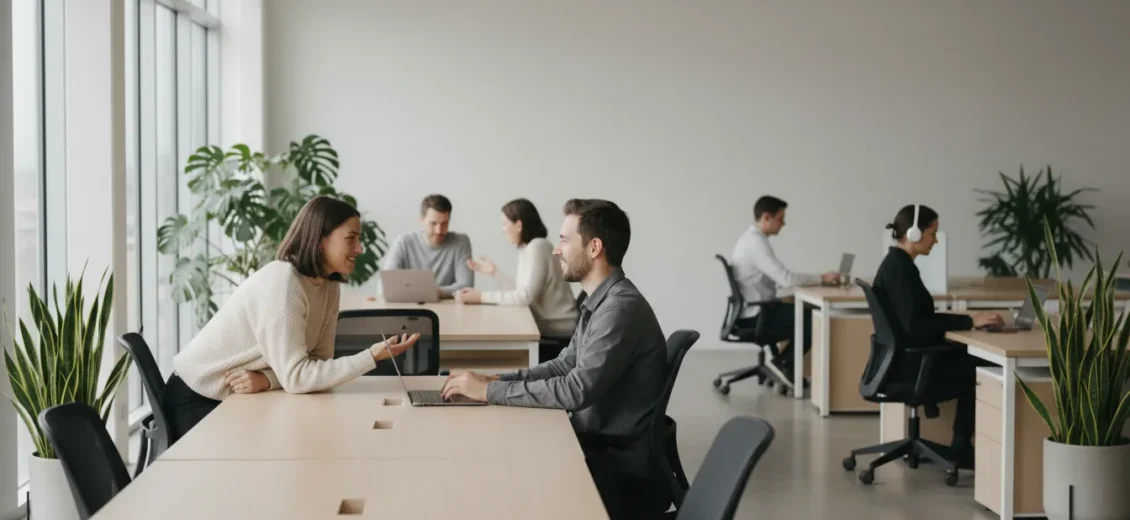

Table of Contents
- Introduction
- Defining the Open Office Environment
- The Evolution of Workspace Strategy
- The Strategic Benefits of an Open Office Layout
- Operational Support: The Invisible Advantage
- Navigating the Considerations of an Open Space
- The Business Development Layer
- Workspace Options Within the Open Model
- Real-World Scenarios in an Open Office
- Conclusion: Making the Open Office Work for You
- FAQ
Introduction
Imagine walking into a room where the air is filled with the low hum of collaborative energy, the clacking of keys, and the occasional burst of laughter from a nearby team brainstorming their next big launch. There are no high cubicle walls blocking your view of the windows, no heavy oak doors separating departments, and no feeling of being isolated in a beige box. This is the reality of the open office—a layout that has redefined how we think about professional environments. But beyond the aesthetics of long tables and shared lounges, what is an open office space in a strategic sense?
The purpose of this post is to explore the nuances of the open office layout, moving past the surface-level definitions to understand how it functions as a tool for growth, connection, and operational efficiency. We will cover the core characteristics of these spaces, the practical benefits for various types of professionals, and how a platform like Workbox elevates the open office experience through our member benefits and Member Success philosophy. By the end of this guide, you will understand how an open office environment—when supported by a robust operational backbone and a dedicated community—can serve as a powerful headquarters for your business.
At its core, an open office is more than just a floor plan; it is a workspace with a purpose, designed to break down barriers and facilitate the high-quality interactions that drive innovation in a modern economy.
Defining the Open Office Environment
To answer the question of what is an open office space, we must look at both the physical structure and the cultural intention. Physically, an open office is a workspace design that minimizes or eliminates enclosed, private offices in favor of a large, shared floor plan. Instead of assigned rooms, teams and individuals work at rows of desks, shared tables, or in communal lounge areas.
This design emerged as a response to the rigid, siloed nature of traditional corporate environments. In a traditional office, the architecture often dictates a hierarchy; the further you are from the windows or the more walls you have, the higher your status. The open office flips this script. It prioritizes access to natural light, shared resources, and, most importantly, other people.
In a Workbox environment, we take this a step further. We don’t just offer a room with desks; we provide a destination for leaders and innovators. While the layout is open to encourage movement and visibility, it is meticulously designed to include various “zones” of activity. You might find a bustling communal area for networking and coffee near the entrance, but as you move further into the space, the environment transitions into areas better suited for focus, supplemented by private phone booths and meeting rooms for when total privacy is required.
The Evolution of Workspace Strategy
The transition toward open layouts wasn’t just a design trend; it was a shift in workplace strategy. As the global economy moved toward knowledge-based work, the “factory model” of office life—where everyone stayed in their lane and followed a linear process—became obsolete. Today’s businesses require agility, rapid communication, and cross-functional collaboration.
From Cubicles to Connectivity
The cubicle era was defined by privacy at the expense of connection. While it provided a sense of individual territory, it often led to a “silo” effect where employees felt disconnected from the broader mission of the company. The open office space was designed to solve this. By removing physical barriers, companies found that information moved faster. A quick question that might have required a scheduled meeting or a formal email in a traditional setting can now be answered with a brief conversation across a desk.
The Rise of Flexible Workspace
As the open office evolved, it merged with the concept of flexible workspace. This is where Workbox finds its niche. We recognize that modern teams don’t just need a desk; they need a platform. An open office in a Workbox location isn’t just about the physical square footage—it’s about the enabling layer of resources and support that surrounds that space. This includes everything from high-speed, secure Wi-Fi and Ethernet to a dedicated community manager who facilitates introductions between members. To see membership options that match your team’s needs, explore our workspace memberships and pricing.
The Strategic Benefits of an Open Office Layout
When a professional asks what is an open office space, they are often weighing the benefits against their current working conditions—whether that’s a home office, a coffee shop, or an expensive, long-term traditional lease. The benefits of an open layout are multifaceted, touching on culture, operations, and business development.
Spontaneous Collaboration and Innovation
One of the primary drivers of the open office is the “serendipity factor.” When you are surrounded by other founders, investors, and innovators, the potential for high-quality member-to-member interactions increases exponentially. You might be working on a marketing plan when you overhear a conversation about a new software tool that solves the exact problem you’re facing.
At Workbox, we lean into this through our Member Connection initiatives. We facilitate purposeful programming, including weekly community-based engagements and quarterly mixers. These aren’t just social events; they are strategic opportunities to build your network and find your next partner, client, or mentor in a relaxed, professional setting. Learn more about the perks that support these connections on our member benefits page.
Cultural Transparency and Team Cohesion
For leaders, an open office space offers a level of transparency that is impossible to achieve in a partitioned environment. It allows founders and managers to be accessible to their teams, fostering a culture of mentorship rather than one of distant management. This visibility helps align the team with the company’s goals and creates a shared sense of mission. It is a significant reason why nearly two-thirds of our member companies choose Workbox as their corporate headquarters.
Scalability and Agility
Traditional office leases are often rigid, requiring 7-10 year commitments and significant upfront capital for build-outs and furniture. An open office model, particularly within a flexible workspace platform, offers a much lower upfront commitment. For example, at Workbox, many of our memberships involve a 1-month rent commitment with a 2-month minimum, providing the agility that growing companies need. To review the specific membership tiers that support scaling teams, visit our membership pricing and options.
As your team grows, you can easily scale from a few Desk Memberships to a larger private suite without the headache of finding a new building, negotiating a lease, and coordinating a move. This flexibility allows you to deploy your capital where it matters most: into your product and your people.
Operational Support: The Invisible Advantage
A common misconception is that an open office is just “a desk and a chair.” In reality, the success of an open environment depends entirely on the operational backbone supporting it. This is where the distinction between “coworking” and “Member Success” becomes clear.
Reducing the Administrative Burden
Running a traditional office involves a mountain of administrative tasks that have nothing to do with your core business. You have to coordinate internet service, manage utilities, hire cleaning crews, stock the kitchen, and ensure the printer actually works. These tasks are a drain on your most valuable resource: time.
In a Workbox open office environment, we provide a seamless operational backbone. We take care of the workplace overhead, including:
- Professional Cleaning Services: Ensuring the space is always client-ready.
- Fast, Secure Connectivity: Reliable Wi-Fi and Ethernet to keep your business running.
- Utilities and Maintenance: No more tracking down the landlord for a lightbulb change.
- Supplies and Amenities: From complimentary coffee and tea to unlimited printing and filtered water.
By bundling these essentials, we reduce the day-to-day office administration for our members. This allows you to walk in, open your laptop, and start working toward your goals from day one.
Professional Presence
Even in an open layout, professionalism is paramount. This is why we include professional features that go beyond the desk. For members in private offices and suites, we include company logo placement on the office door at no additional cost. For all members, we offer access to private conference rooms for client pitches or board meetings, which can be booked easily as needed. This ensures that even if you prefer the energy of the open floor for your daily tasks, you always have a professional venue for your most important conversations.
Navigating the Considerations of an Open Space
While the open office offers immense benefits, it requires a thoughtful approach to ensure it meets the needs of every professional. Critics often point to potential distractions or a lack of privacy. At Workbox, we don’t view these as drawbacks, but as considerations to be addressed through intentional design and resources.
Privacy When You Need It
The key to a successful open office is the availability of “release valves”—spaces where you can go when you need a different environment.
- Phone Booths: Our spaces are equipped with private phone booths for quick calls or video meetings, ensuring you don’t have to worry about disturbing your neighbors (or being overheard).
- Meeting Rooms: For longer sessions or collaborative team meetings, private conference rooms are available. Meeting rooms start at $60/hr and provide a contained environment for deep strategy sessions.
- Wellness Rooms: We provide a wellness room in our locations for members who need a private space for personal health needs or a moment of quiet reflection.
- Private Offices: For teams that need a home base within the community, our private offices and suites provide the benefit of a door that locks while still keeping you steps away from the collaborative energy of the open floor.
Establishing Work Rhythms
A successful open office experience is often a matter of routine. For a consultant juggling client meetings and deep work, reserving a professional meeting room when needed—while using a Floating Membership for day-to-day tasks—creates a predictable weekly rhythm. This balance allows for the focus required for deep work and the connectivity required for business development.
The Business Development Layer
What truly separates the Workbox experience from a generic open office is our Business Development layer. We believe that “Success Takes More” than just a desk. It takes a powerful network and access to resources that help your business scale.
Beyond the Physical Space
Members at Workbox gain access to a virtual platform and business-development resources designed to accelerate growth. This includes:
- Capital Access: We connect our members to a network of capital partners, business leaders, and founders. While we never guarantee funding, we provide the platform for these introductions to happen naturally.
- Purposeful Programming: Our events are curated to support professional connection. From sessions with industry experts to partnership events across the country, we aim to provide more than just networking—we provide growth opportunities.
- Vendor Discounts and Cloud Credits: To further reduce the cost of doing business, we offer our members access to exclusive vendor discounts and cloud credits, helping you stretch your budget further.
By integrating these resources into the daily experience of the office, we transform the open floor plan from a place where you work into a place where your business evolves.
Workspace Options Within the Open Model
Understanding what is an open office space also involves knowing the different ways you can occupy it. At Workbox, we offer a range of membership types to suit different professional needs, all of which benefit from our centralized operational support and community connectivity.
Floating Memberships
Starting at $250/mo (pricing varies by location), a Floating Membership is the quintessential open office experience. It allows you to utilize any available desk in our communal areas. This is perfect for the mobile professional, the freelancer, or the founder who thrives on a change of scenery and high interaction. Members at this level also gain access to mailing and packaging services (details vary by location) and 8:30 am–5:00 pm access to any Workbox location nationwide.
Desk Memberships
Starting at $350/mo (pricing varies by location), a Desk Membership provides the consistency of a dedicated spot within the open environment. You get your own desk that is yours and yours alone, combined with the benefits of 24/7 access to your home-base location. This is an ideal solution for professionals who want the energy of the community but need a permanent setup for their external monitors or files.
Private Offices and Suites
Starting at $500/mo (pricing varies by location), private offices offer the best of both worlds. You have a private, furnished space for your team with 24/7 access and your company logo on the door, but you are still fully integrated into the Workbox community. For a small team transitioning out of coffee shops, a private office gives them consistency and privacy for calls while staying connected to a broader professional network.
Day Passes and Meeting Rooms
For those who only need the open office experience occasionally, we offer Day Passes for $35/day. These are available during staffed hours (8:30 am–5:00 pm, Mon–Fri). Meeting rooms can also be booked by non-members starting at $60/hr, providing a professional environment for specific needs without a monthly commitment.
Real-World Scenarios in an Open Office
To truly understand the value of an open office, it helps to see how it functions in real-world professional lives.
The Scaling Startup
Consider a tech startup that has just secured its first round of seed funding. They are too big for the founder’s living room but not ready to sign a ten-year lease on a warehouse. By moving into a Workbox private suite, they immediately gain a professional headquarters. They don’t have to spend weeks interviewing cleaning companies or setting up a server rack. Instead, they focus on hiring. Their developers use the phone booths for focused coding sessions, while the founders utilize the quarterly mixers to meet potential series A investors and strategic partners.
The Independent Consultant
An independent consultant specializing in logistics needs a professional place to meet clients but doesn’t want the isolation of a home office. With a Floating Membership, they spend their mornings at a shared table, benefiting from the “office hum” that keeps them motivated. When a client comes in for a quarterly review, they book a polished meeting room. Between meetings, they use the Workbox virtual platform to access business development resources that help them find their next contract.
Conclusion: Making the Open Office Work for You
So, what is an open office space? It is an agile, collaborative, and operationally supported environment designed for the modern professional. It is a place where the physical layout is intentionally crafted to foster the connections that lead to business success.
At Workbox, we have moved beyond the “one-size-fits-all” approach to coworking. We offer “Workspace with a Purpose,” combining a beautiful, functional open office design with a powerful Business Development layer and an uncompromising commitment to Member Success. Whether you are a solo entrepreneur looking for your first professional desk or a growing team looking for a new corporate headquarters, the open office model provides the flexibility and resources you need to operate smoothly and scale effectively.
The modern workplace should do more than just house your team; it should enable your growth. By reducing administrative burdens, facilitating high-quality connections, and providing access to a national network of innovators, Workbox ensures that your workspace is a strategic asset, not just an expense.
Are you ready to experience a workspace that prioritizes your success? Explore our diverse locations and book a tour today.
FAQ
What is an open office space and how does it differ from a traditional office?
An open office space is a workplace layout that minimizes the use of private, enclosed rooms in favor of a large, shared floor plan. Unlike a traditional office, which relies on fixed walls and hierarchical layouts, an open office emphasizes visibility, spontaneous collaboration, and flexibility. At Workbox, this model is enhanced with operational support and community programming to help members focus on their core business rather than office management.
Is an open office space productive for deep work?
Productivity in an open office is achieved through a variety of workspace types. While the open floor plan is excellent for collaboration and energy, Workbox provides private phone booths, meeting rooms, and wellness rooms for tasks that require focus or privacy. This “hybrid” approach within the space allows members to choose the environment that best suits their current task, ensuring they can achieve both deep work and team connectivity.
What are the cost advantages of choosing an open office over a traditional lease?
Choosing an open office, especially through a flexible platform like Workbox, significantly reduces upfront capital requirements and ongoing administrative costs. Traditional leases often require long-term commitments and separate payments for internet, cleaning, utilities, and furniture. Workbox provides a bundled environment where these essentials are included in a single monthly membership, often with much shorter commitment terms (as little as a 2-month minimum), allowing businesses to stay agile.
Who is an open office space best suited for?
Open office spaces are ideal for a wide range of professionals, including individual freelancers, scaling startups, and established companies looking for a more dynamic corporate headquarters. They are particularly beneficial for those who value networking, professional development, and a reduced administrative burden. Nearly two-thirds of Workbox members are companies that use our space as their primary office, benefiting from our community and Business Development resources.