skip to main content
 What is an Open Space Office? A Guide for Modern Teams

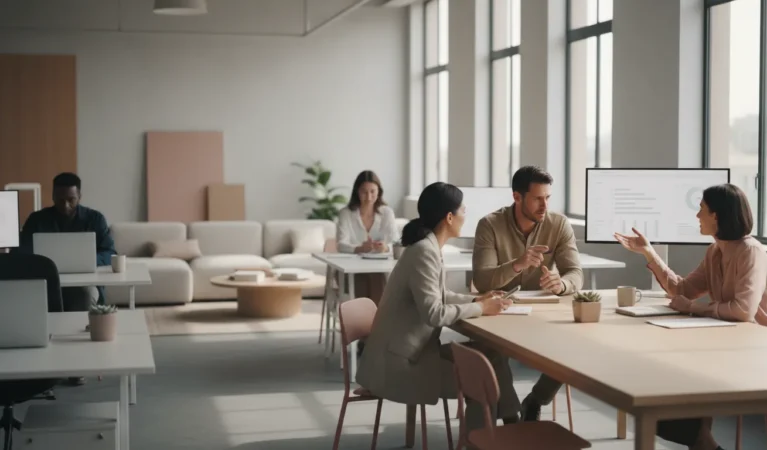
Table of Contents
- Introduction
- Defining the Open Space Office Concept
- The Evolution of the Workplace: From Cubicles to Connection
- Balancing Collaboration and Focus in Open Environments
- The Operational Support of a Bundled Workspace
- Member Connection and the Business Development Layer
- Is an Open Space Office Right for Your Business?
- Designing the Day: 24/7 Access and National Reach
- The Practical Value of “Workspace with a Purpose”
- Success Factors: Connectivity and Resources
- Conclusion
- FAQ
Introduction
Imagine walking into a workplace where the physical barriers to communication have been replaced by an atmosphere of collective energy. Instead of a maze of high-walled cubicles that isolate individuals, you see a landscape of shared tables, inviting lounge areas, and integrated breakout spaces designed for spontaneous brainstorming. This is the essence of the open space office—a layout characterized by the absence of internal walls and a focus on visibility and shared resources.
The primary purpose of this blog post is to define exactly what an open space office is, explore how it has evolved from the rigid office structures of the past, and examine how modern professionals use these environments to accelerate their success. We will look at the practical benefits of this model, the operational efficiencies it provides, and how a purposeful approach to workspace design can transform a simple floor plan into a strategic business asset. At its core, the open space office is not just an architectural choice; it is a commitment to transparency, community connectivity, and a more agile way of doing business.
Defining the Open Space Office Concept
When people ask “what is an open space office,” they are often looking for more than a dictionary definition. While the technical answer is a workspace floor plan that minimizes or eliminates enclosed rooms and cubicle partitions, the functional answer is much more complex. It is a philosophy of work that prioritizes the flow of information and the strength of professional relationships.
In a traditional office, the environment is segmented. Managers might have private offices while staff are relegated to cubicles. This creates a literal and figurative hierarchy that can stifle the quick exchange of ideas. In contrast, an open space office levels the playing field. By removing these dividers, teams can more easily see when a colleague is available for a quick question or a collaborative session.
At Workbox, we view the open space office as a “Workspace with a Purpose.” We recognize that for an open plan to be effective, it cannot just be a sea of desks. It must be a thoughtfully curated environment that balances communal areas with specialized zones for different types of work. This holistic approach combines the physical space with a community connectivity layer that helps professionals grow.
The Evolution of the Workplace: From Cubicles to Connection
To understand the modern open space office, it is helpful to look back at where we started. The “Action Office” of the 1960s was originally intended to give workers more freedom and movement, but it eventually devolved into the “cubicle farms” that many professionals remember with a sense of stagnation. These layouts were designed for task repetition and oversight rather than innovation.
The shift toward open space offices gained momentum as the nature of work changed. With the rise of the knowledge economy and the tech sector, the need for cross-departmental collaboration became paramount. Companies realized that “collision points”—moments where two people from different teams bump into each other and share an insight—were often where the most valuable ideas were born.
However, the earliest versions of open offices were sometimes criticized for being too loud or offering too little privacy. This is where the modern “flex” model, which we champion at Workbox, provides a solution. Instead of a one-size-fits-all open floor, we offer a variety of workspace membership options:
- Floating Memberships: For the professional who needs a home base and the flexibility to work from different spots within the community.
- Desk Memberships: For those who want a dedicated spot in a professional, shared environment.
- Private Offices & Suites: For teams that need a secure, branded home base while still having immediate access to the broader open-plan community.
By providing these layers, we allow companies to enjoy the benefits of an open space layout—transparency and community—without sacrificing the practical need for focus.
Balancing Collaboration and Focus in Open Environments
One of the most important considerations when choosing an open space office is how the layout handles the different “modes” of work. A productive day often requires shifting from high-energy collaboration to deep, individual focus.
The Role of Infrastructure
In a well-designed open space office, the infrastructure supports these shifts. At Workbox, we include specific amenities to ensure that the open environment remains productive:
- Phone Booths: These are essential for taking private calls or joining virtual meetings without distracting others in the shared space.
- Private Conference Rooms: For more formal meetings or team deep-dives, having access to bookable rooms is a necessity.
- Wellness Rooms: Providing a dedicated space for personal health needs or a moment of reset.
- Lounges and Breakout Areas: These are the heart of the “open” concept, where members can step away from their desks for a change of scenery.
For a consultant juggling client meetings and deep work, reserving a professional meeting room when needed—while using a floating membership for focused work—creates a predictable weekly rhythm. They get the professional presence of a high-end office without the overhead of managing a 10-person suite alone.
Creating a Culture of Respect
An open space office also thrives on a shared professional culture. When you are surrounded by other innovators, leaders, and investors, there is a natural incentive to maintain a professional atmosphere. We find that our members—nearly two-thirds of whom use Workbox as their corporate headquarters—set a standard for the environment. It is not just about the space; it is about the “Member Success” philosophy that underpins every interaction.
The Operational Support of a Bundled Workspace
Transitioning to an open space office, particularly within a flexible workspace model, offers significant operational advantages compared to a traditional office build-out. When a company chooses a traditional office, they are often responsible for every minor detail of the infrastructure.
Reducing Administrative Burden
In a traditional model, setting up an office means coordinating with internet providers, hiring a cleaning crew, purchasing furniture, and managing utility accounts. These are all “non-core” activities that take time away from growing your business. At Workbox, we provide a seamless operational backbone. This bundled approach includes:
- Fast, secure Wi-Fi and Ethernet
- Professional cleaning services
- Unlimited printing
- Mailing and packaging services (available for Floating Memberships and higher)
- A dedicated community manager to oversee daily operations
By handling the “workplace overhead,” we allow leaders to focus on their mission from day one. This operational support reduces the administrative burden of running an office, making the transition as simple as showing up and plugging in.
Lower Upfront Commitment
Traditional leases often require a 7-to-10-year commitment and a massive upfront investment in construction and furniture. In contrast, the flexible workspace model allows for a significantly lower upfront commitment. This is particularly valuable for growing teams that may need to scale their footprint within six months. Our Private Offices and Suites start at $500/month (varying by location), providing a high-quality environment without the long-term risk of a conventional lease.
Member Connection and the Business Development Layer
What truly separates a standard open space office from a Workbox location is our focus on Member Connection and Business Development. We believe that a workspace should do more than just house your team; it should actively contribute to your growth.
Purposeful Programming
We facilitate high-quality member-to-member interactions through a variety of touchpoints:
- Weekly Community-Based Engagements: Regular opportunities to meet neighbors and share what you are working on.
- Quarterly Mixers: Larger events designed to strengthen the bonds within the local and national network.
- Partnership Events: Access to events across the Workbox community that support professional connection.
These aren’t just social hours; they are business development opportunities. For a small team transitioning out of coffee shops, a private office at Workbox gives them consistency and privacy for calls, but the open community areas give them the chance to meet a potential investor or a future partner during a weekly engagement.
The Business Development Layer
Members at Workbox gain access to a virtual platform and a suite of business-development resources. This includes:
- Programming with Capital Partners and Founders: Events tailored to those looking to scale their operations.
- Vendor Discounts and Cloud Credits: Practical tools that lower the cost of doing business.
- A Powerful Network: Connectivity to a community of innovators and leaders.
While some spaces focus purely on the desk, we focus on the “Success Takes More” approach, prioritizing Member Connection and Operational Support as the pillars of a successful workspace.
Is an Open Space Office Right for Your Business?
Deciding whether to move into an open space environment depends on your team’s goals and your current stage of growth. Here are a few common scenarios where this model excels:
For the Solo Professional or Consultant
If you spend most of your time on client calls or need a professional place to meet partners, a Floating or Desk Membership in an open space office provides the perfect balance. You get the amenities of a large corporate office—like complimentary coffee, tea, and professional meeting rooms—without the isolation of a home office.
For the Scaling Startup
Startups need to be lean and agile. The ability to rent a few desks in an open area and then move into a Private Suite as the team grows is a major advantage. Furthermore, the ability to have your company logo placed on your office door at no additional cost helps build brand identity from the start.
For Established Teams and Headquarters
Many established companies are moving away from traditional offices in favor of the flexible, open-plan model. They value the “community connectivity” that keeps their employees engaged and the “Capital Access” language that resonates with their board members and investors. By positioning their headquarters in a destination for leaders, they improve their ability to attract and retain top talent.
Designing the Day: 24/7 Access and National Reach
A common concern with open offices is the “standard” operating hours. At Workbox, we solve this by providing our members with the flexibility they need to work on their own terms.
- Member Access: Those with Desk Memberships, Private Offices, or Suites have 24/7 access to their home-base location. This ensures that if a project requires late-night focus or an early morning start, the space is available.
- National Reach: Members also enjoy access to any other Workbox location nationwide during staffed hours (8:30 am to 5:00 pm, Monday through Friday). This is a game-changer for professionals who travel for business and need a consistent, high-quality environment to work between meetings.
For a non-member or someone using a Day Pass ($35/day), our staffed hours provide a professional window to experience the community and utilize our amenities like filtered water, secure Wi-Fi, and the vibrant common areas.
The Practical Value of “Workspace with a Purpose”
When we talk about “Member Success,” we are talking about creating an environment where the obstacles to growth are removed. An open space office, when managed by a team that understands operational support, becomes a platform for achievement.
Think about the time spent troubleshooting a printer, waiting for a delivery, or trying to find a quiet place for a sensitive call. In a traditional office, those tasks fall on the business owner or an office manager. In our model, the included membership benefits handle those details. Whether it is the mailing and packaging services for our members or the presence of a dedicated community manager, the goal is to make the workday smoother.
Furthermore, the physical design of our spaces facilitates network building. We don’t just put desks in a room; we design spaces that encourage introductions. From the curated artwork to the layout of our kitchen areas—featuring draft and bottled beer where applicable—every detail is intended to foster a sense of belonging and professional pride.
Success Factors: Connectivity and Resources
Beyond the physical layout, the success of an open space office is often determined by the resources available to the people inside it. This is why we emphasize the “Business Development” layer. We provide a destination for leaders and investors to connect, creating a unique ecosystem that you won’t find in a generic coworking space.
For those in the venture-backed or innovation-heavy sectors, our connectivity to the capital partner network is a significant differentiator. While we never guarantee funding, we provide the “purposeful programming” and “access to partnership events” that put founders in the same room as the people who can help them scale. This is where the open space office moves from being a “place to sit” to a “place to grow.”
Conclusion
The open space office has come a long way from the simple removal of walls. Today, it represents a sophisticated approach to workplace strategy that prioritizes connection, flexibility, and operational ease. By blending the energy of a collaborative environment with the practical infrastructure of phone booths, meeting rooms, and private suites, modern professionals can have the best of both worlds.
At Workbox, we are committed to your “Member Success.” We provide more than just a desk; we offer a community of innovators, a layer of business development resources, and an operational backbone that lets you focus on what you do best. Whether you are a solo consultant looking for a professional home or a growing company looking for a corporate headquarters, our “Workspace with a Purpose” is designed to help you thrive.
We invite you to experience the difference that a dedicated, support-driven environment can make for your business. Explore our diverse locations, see how our members are connecting, and find the space that fits your goals.
Ready to take your professional journey to the next level? View our locations and reach out to our team today to learn how Workbox can support your success.
FAQ
What is an open space office and how does it differ from a traditional office?
An open space office is a workspace design that minimizes the use of internal walls and private offices, creating a more transparent and collaborative environment. Unlike traditional offices that use cubicles and closed doors to segment teams, open spaces focus on visibility and shared resources. At Workbox, we enhance this concept by providing a “Workspace with a Purpose,” which includes a mix of open areas, private offices, and essential infrastructure like phone booths to balance collaboration with the need for privacy.
Are open space offices too loud for focused work?
While the open layout encourages communication, a well-managed space like Workbox provides solutions for deep focus. We offer private phone booths for calls, bookable conference rooms for meetings, and private offices for teams that need a dedicated, quiet environment. Additionally, our members-only 24/7 access allows individuals to choose work times that best suit their concentration needs, ensuring the open environment remains a productive tool rather than a distraction.
What are the main benefits of choosing an open space office at Workbox?
The primary benefits include reduced administrative burden, increased community connectivity, and access to a professional network of leaders and investors. Our bundled model covers essentials like internet, cleaning, and utilities, while our “Business Development” layer provides programming, vendor discounts, and networking events. Members also benefit from a “Member Success” philosophy that focuses on providing the resources and introductions needed to grow a business.
Can I get a business address or mail services with an open space office membership?
Yes, mailing and packaging services are available to Workbox members with a Floating Membership or higher. This allows you to have a professional business address at one of our premier locations. Details and specific services may vary by location and membership type, so we recommend speaking with a community manager to find the best fit for your business needs. Please note that these services are not available for Day Pass users or non-members.