skip to main content
 Why Coworking Spaces Are the Future of the Modern Office


Table of Contents
- Introduction
- The Evolution from Real Estate to Resource Platforms
- Prioritizing Member Connection in a Distributed World
- The Seamless Operational Backbone
- Designing for Productivity and Professionalism
- The Business Development Layer: Success Takes More
- Flexibility as a Competitive Advantage
- Accessibility and Nationwide Reach
- The Value of a Managed Environment
- Conclusion
- FAQ
Introduction
Imagine a founder sitting in a hollowed-out traditional office suite, surrounded by boxes of printer paper they had to order themselves and a stack of utility bills that require hours of administrative sorting. Their team is growing, but the ten-year lease they signed just eighteen months ago already feels like a cage—too big for today, but perhaps too small for tomorrow. This disconnect between traditional real estate and the actual needs of a scaling business is why the professional world is undergoing a fundamental shift.
The traditional office model is no longer the default for leaders who value agility, connection, and operational efficiency. Instead, we are seeing a massive migration toward a more integrated, supportive environment. The question is no longer whether your company needs an office, but rather what that office actually does for your business. Does it merely provide a desk, or does it actively contribute to your success?
In this post, we will explore how coworking spaces are the future by analyzing the shift from “real estate as a commodity” to “workspace as a service.” We will examine the critical role of member connection, the elimination of operational burdens, and the strategic importance of a business development layer that helps professionals grow. By the end of this article, you will understand why the most innovative companies are moving away from the isolated office model and toward a holistic platform built for member success.
At Workbox, we believe that success takes more than just a desk and a chair. It requires a purposeful environment where the workspace acts as a catalyst for professional growth. This is the new standard of the modern workplace.
The Evolution from Real Estate to Resource Platforms
For decades, the office was viewed as a static asset—a place where employees went to perform tasks between the hours of nine and five. Companies would sign long-term leases, invest heavily in tenant improvements, and then spend significant time and capital managing the minutiae of the facility. In this old model, the office was a cost center and a logistical hurdle.
How coworking spaces are the future is rooted in the transition of the office into a dynamic resource platform. Modern professionals, particularly those in leadership and innovation sectors, require a workspace that adapts to them, rather than the other way around. This means moving beyond the “landlord-tenant” relationship and toward a “platform-member” relationship.
When we talk about workspace with a purpose, we are describing an environment designed to facilitate specific outcomes: higher productivity, stronger professional networks, and reduced administrative friction. Nearly two-thirds of our member companies choose our locations as their corporate headquarters because they recognize that a high-growth business needs more than just four walls; it needs an ecosystem.
A Holistic Approach to Professional Life
The future of work is not just about where you sit; it is about who you are sitting near and the resources you can access with a single conversation. A comprehensive workspace platform combines three essential pillars:
- Physical Space: High-quality environments ranging from private offices and suites to professional meeting rooms and phone booths. Explore our workspace membership options and pricing
- Community Connectivity: A curated network of innovators, leaders, and investors that fosters organic collaboration.
- Enabling Resources: A layer of operational and business development support that removes the barriers to growth.
By integrating these elements, coworking spaces provide a level of utility that a traditional lease simply cannot match. For a small team transitioning out of coffee shops or home offices, a private office gives them consistency, privacy for calls, and a home base while still staying connected to a broader professional community. This balance of privacy and connectivity is a hallmark of the future workplace.
Prioritizing Member Connection in a Distributed World
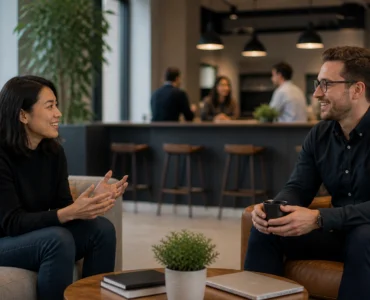
One of the most significant drivers of the shift toward flexible workspace is the need for high-quality human interaction. In an era of remote work and distributed teams, professional isolation has become a tangible risk to both mental well-being and business innovation. Coworking spaces solve this by serving as a destination for leaders and innovators to converge.
At Workbox, our philosophy is centered on Member Success. This isn’t just a catchy phrase; it is a commitment to fostering member connection through intentional programming and space design. We facilitate high-quality member-to-member interactions that go beyond the surface level.
Purposeful Programming and Networking
The future of coworking is defined by the depth of its community. Rather than just offering a place to work, we provide a platform for professionals to connect, collaborate, and grow. This is achieved through several distinct community touchpoints:
- Weekly Community-Based Engagements: These regular touchpoints ensure that the community remains active and that members have frequent opportunities to meet their neighbors in a low-pressure environment.
- Quarterly Mixers: These larger events are designed to facilitate deeper network building, allowing members from different industries—finance, tech, marketing, and law—to find common ground and potential partnerships.
- Access to Partnership Events: We provide access to partnership events across the country, supporting greater professional connection and business development opportunities that extend far beyond the walls of a single location.
Consider a consultant who spends much of their week in deep work. By utilizing a membership in a community-focused space, they can seamlessly move from a private phone booth for a client call to a community event where they might meet their next big lead. This ability to oscillate between focus and connection is why coworking is the future for independent professionals and established teams alike.
The Seamless Operational Backbone
One of the most overlooked advantages of the coworking model—and a primary reason it is the future of the office—is the radical simplification of operations. Running a traditional office is an administrative nightmare. It involves coordinating with internet service providers, hiring cleaning crews, managing furniture procurement, and ensuring the kitchen is stocked and the printers are functional.
When a company chooses a flexible workspace, they are essentially outsourcing their entire office operations to a dedicated team. We provide a seamless operational backbone that helps members operate smoothly and reduces the administrative burden of running an office.
Reducing Traditional Office Burdens
The practical value of a bundled workplace environment cannot be overstated. From day one, members can focus entirely on their core business because the “workplace overhead” has been handled. This includes:
- Infrastructure: Fast, secure Wi-Fi and Ethernet are standard, as is unlimited printing. There is no need to troubleshoot a router or call a technician when a deadline is looming.
- Facility Management: Professional cleaning services and a dedicated community manager ensure the space is always client-ready.
- Amenities: Everything from filtered water, complimentary coffee and tea, and even draft or bottled beer (where applicable) is managed by the workspace provider.
- Mailing and Packaging: For members with a Floating Membership or higher, having a professional address and handled mail (with details varying by location) adds a layer of professionalism without the need for a dedicated mailroom staff. Learn more about membership benefits and included amenities. (See the member benefits.)
By removing these day-to-day distractions, leaders can reclaim hours of their week. For a founder, those hours are better spent on product development or fundraising than on ordering more coffee filters or negotiating a janitorial contract.
Designing for Productivity and Professionalism
The aesthetics and layout of the future office are also evolving. We are moving away from the “sea of cubicles” and the “noisy open plan” toward a more nuanced design that respects different work styles. The future of coworking design focuses on providing a variety of environments within a single location.
A Diverse Range of Workspaces
A truly effective workspace must accommodate everything from intense collaboration to deep, focused work. At Workbox, our spaces are designed to facilitate these different modes of productivity:
- Private Offices & Suites: These provide a dedicated, secure home base for teams. At Workbox, company logo placement on the office door is included at no additional cost, reinforcing the member’s brand identity. See our workspace memberships & pricing for private office and suite options.
- Meeting Rooms: Professional conference rooms are available for client presentations or team brainstorming sessions. For non-members, these are available during staffed hours (8:30 am – 5:00 pm, Mon-Fri), while members enjoy broader access.
- Phone Booths: When a member needs to take a private call or join a video conference, phone booths offer a quieter environment in a private space without the need to book a full meeting room.
- Wellness Rooms: Dedicated spaces for members to take a moment for personal health or reflection, acknowledging that a productive workday requires balance.
By offering these varied environments, coworking spaces allow professionals to choose the best setting for their current task. This “activity-based working” model is shown to increase satisfaction and output, making it a cornerstone of workplace strategy moving forward.
The Business Development Layer: Success Takes More
If the first generation of coworking was about the “desk” and the second was about the “amenities,” the third generation—the future—is about “business development.” This is where Workbox truly differentiates itself. We understand that for a business to thrive, it needs more than just a place to operate; it needs access to a powerful network of other innovators and leaders.
Capital Access and Professional Growth
For companies in the growth phase, connectivity to the broader business ecosystem is vital. We have built an enabling layer of resources and support that includes:
- Virtual Platform Access: Members can utilize a virtual platform to access business development resources and connect with the wider network.
- Programming with Leaders: We host programming and networking events with capital partners, business leaders, and successful founders. These are not just social hours; they are purposeful opportunities to gain insights and forge strategic relationships.
- Vendor Discounts and Cloud Credits: To help startups and small businesses manage their bottom line, we offer a range of vendor discounts and cloud credits that provide immediate, tangible value.
For those in the startup or investment space, the proximity to a ventures-related environment is a major draw. While Workbox Ventures is a separate entity focused on investment, its presence within the ecosystem highlights our commitment to being a destination for those who are building the future. (Note: Workbox Ventures is informational only and does not constitute investment advice or a guarantee of funding).
Flexibility as a Competitive Advantage
The volatility of the modern economy has made flexibility a non-negotiable requirement for many businesses. The ability to scale up or down without being penalized by a decade-long lease is a powerful strategic advantage.
Comparing Commitment Models
When we look at why coworking spaces are the future, the commitment structure is a primary factor. A traditional office often requires a massive upfront investment in security deposits, legal fees for lease negotiations (estimated at $2k–10k in industry studies), and furniture (often estimated at $1k per office). Furthermore, these leases usually demand a 7–10 year minimum commitment.
In contrast, the flexible model offers:
- Lower Upfront Commitment: Compared with a conventional office, the capital required to move into a coworking space is minimal.
- Flexible Terms: Options like 1-month rent with a 2-month minimum lease provide the agility that modern businesses need to respond to market changes.
- Scalability: As a team grows from two people to twenty, they can transition from a few desk memberships to a private suite within the same community, maintaining their professional address and network throughout the process.
For a consultant juggling client meetings and deep work, reserving a professional meeting room when needed—while using a membership for focused work—creates a predictable weekly rhythm without the risk of long-term debt. This flexibility allows businesses to stay “lean” while appearing—and operating—as “enterprise-grade.”
Accessibility and Nationwide Reach
The future of work is mobile. Professionals no longer want to be tied to a single neighborhood or even a single city. Coworking networks are responding by providing nationwide access, turning a local membership into a national office network.
Access Rules and Staffing
Understanding how to navigate these spaces is key to maximizing their value. At Workbox, we maintain clear standards for access to ensure a professional environment for all:
- Day Passes & Non-Member Bookings: Our spaces are staffed Monday through Friday, from 8:30 am to 5:00 pm. This ensures that guests and day-pass users have the support they need during standard business hours. Learn about our day pass options.
- Full Membership Access: Those with Floating Memberships, Desk Memberships, or Private Offices enjoy 24/7 access to their home-base location. This allows for the “early bird” or “night owl” schedules that many founders and leaders prefer.
- National Mobility: Members also receive 8:30 am – 5:00 pm access to any other Workbox location nationwide, making business travel seamless and productive.
Whether you are in your home city or traveling for a conference, having a consistent, high-quality environment where you can plug in, grab a coffee, and get to work is a massive productivity boost.
The Value of a Managed Environment
Ultimately, the reason how coworking spaces are the future boils down to the value of “mindshare.” When you don’t have to think about the office, you can think about your business. A managed environment provides a level of professional polish that is difficult and expensive to achieve on one’s own.
From the moment a client walks into the lobby and is greeted by a dedicated community manager, to the moment they sit down in a furnished, branded office, the impression is one of success and stability. This professional presence is vital for attracting talent, winning clients, and building a brand.
Summary of Future-Proof Features
To recap why the flexible workspace model is dominating the future of real estate:
- Workspace with a Purpose: It is an environment designed specifically for professional growth, not just habitation.
- Member Connection: It provides a curated community and high-quality interactions that combat isolation and drive innovation.
- Operational Support: It acts as a seamless backbone, handling all the logistical friction of running an office.
- Business Development Layer: It offers a platform of resources, networking with capital partners, and vendor discounts.
- Flexibility: It replaces long-term liabilities with agile, scalable workspace solutions.
As we move further into this new era of work, the businesses that thrive will be those that leverage their environment as a tool for success. They will choose spaces that offer community connectivity, operational ease, and a clear path toward professional development.
Conclusion
The shift in the workplace landscape is permanent. The era of the isolated, administratively heavy traditional office is giving way to a more integrated and supportive model. Coworking spaces are the future because they address the modern professional’s need for connection, flexibility, and a focus on core business growth over facility management.
At Workbox, we are proud to be at the forefront of this evolution. By prioritizing Member Success and providing a platform that combines high-quality space with a robust Business Development layer, we help our members do more than just work—we help them succeed. Whether you are a solo founder looking for a professional community or a growing team in need of a new corporate headquarters, the future of your office is here.
Success takes more than just a desk. It takes a community, a support system, and a workspace designed with your goals in mind. We invite you to experience the Workbox difference and see how our approach to “Workspace with a Purpose” can transform your professional journey. Ready to book a tour and find your next workspace? If you have questions about our memberships or the Business Development layer, reach out to our team—we are here to help you make your next move with confidence.
Ready to find your next workspace? Explore our locations and book a tour today to see how Workbox can support your team’s success. If you have questions about our memberships or the Business Development layer, reach out to our team—we are here to help you make your next move with confidence.
FAQ
Why are coworking spaces considered the future of work?
Coworking spaces are the future because they offer the flexibility and scalability that modern businesses require, moving away from the rigid, long-term commitments of traditional leases. They provide an integrated platform that combines professional workspace with community connectivity and operational support, allowing leaders to focus on growth rather than office management.
How do coworking spaces support business development?
Beyond providing a desk, forward-thinking coworking spaces like Workbox offer a Business Development layer. This includes purposeful programming, networking events with capital partners and founders, access to virtual resource platforms, and vendor discounts. These features help members build the connections and access the resources necessary to scale their businesses.
Is a coworking space professional enough for a corporate headquarters?
Yes. In fact, nearly two-thirds of Workbox member companies use our locations as their corporate headquarters. With private offices and suites that include no-cost logo placement, professional meeting rooms, and a dedicated community manager to greet guests, these spaces provide an enterprise-grade presence without the overhead of a traditional office. See our workspace memberships & pricing for more details.
What is the difference between a traditional lease and a flexible workspace membership?
A traditional lease typically involves a 7–10 year commitment, significant upfront costs for furniture and legal fees, and the ongoing burden of managing utilities, cleaning, and maintenance. A flexible workspace membership, such as those at Workbox, offers much lower upfront costs, terms as short as two months, and a bundled service model where all operational needs—from internet to coffee—are handled by the provider.